Ancient Beauty Standards: How Past Cultures Defined Attraction and Power
When we talk about ancient beauty standards, the culturally specific ideals of physical attractiveness that varied across civilizations and were tied to status, religion, and gender roles. Also known as historical ideals of beauty, it shaped who was seen as desirable, powerful, or even sacred. These weren’t just fashion trends—they were systems of control, signals of status, and sometimes sacred rituals. In ancient Egypt, Cleopatra’s red ochre lipstick, a symbol of political authority and erotic power, worn by elite women to signal both wealth and sexual agency wasn’t just makeup—it was armor. Meanwhile, in Etruria, Etruscan funerary art, explicit sexual scenes painted on tomb walls to guide souls into the afterlife showed that pleasure and death weren’t opposites—they were linked. These cultures didn’t hide desire; they honored it as part of life’s cycle.
Ancient beauty standards didn’t just celebrate looks—they enforced roles. In Victorian England, Victorian gender roles, a rigid system that confined women to the home and men to public life turned thinness, paleness, and modesty into moral virtues. A woman’s body had to disappear to be considered pure. But in ancient India, Tantric traditions, a spiritual path that used sexual energy as a tool for enlightenment, not just pleasure celebrated the body as sacred. At Khajuraho temples, carved figures in intimate poses weren’t erotic decoration—they were meditative maps. These weren’t contradictions. They were different ways of answering the same question: what makes a body valuable?
What’s missing from most modern conversations about beauty is how deeply these standards were tied to power—who got to define them, who was punished for not meeting them, and who benefited. The same society that glorified the hourglass figure in 18th-century Europe also locked women into corsets that crushed their organs. The same culture that painted sexual acts in tombs in Etruria later burned books for describing female pleasure. These aren’t just old customs—they’re blueprints. They show us how beauty has always been political, and how the body has always been a battleground. What you’ll find below isn’t a list of pretty pictures from the past. It’s a collection of real stories: how women used lipstick as a weapon, how medical myths silenced desire, how erotic poetry was banned, and how pleasure was disguised as therapy. These aren’t relics. They’re clues to how we still think about beauty, power, and control today.
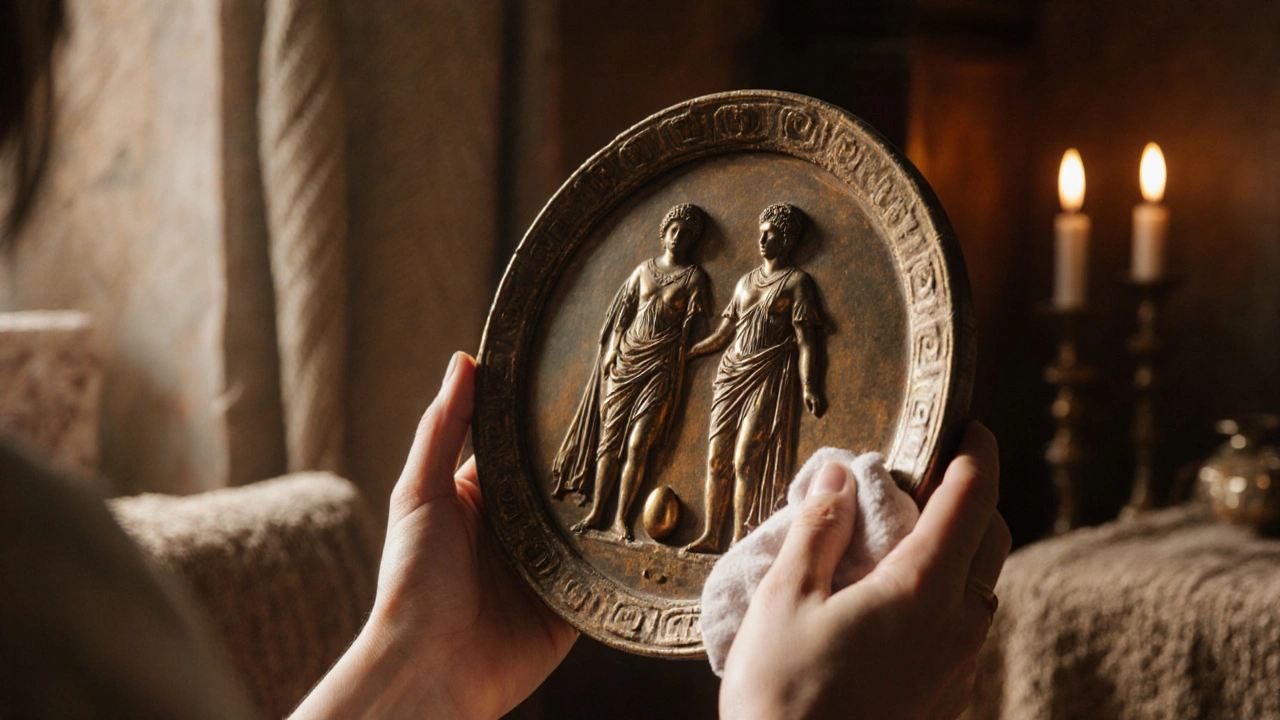
Etruscan Mirrors and Myth: Beauty, Sexuality, and Domestic Power
Oct 24 2025 / History & ArchaeologyEtruscan bronze mirrors reveal how ancient women used beauty, myth, and ritual to claim power in life and death. More than vanity objects, they were spiritual tools linking daily grooming to eternal identity.
VIEW MORE