Etruscan Myth Interpretation Explorer
How to Use This Tool
Select a myth scene from the dropdown below to explore its significance in Etruscan culture.
Each myth scene was carved on the back of an Etruscan mirror—where only the owner could see it—serving as a personal spiritual statement for women.
When you think of ancient mirrors, you might picture a simple polished metal disc, maybe used by a noblewoman to check her hair before a banquet. But in Etruria, between the 8th and 3rd centuries BCE, these mirrors were far more than grooming tools. They were ritual objects, storytelling canvases, and quiet declarations of power-carried by women, buried with them, and engraved with myths that spoke directly to their lives, desires, and fears.
More Than Vanity: The Mirror as a Woman’s Tool
Etruscan women didn’t just use mirrors for vanity. They used them every day. Archaeologists have found hundreds of these bronze mirrors in tombs, mostly belonging to women of high status. These weren’t cheap trinkets. Each mirror was hand-cast, polished to a high sheen, and weighed nearly a pound. The reflective surface, made from a copper-tin alloy, needed constant care to stay clear. A woman would polish it with a soft cloth and perhaps a bit of oil, turning the mirror into a daily ritual-like brushing teeth today, but with deeper meaning. The handle was just as important as the face. Some were shaped like birds, others like animals, but the most common were winged figures called Lasa. These weren’t just decorative. Lasas were minor deities linked to Turan, the Etruscan goddess of love, and often held an alabastron-a small bottle of scented oil used in ceremonies. One mirror at the Art Institute of Chicago, dated to 300-201 BCE, shows a Lasa holding that oil flask. That detail isn’t random. It connects the mirror to anointing rituals, the kind used for the dead. So when a woman held this mirror each morning, she wasn’t just checking her reflection. She was touching something that linked her to the divine, to beauty, and to what came after death.Myths on the Back: Who Were These Gods and Why Them?
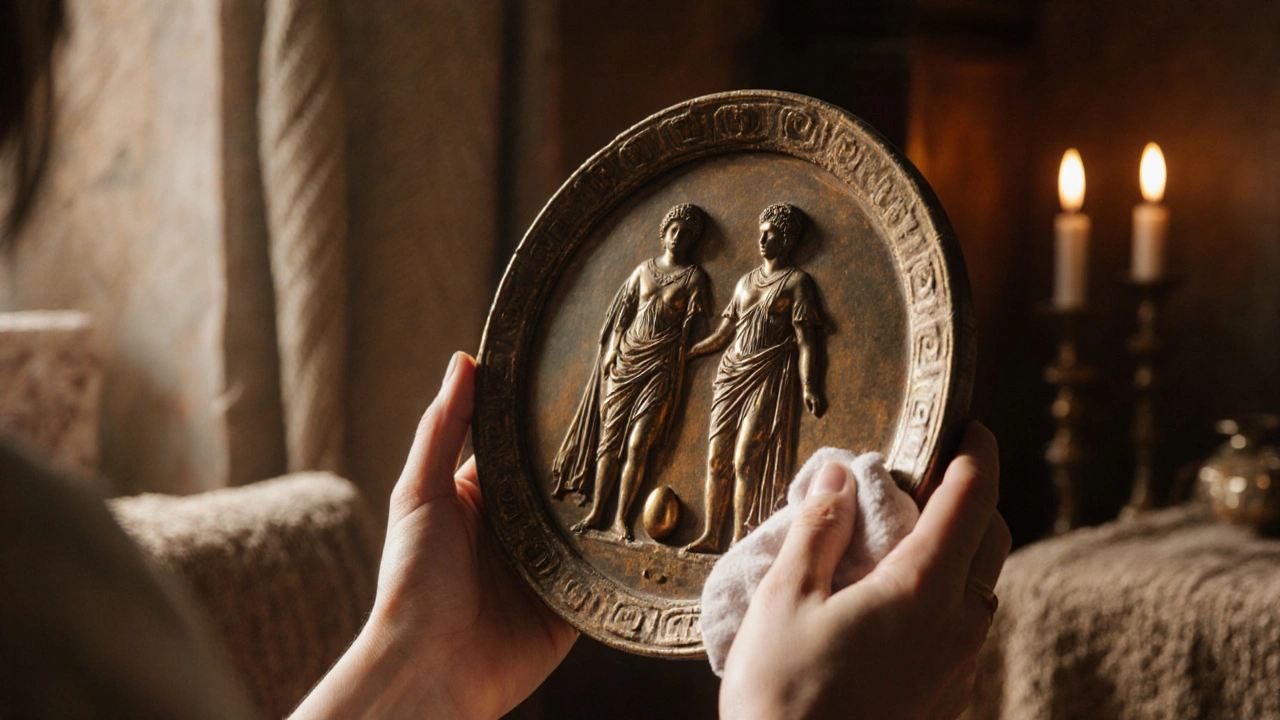
The real story wasn’t on the shiny side. It was carved into the back, where no one but the owner could see it. And what they saw were scenes from myths that centered on beauty, desire, and power. The most common image? The Dioskouroi-Castor and Pollux, the twin brothers from Greek myth. They weren’t warriors here. They were beautiful, youthful, and inseparable. In Etruscan versions, they’re shown standing side by side, sometimes with an egg-the symbol of their birth-between them. Why? Because their myth promised eternal closeness. Zeus let them share immortality so they’d never be apart. For an Etruscan woman, this wasn’t just a pretty picture. It was a wish: for lasting love, for partnership that outlasted death. Then there was Paris choosing Aphrodite (Turan) as the most beautiful goddess. That scene appears over and over. Why? Because it’s not about the choice-it’s about the prize. Turan won because of her beauty, and beauty was power. In a world where women’s influence often operated behind the scenes, this myth said: your looks matter. They can change the fate of gods. Other scenes show Adonis (Atune), the perfect young man, or Ganymede, the boy Zeus stole to be his cupbearer. Even Helen of Troy, called “the most beautiful woman in the world,” shows up. These weren’t just stories. They were affirmations. Every time a woman looked at the back of her mirror, she saw herself reflected-not just in the metal, but in the divine. She saw beauty as something sacred, something that could attract gods, alter destinies, and survive beyond life.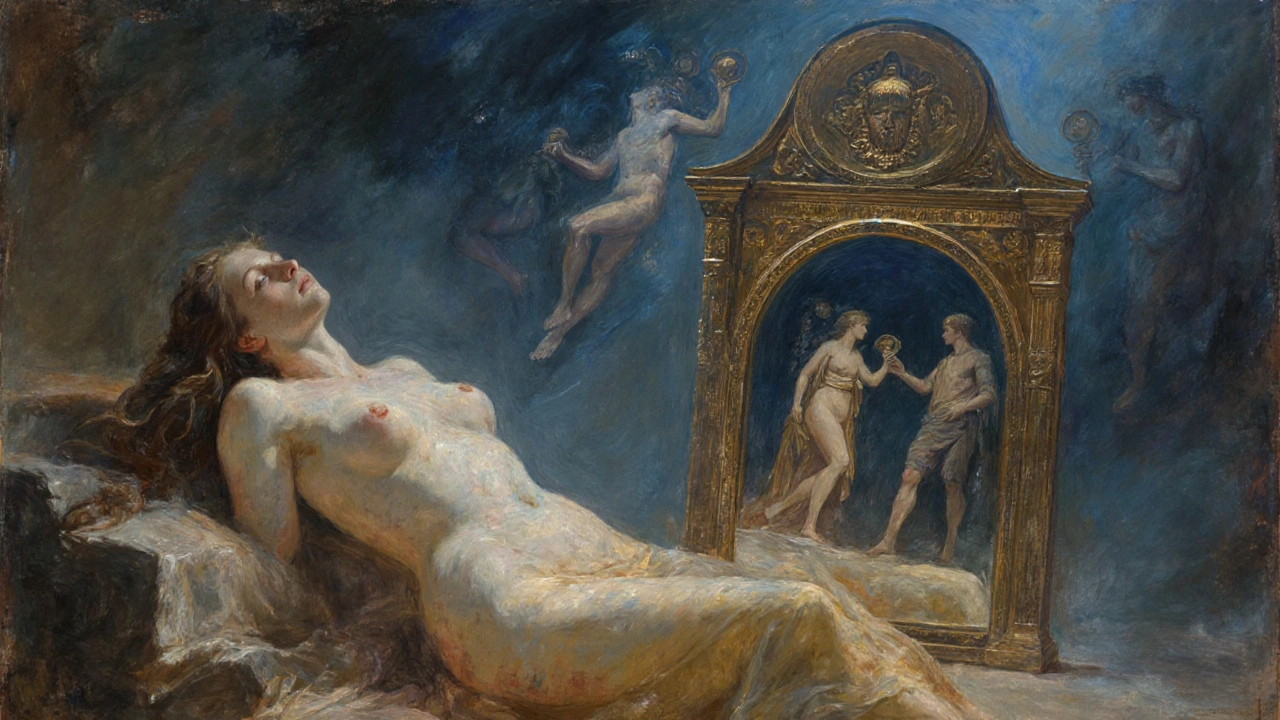
Beauty, Sexuality, and the Afterlife
The Etruscans didn’t believe death was the end. They believed in an afterlife where daily life continued-eating, dressing, grooming. That’s why mirrors were buried with women. Not as ornaments. As tools. They were meant to be used in the next world. The Etruscan word for soul, hinthial, also meant “reflection.” That’s not a coincidence. It suggests they saw the soul as something mirrored-the inner self made visible. When a woman died, her mirror was placed beside her, perhaps still polished, still ready. It wasn’t about vanity in the Roman sense. It was about identity. The mirror held her image, yes-but also her essence. As scholar Nancy de Grummond wrote, these mirrors could be “imprinted with the image and memory of the deceased.” This idea turns the mirror into something almost spiritual. It wasn’t just showing what you looked like. It was showing who you were. And if you believed your soul lived on, then your reflection mattered in death just as much as in life.Domestic Power in a Patriarchal World
Rome called the Etruscans decadent, effeminate, obsessed with luxury. But that was propaganda. Romans conquered them. They had a reason to paint them as weak. The truth? Etruscan women had more freedom than their Greek or Roman counterparts. They could own property, attend banquets, and be buried with luxury goods-including mirrors. These weren’t just gifts from husbands. They were inherited, traded, and passed down. A mirror was a woman’s personal object, her private space in a world where public power was mostly male. The myths on the mirrors reinforced that. They showed women as central figures-Turan, Helen, even the Lasa figures who served them. The mirrors didn’t depict women as passive objects. They showed them as part of a divine order, connected to gods of love, beauty, and eternal life. In a society where men ruled politics and war, women ruled the home-and the mirror was their symbol. One mirror even shows Eros, the god of love, standing among carpentry tools. That’s bizarre. No other culture did that. Why? Maybe it meant love was built, like a house. Or maybe it was a private joke, a nod to the craftsmanship behind both the mirror and the relationship it represented. Either way, it shows Etruscan women weren’t just copying Greek myths-they were reshaping them to fit their own lives.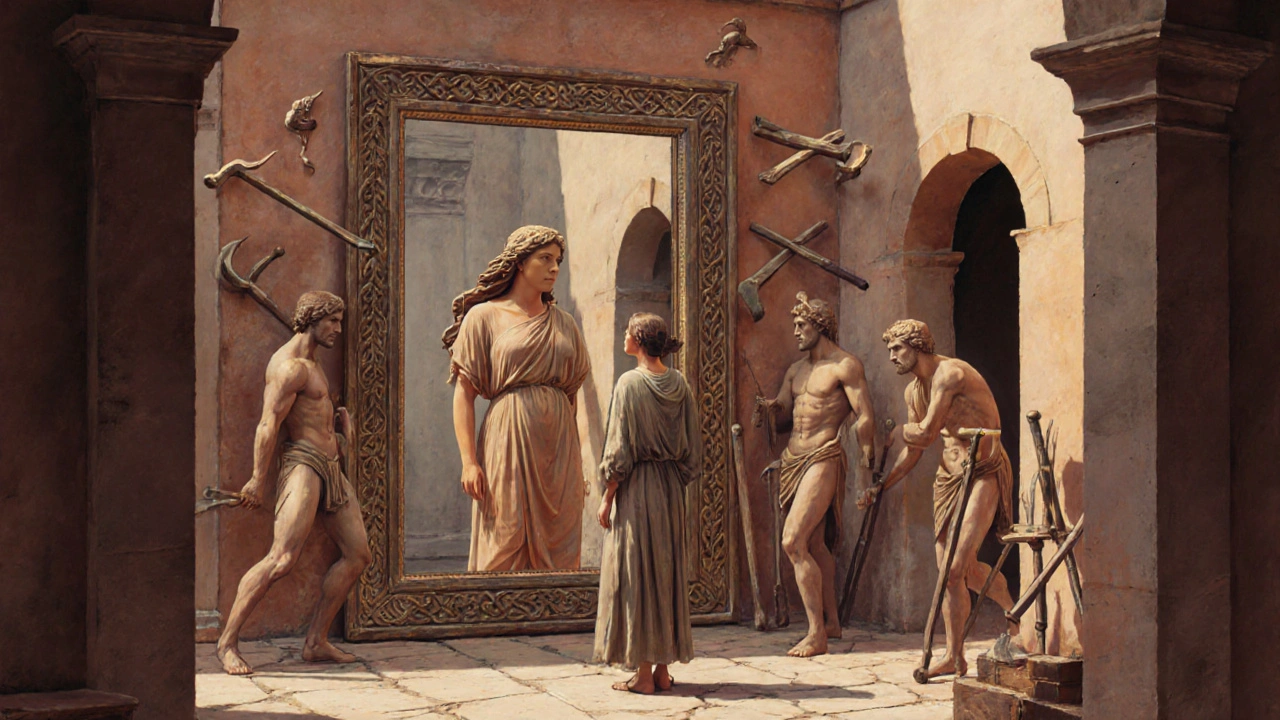
Why These Mirrors Survive When Their Words Didn’t
The Etruscans didn’t leave behind books. They didn’t write down their myths in scrolls. What we know about their beliefs? It comes from their art. And their most abundant, most detailed art? The backs of bronze mirrors. That’s why they’re so important. They’re the only surviving window into how Etruscan women saw themselves. No Roman historian ever wrote: “Etruscan women believed their beauty gave them divine power.” But we have dozens of mirrors that prove it. These objects show a culture that didn’t separate beauty from spirituality, or sexuality from strength. A woman holding a mirror wasn’t being shallow. She was performing a quiet act of faith-connecting her daily routine to the eternal, to the gods, to the soul.What the Mirrors Tell Us Today
We still use mirrors. We still care about how we look. But we rarely think about what that means beyond appearance. The Etruscans did. They understood that beauty rituals were never just about the surface. They were about identity, memory, and power. These mirrors remind us that women in ancient times weren’t silent. They spoke through objects. Through art. Through the way they chose to be remembered. And in the polished bronze of a 2,300-year-old mirror, we still hear them.Why were Etruscan mirrors buried with women?
Etruscan mirrors were buried with women because they believed life continued after death, and personal grooming was part of that afterlife. The mirror wasn’t just a tool-it was a link to identity and soul. The Etruscan word for soul, "hinthial," also meant "reflection," suggesting they saw the mirror as a vessel for the self beyond death. Women were buried with them to ensure they could continue their daily rituals and maintain their presence in the next world.
What myths appear most often on Etruscan mirrors?
The most common myths are those centered on beauty and divine love: the Dioskouroi (Castor and Pollux), Paris choosing Aphrodite (Turan), Adonis (Atune), Ganymede, and Helen of Troy. These weren’t random choices. They reflected Etruscan values-eternal partnership, the power of beauty, and the connection between mortal desire and divine favor. The Dioskouroi, in particular, were so popular because their myth promised immortality through unity, a powerful idea for women in a society that valued family and continuity.
Were Etruscan women more powerful than Roman women?
Yes, in many ways. Etruscan women could own property, attend public banquets, and be buried with luxury items like bronze mirrors-something Roman women couldn’t do until much later. Roman writers called Etruscans decadent to discredit them, but the artifacts tell a different story. Etruscan women had social and religious influence, and their mirrors show they were active participants in shaping cultural narratives around beauty and sexuality.
How were Etruscan mirrors made?
Etruscan mirrors were cast in bronze using a single-piece mold, with a highly polished front surface for reflection and a detailed engraved back. The alloy was typically copper with about 10-20% tin, which gave it a bright, durable shine. Handles were shaped into figures like winged deities (Lasa), animals, or mythological scenes. Polishing the reflective side required regular maintenance with oil and cloth. The craftsmanship was advanced, and these mirrors were expensive, indicating they were luxury items for the elite.
Why do Etruscan mirrors have such detailed myth scenes?
Because the Etruscans had almost no written records, their myths survived through art. Mirrors were personal objects, so the scenes carved on them weren’t just decoration-they were private spiritual statements. Each image connected the owner to a divine story about beauty, love, or immortality. The mirror became a sacred space where the woman’s daily life met eternal myths, reinforcing her role in both the household and the cosmos.
Did Etruscan mirrors influence Roman culture?
Yes, but indirectly. After Rome conquered Etruria, they adopted many Etruscan customs, including the use of mirrors. However, Romans reinterpreted them. Where Etruscans saw mirrors as spiritual tools tied to the soul, Romans saw them as symbols of vanity. The Roman goddess Venus (Aphrodite) became associated with mirrors, but the deeper Etruscan meanings-like the connection between reflection and the afterlife-were lost or ignored. The Etruscan mirror’s true significance was buried with its original owners.