Ancient Chinese Sexuality: Practices, Beliefs, and Hidden Histories
When we think of ancient Chinese sexuality, a sophisticated system of erotic knowledge tied to health, cosmology, and power in imperial China. Also known as Chinese bedchamber arts, it wasn’t about pleasure alone—it was about balance, longevity, and controlling vital energy, or qi. Unlike Western views that often separated sex from spirituality, ancient China treated it as a core part of medicine, philosophy, and statecraft. The Taoist sexual practices, a set of techniques developed over centuries to preserve life force and achieve immortality through controlled intimacy. Also known as fangzhongshu, it included breathing rituals, orgasm control, and partner synchronization—practices recorded in hand-copied manuals buried in tombs and passed down in secret. These weren’t fringe ideas. They were taught in imperial courts, referenced in medical texts like the Huangdi Neijing, and used by emperors who believed mastering sexual energy could extend their rule—and their lives.
Women in ancient China weren’t passive in this system. While Confucian ideals pushed female modesty, real-life practices told a different story. Courtesans in the Tang and Han dynasties were trained in erotic arts, poetry, and music, often wielding more influence than noble wives. Sex manuals from the Han dynasty even detailed how women could control male ejaculation to absorb his vitality, turning sex into a form of energy transfer. Meanwhile, the Chinese sex manuals, written guides from 200 BCE to 1000 CE that codified techniques for longevity, fertility, and pleasure. Also known as fangzhong shu, they were among the most detailed records of pre-modern sexual science in any culture. These weren’t porn—they were survival guides. One manual warned that excessive male ejaculation could cause weakness, madness, or early death. Another advised women to withhold orgasm to drain a man’s energy, a practice called "stealing the essence."
Gender roles in ancient China were complex. Men were expected to be sexually active, but restraint was the ultimate sign of power. Women, though often silenced in official texts, held real authority in private spaces. Archaeologists have found erotic figurines in tombs, not as decoration, but as tools for guiding the soul in the afterlife—showing that sexuality was sacred, not shameful. Even the Han dynasty sexuality, a period when erotic art, medical texts, and courtly love flourished under relative openness. Also known as Han sexual culture, it laid the foundation for later traditions treated sex as a natural force, like wind or water—something to be understood, not suppressed.
What you’ll find in the posts below isn’t just history—it’s a dismantling of myths. You’ll see how modern ideas about female pleasure, consent, and gender were already being debated in ancient China, often in ways that surprise us today. From temple rituals to imperial harem politics, these stories reveal a culture that saw sex as power, medicine, and art—not sin. There’s no fluff here. Just the real, messy, brilliant truth about how one of the world’s oldest civilizations understood the most human of acts.
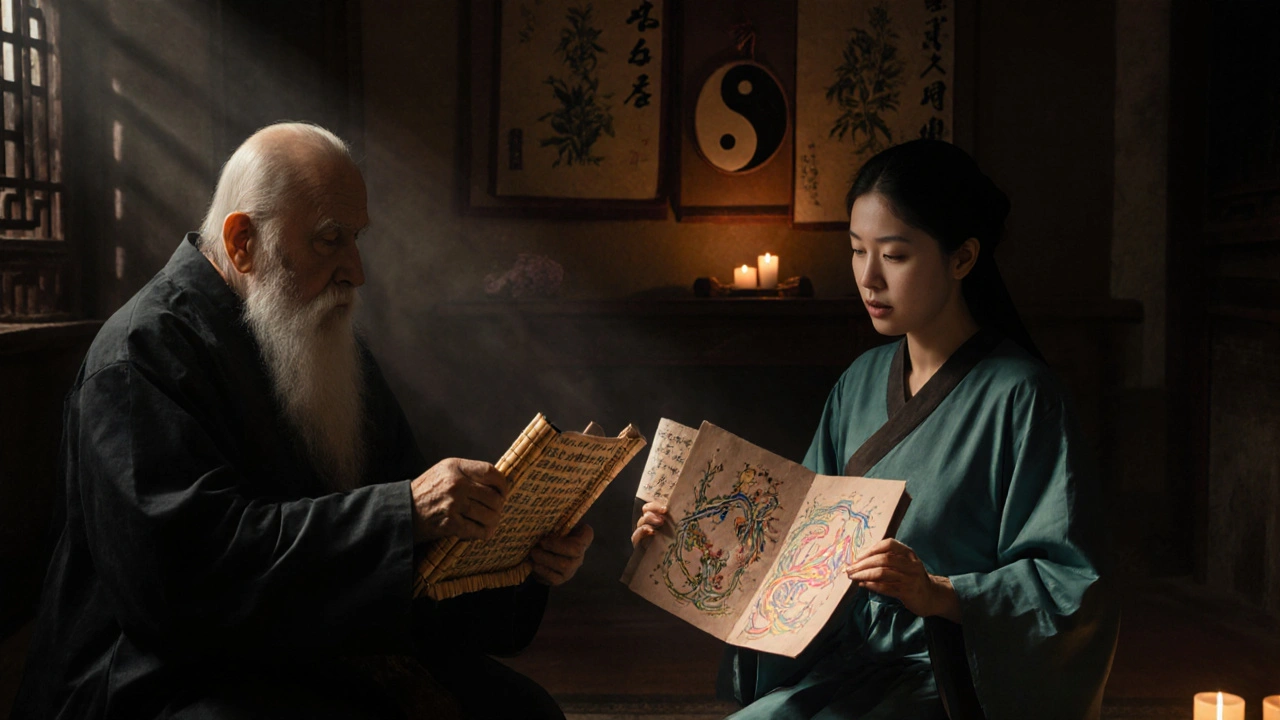
Sexuality in Ancient China and Southeast Asia: Medicine, Method, and Social Roles
Oct 22 2025 / Global TraditionsAncient China and Southeast Asia developed sophisticated systems of sexual medicine, blending spirituality, herbalism, and body awareness. From energy conservation techniques to early recognition of STIs, their methods reveal a deep, practical understanding of human sexuality long before modern science.
VIEW MORE