Ancient Chinese Herbs for Sexual Health
Ancient Chinese Wisdom for Modern Health
Based on ancient Chinese medical texts, specific herbs were selected for sexual health using the Doctrine of Signatures and centuries of observation. This tool helps you identify herbs that may support your wellness based on your symptoms.
Symptom Assessment
Herbal Recommendations
Select a symptom to see traditional Chinese herbal recommendations.
Sexuality Was Never Just About Pleasure in Ancient China
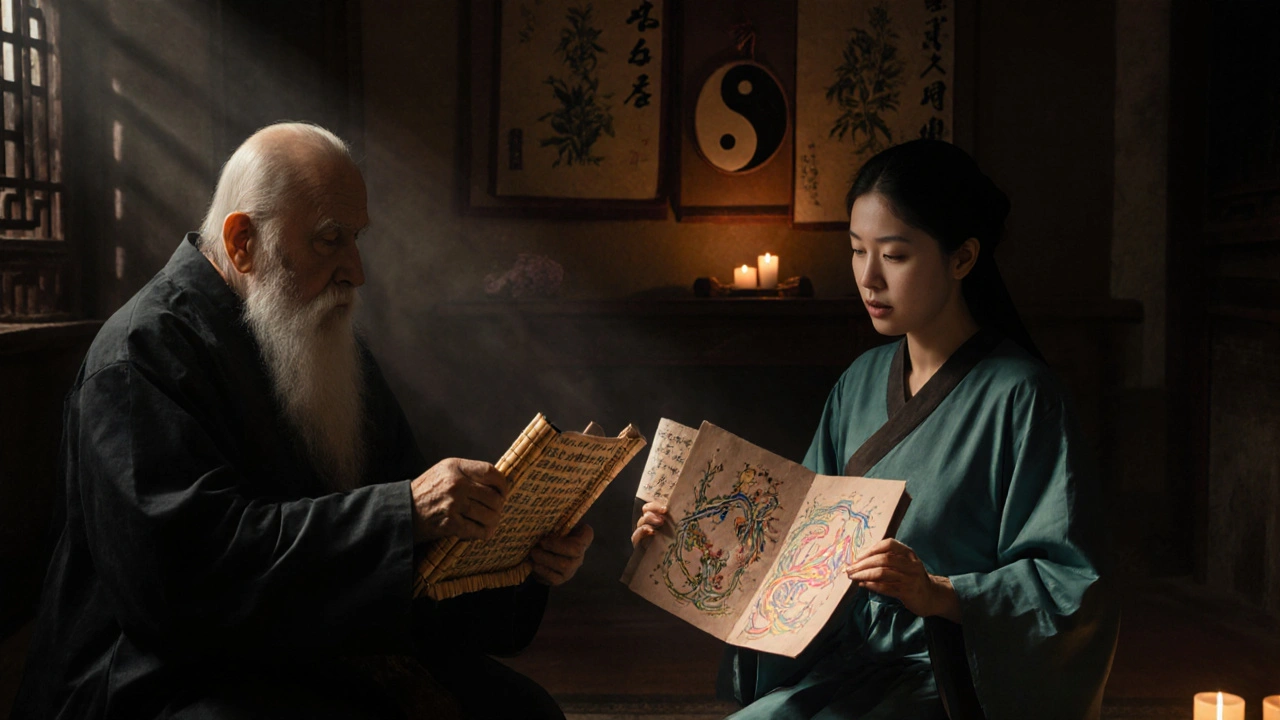
In ancient China, sex wasn’t a private act hidden behind closed doors-it was a medical science, a spiritual discipline, and a social contract all at once. While modern Western culture often treats sexuality as either a biological urge or a personal freedom, ancient Chinese texts treated it as a force that could heal or harm, extend life or shorten it. The Yellow Emperor’s Inner Canon, written over 2,200 years ago, didn’t just talk about sex-it mapped how sexual energy flowed through the body, linked it to the lungs and kidneys, and warned that too much could drain your jing, the vital essence believed to be the foundation of life itself.
This wasn’t just philosophy. Archaeologists found clay tablets in Mawangdui, China, buried in a tomb from 168 BCE, that detailed exact techniques for men to avoid ejaculation during intercourse. The goal? To absorb a woman’s energy through her breath and saliva, then redirect it upward to the brain. This practice, called huanjing bunao (returning the essence to the brain), wasn’t about control for control’s sake. It was a calculated method to preserve vitality. Men were told to tighten their pelvic muscles, breathe deeply, and stay aroused without releasing. One text, the Sunü Jing, claimed this could make you live longer, think clearer, and even see spirits.
Women’s Medicine Wasn’t an Afterthought-It Was the Foundation
While men wrote most of the surviving texts, women’s health was central to ancient Chinese medicine long before it was recognized in Europe. The Recipes for Fifty-Two Ailments, written around 215 BCE, prescribed menstrual blood soaked cloths to treat horse-induced spasms and intestinal swelling. That’s right-menstrual blood was seen as medicinal. Modern science now knows menstrual blood contains stem cells and hormones, but ancient practitioners didn’t need a lab to know it had power. They observed its effects. They used it.
The specialized branch of medicine for women, called fuke, didn’t emerge suddenly in the Song Dynasty as once thought. Evidence shows it was already active in the Han Dynasty, with female healers diagnosing infertility, menstrual disorders, and postpartum conditions. These women weren’t just midwives-they were practitioners who used herbs, acupuncture, and massage. But by the Tang Dynasty, male doctors began to push them out. They called female healers uneducated, claimed their methods were superstitious, and took over their practices. By the time the Ming Dynasty rolled around, most records of women’s medical knowledge were written by men-and often distorted.
Sex, Herbs, and the Shape of Power
Herbs weren’t just for curing fevers-they were chosen by shape, smell, and legend. Emperor Shen-Nung, a mythic figure from 2800 BCE, supposedly chewed hundreds of plants to test their effects. When he tried ginseng, he felt a warm, pleasurable surge. He noticed its root looked like a human figure-especially the phallus-and declared it the perfect remedy for weakness. That’s why ginseng became the go-to herb for erectile dysfunction. It wasn’t magic. It was the doctrine of signatures: if it looks like a body part, it fixes that part.
Other plants were used too. Cinnamon warmed the body, deer antler boosted stamina, and rehmannia nourished the kidneys. These weren’t random guesses. They were based on centuries of observation. A man with low energy? His kidneys were weak. Weak kidneys meant low jing. So you fed him herbs that strengthened the kidneys. Simple. Direct. Effective.
Acupuncture was also used for sexual health. Points along the bladder and kidney meridians were stimulated to increase libido, reduce premature ejaculation, or ease menstrual cramps. There were no pills, no prescriptions-just needles, breath, and timing.
Southeast Asia: Shared Roots, Different Paths
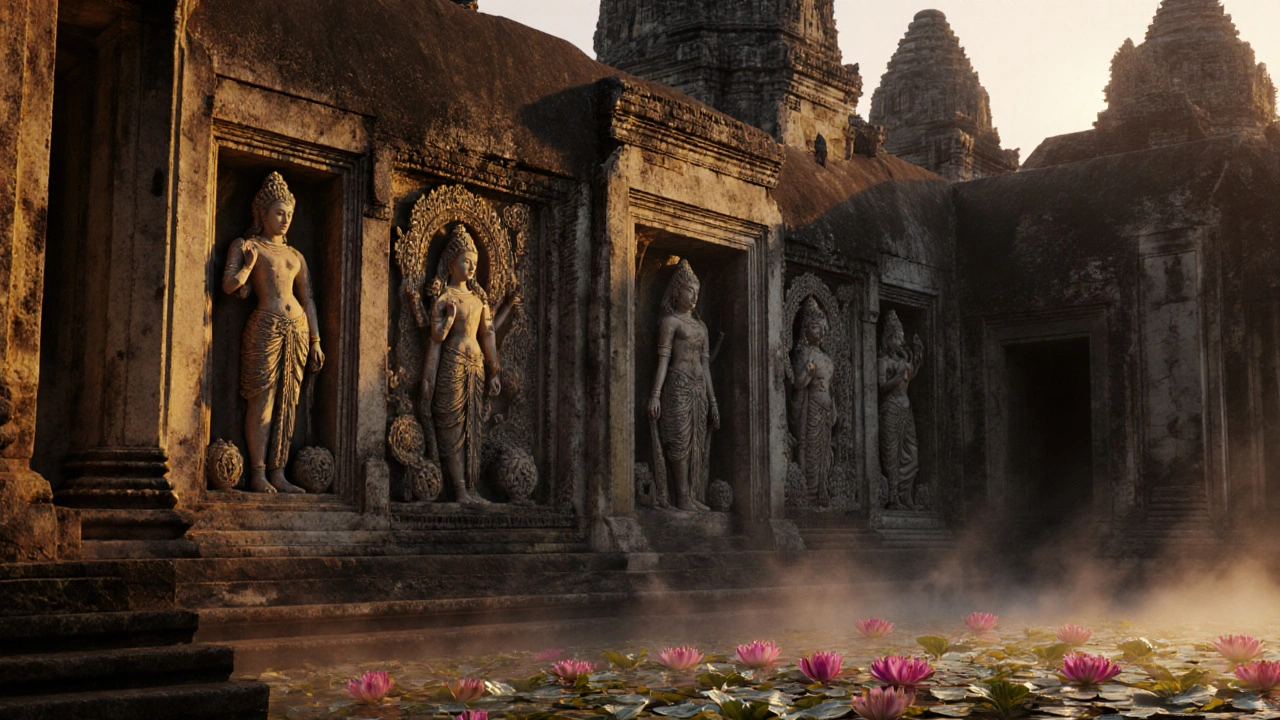
While China developed its medicalized view of sex, Southeast Asia took a different route. In ancient Cambodia, Thailand, and Java, sexuality was woven into temple art, ritual, and cosmology. The carvings at Angkor Wat don’t just show gods and demons-they show couples in intimate poses, not as porn, but as symbols of cosmic balance. The union of male and female energy was seen as necessary to sustain the universe.
In Java, the Kamasutra-like texts of the 8th century didn’t just list positions-they tied each one to spiritual outcomes. Certain positions were said to awaken the kundalini energy, while others were meant to calm the mind before meditation. Unlike China’s focus on energy conservation, Southeast Asian traditions often emphasized surrender, rhythm, and sacred union.
Herbs were shared across borders. In Thailand, the bark of the krachai plant was chewed to enhance stamina, much like ginseng in China. In Vietnam, women used betel nut and turmeric mixtures to regulate cycles. These weren’t isolated practices. Trade routes between southern China and the Malay Archipelago moved not just silk and spices-but knowledge of the body.
Sexual Disease Was Known-And Documented
People in ancient China didn’t ignore the risks. By 1264 CE, during the Southern Song Dynasty, physicians wrote clearly about sores on the penis and genital erosion in women. They called it yin shang-genital sores-and linked them directly to “great licentiousness.” This wasn’t moralizing. It was observation. They noticed patterns: too many partners, no hygiene, repeated exposure-and then disease.
They didn’t have germ theory, but they understood transmission. They advised abstinence after symptoms appeared. They used herbal washes made from alum, bitter melon, and tea tree to treat infections. These weren’t crude remedies-they were targeted treatments based on symptoms and outcomes.
Why Did These Practices Fade?
By the Qing Dynasty (1644-1912), Confucian officials began to ban books on sexual cultivation. They called them “lewd,” “dangerous,” and “corrupting.” The state didn’t just censor-it burned texts. The Fangzhongshu, a collection of hundreds of sexual techniques, vanished. Only fragments survived in tombs or hidden copies.
Why? Because sex was becoming political. The ruling class wanted control-not over bodies, but over behavior. Public discussion of sex was seen as a threat to social order. Women’s medical knowledge was erased because it gave women power. Herbal remedies were replaced by state-approved drugs. And the idea that sex could be a path to longevity? It was rewritten as superstition.
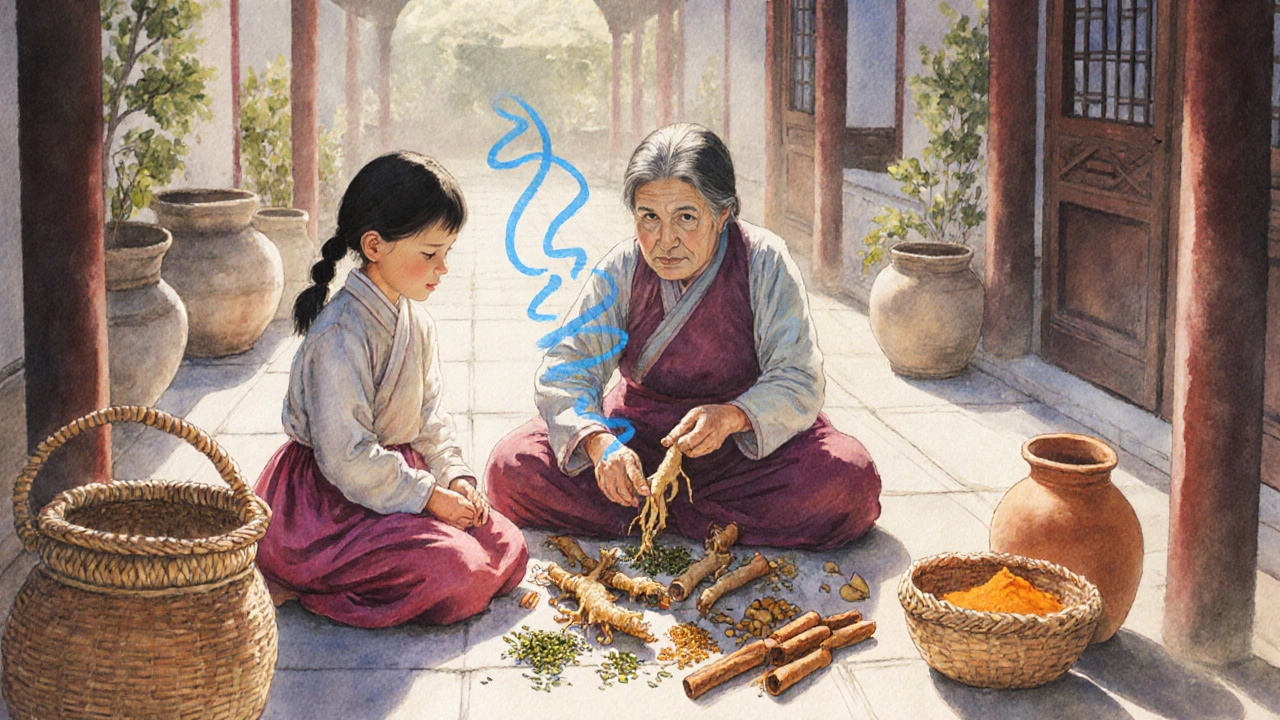
But the ideas didn’t die. They moved underground. In rural villages, grandmothers still whispered about ginseng and pelvic exercises. In Taoist monasteries, monks kept the texts alive. Today, some integrative medicine practitioners in the U.S. and Europe are rediscovering these methods-not as magic, but as systems of body awareness that predate modern sex therapy by millennia.
What’s Left Today?
Modern sex therapists talk about “sensate focus,” where partners touch without pressure to perform. Sound familiar? That’s exactly what ancient Chinese texts described as karezza-slow, non-ejaculatory sex to deepen connection. The difference? They didn’t need a therapist. They had manuals.
Today, you can find ginseng in every health store. You can buy pelvic floor exercisers modeled after Han Dynasty techniques. Yoga and qigong teachers still teach breath control for sexual energy. These aren’t new trends. They’re ancient tools, repackaged.
The real question isn’t whether these methods worked. It’s why we forgot them. And why we’re only now remembering.
Did ancient Chinese people believe sex could extend life?
Yes. Ancient Chinese medicine saw sexual energy as a form of jing, or vital essence, that could be conserved and redirected. Texts like the Sunü Jing and writings by Sun Simiao claimed that avoiding ejaculation during intercourse allowed men to absorb a partner’s energy and channel it to the brain, enhancing longevity. This wasn’t metaphor-it was a medical technique, with specific breathing and muscle control instructions. While modern science doesn’t support the mystical claims, the emphasis on moderation, breath, and body awareness aligns with today’s understanding of stress reduction and sexual health.
Was women’s medicine taken seriously in ancient China?
Initially, yes. Female healers diagnosed and treated menstrual disorders, infertility, and postpartum conditions as early as the Han Dynasty. Texts like the Recipes for Fifty-Two Ailments show women’s medical knowledge was practical and advanced. But by the Tang Dynasty, male physicians began to dominate the field, dismissing female practitioners as untrained. By the Song Dynasty, the formal branch of fuke (women’s medicine) was established-but mostly by men writing about women, not by women themselves. The original female-led practices were erased or absorbed into male-controlled systems.
How did ancient Chinese and Southeast Asian approaches to sex differ?
China focused on energy conservation and internal balance. Sex was a medical practice aimed at preserving jing, using techniques like huanjing bunao and herbal tonics. Southeast Asia, especially in Khmer and Javanese cultures, saw sex as a sacred act that mirrored cosmic harmony. Temple carvings show couples in intimate poses not for arousal, but as symbols of divine union. While China sought to control energy, Southeast Asia emphasized surrender, rhythm, and spiritual connection. Both used herbs, but China’s were chosen for organ-specific effects, while Southeast Asia’s were tied to ritual and aura.
Did ancient Chinese recognize sexually transmitted diseases?
Yes. By 1264 CE, the Southern Song text Ren Zhai Zhi Zhi Feng Lun clearly described genital sores in men and women, linking them to “great licentiousness.” They called it yin shang-genital erosion-and advised abstinence and herbal washes for treatment. This is the earliest known medical documentation of sexual disease transmission in Asia. They didn’t know about bacteria, but they understood patterns: multiple partners led to sores. That’s epidemiology, even without microscopes.
Why were these practices lost?
Confucian officials during the Qing Dynasty labeled sexual texts as immoral and banned them. Books were burned. Knowledge was suppressed because public discussion of sex threatened social order. Male physicians also replaced female healers, erasing women’s medical authority. Modernization in the 19th and 20th centuries further dismissed these traditions as “superstitious.” But fragments survived in hidden manuscripts, rural practices, and Taoist lineages-and are now being rediscovered in integrative medicine.
What Should You Do With This Knowledge?
Don’t try to replicate ancient techniques blindly. You won’t find a magic pill in ginseng, and you won’t extend your life by holding back ejaculation. But you can learn from their framework: sex isn’t just physical-it’s tied to your energy, your stress, your sleep, your breath. If you’re tired, overworked, or disconnected, maybe the problem isn’t your libido. Maybe it’s your qi.
Try this: next time you’re intimate, slow down. Breathe. Notice how your body feels-not just what it’s doing. That’s not ancient mysticism. That’s mindfulness. And it’s been proven to improve sexual satisfaction.
These traditions didn’t vanish because they were wrong. They vanished because they were too powerful to let people talk about.