Ancient Greek Sex Work: Prostitution, Temples, and Social Roles in Classical Greece
When we talk about ancient Greek sex work, the organized, legal, and socially integrated practice of commercial sex in classical Greece. Also known as prostitution in ancient Greece, it wasn't hidden or shameful—it was a normal part of urban life, regulated by law, taxed by the state, and sometimes even tied to religious rituals. Unlike today’s stigma, Greek society didn’t see sex work as a moral failure. It was a job, like baking or weaving, and many women entered it out of economic necessity, not coercion.
One of the most misunderstood roles was the hetairai, highly educated female companions who provided sex, conversation, and entertainment to elite men. Also known as courtesans, they weren’t slaves or street workers—they were often freedwomen or foreigners with skills in music, poetry, and philosophy. Some, like Aspasia, influenced politicians and shaped public discourse. Their status stood in sharp contrast to the pornai, lower-class prostitutes who worked in brothels or on the streets. Also known as common prostitutes, they were usually slaves or poor women with little autonomy, yet still protected under Athenian law from violence and exploitation.
Sex work wasn’t just about pleasure—it was part of religion too. In places like Corinth, temple prostitution was a documented practice, where women served the goddess Aphrodite. While scholars debate how widespread it was, the idea that sacred sex was part of worship shaped how Greeks viewed desire—not as sinful, but as divine. This connection between sexuality and spirituality is why ancient Greek sex work feels so different from modern views, where religion often condemns what the Greeks celebrated.
Men didn’t face social penalties for visiting prostitutes. In fact, it was expected. Young men were sent to brothels as part of their coming-of-age. Marriage was for children and property, not passion. Sex work filled the emotional and physical gaps that marriage didn’t cover. Meanwhile, women had no legal right to own property or leave their homes freely—so for some, sex work was one of the few paths to independence.
What you’ll find in the posts below isn’t just history—it’s a look at how power, gender, and economics shaped the oldest form of commercial intimacy. From temple rites to legal codes, from the clout of hetairai to the silence of pornai, these stories reveal a world where sex wasn’t hidden, but understood. And in that understanding, we see echoes of today’s debates about consent, autonomy, and who gets to control desire.
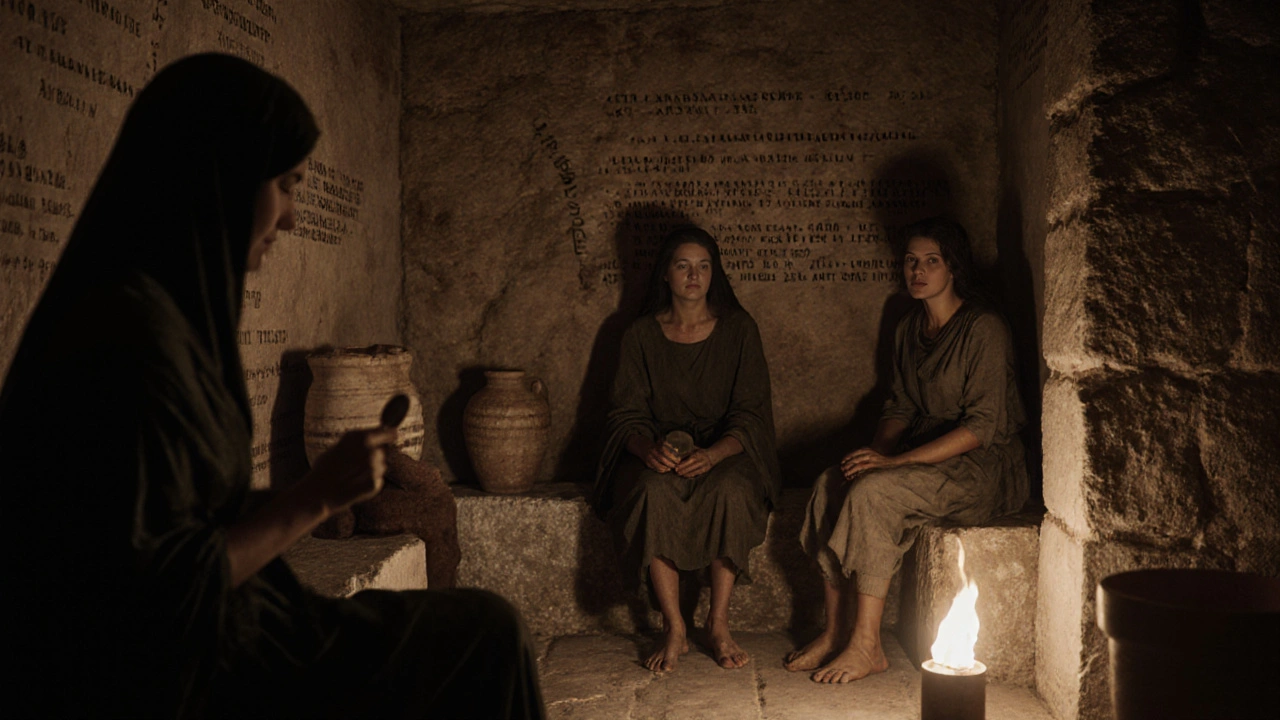
Athenian Prostitution: The Real Categories of Pornai and Hetairai
Oct 22 2025 / Global TraditionsAncient Athens had only two real categories of sex workers: pornai and hetairai. The terms 'chamaitypa'i' and 'perepatetikes' are modern myths. Here's how the system actually worked-and who paid the price.
VIEW MORE