Bedding Ceremony: The Hidden Rituals of Sex, Power, and Marriage Through History
When you think of a wedding, you probably picture vows, cake, and dancing. But for centuries, the real moment that made a marriage official wasn’t at the altar—it was in the bedroom. The bedding ceremony, a public ritual where the newly married couple was undressed, placed in bed, and sometimes sexually consummated in front of witnesses. Also known as bedding ritual, it wasn’t just a party—it was a legal requirement in many parts of Europe and beyond. Without this act, the marriage could be annulled. The bed wasn’t just furniture; it was the courtroom, the altar, and the proof.
This wasn’t about romance. It was about control. Families used the bedding ceremony, a public ritual where the newly married couple was undressed, placed in bed, and sometimes sexually consummated in front of witnesses. Also known as bedding ritual, it wasn’t just a party—it was a legal requirement in many parts of Europe and beyond. to verify virginity, secure dowries, and prevent fraud. In medieval England, neighbors would watch the bride and groom undress, sometimes even test the bride’s hymen. In France, guests would shout encouragement—or insults—until the couple was alone. The consummation rite, the act of sexual intercourse that legally completed a marriage in pre-modern societies. Also known as marital consummation, it was the final step in transferring property, legitimacy, and social status. was the moment the bride became a wife in the eyes of the law, not the priest. And if the groom couldn’t perform? The marriage could be undone. Women had little say. In some places, if the groom failed, the bride could be forced to marry his brother. The marital power dynamics, the social and legal structures that dictated who controlled sex, reproduction, and property within marriage. Also known as gendered marriage authority, they turned intimacy into a transaction. were baked into every step.
These rituals faded as courts stopped requiring witnesses and doctors replaced village elders as arbiters of fertility. But their legacy didn’t disappear. The pressure to prove you’re "ready" for marriage? The shame around sexual performance? The idea that a woman’s worth is tied to her ability to consummate? Those are all echoes of the bedding ceremony. You won’t find them in modern wedding planners, but they’re still in the air—quiet, unspoken, and deeply rooted.
What follows is a collection of articles that dig into the hidden history behind these rituals—the laws, the myths, the silenced voices, and the power structures that made sex a public duty. You’ll see how the same forces that once demanded a crowd to witness a wedding night still shape how we think about consent, virginity, and control today.
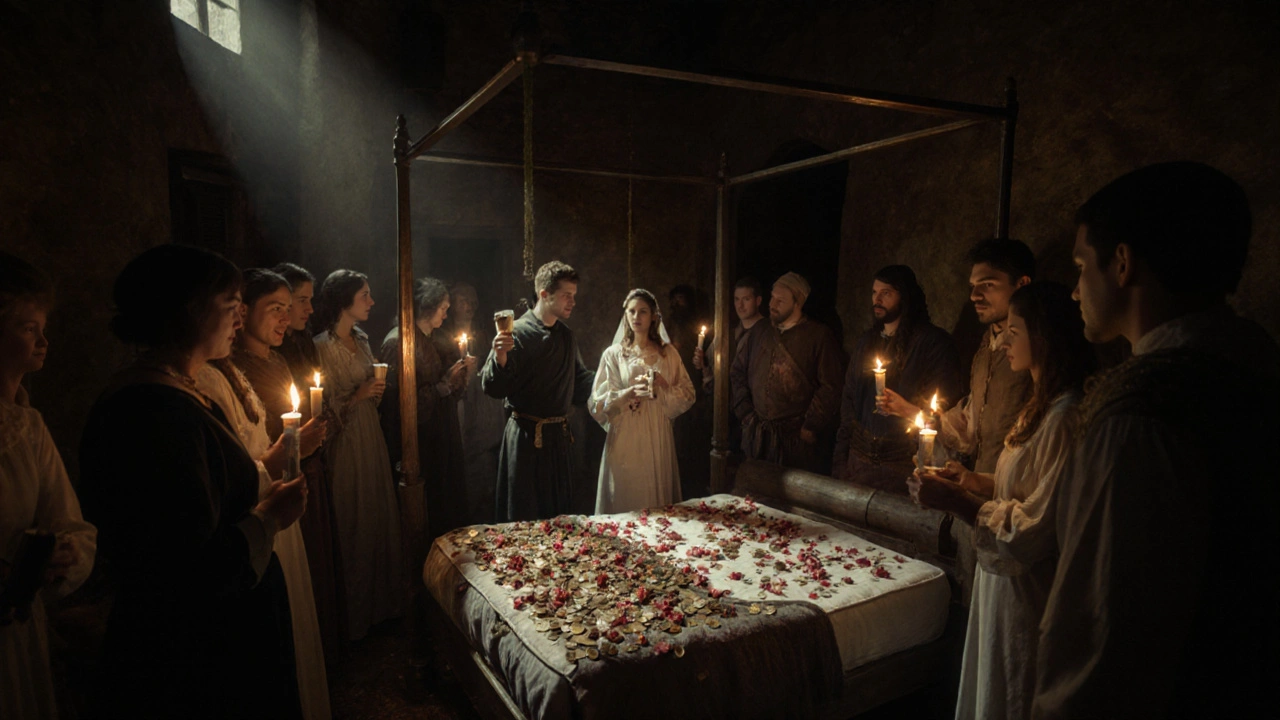
Bedding Ceremonies: How Communities Once Validated Marriage Through Consummation Rituals
Nov 24 2025 / EconomicsBedding ceremonies were once common in medieval Europe, where communities watched newlyweds consummate their marriage to legally validate the union. This practice shaped inheritance, religion, and gender norms-and its echoes survive in today's wedding traditions.
VIEW MORE