Classical Greece and the Roots of Western Sexuality
When we talk about classical Greece, the civilization that flourished between 800 and 300 BCE and laid the foundations for Western philosophy, politics, and art. Also known as Ancient Greece, it was a society where sex wasn’t hidden—it was studied, debated, and woven into daily life. Unlike later cultures that tied sex tightly to sin or reproduction, classical Greece saw desire as natural, even noble—when expressed in the right context. This wasn’t wild freedom; it was a strict code, shaped by age, status, and gender. The most famous example? pederasty, a socially accepted relationship between an older man and a younger male, meant to educate and mentor, not just satisfy. It wasn’t about homosexuality as we understand it today—it was about hierarchy, mentorship, and the performance of masculinity.
Women in classical Greece lived under very different rules. Their sexuality was controlled—by fathers, husbands, and laws. Marriage was about producing legitimate heirs, not love. Yet, even in silence, women found ways to express desire. Courtesans, or hetaerae, highly educated female companions who engaged in intellectual and sexual relationships with elite men. Unlike married women, they could speak publicly, travel freely, and influence politics. They weren’t prostitutes in the modern sense—they were cultural figures, sometimes more powerful than wives. Meanwhile, male same-sex relationships were celebrated in art and poetry, while female same-sex desire was barely recorded. When it was mentioned, it was often dismissed, mocked, or erased. This isn’t just history—it’s the origin of how we still treat male and female sexuality differently today.
Classical Greece didn’t have the same categories we do—gay, straight, bisexual. Instead, it had roles: active and passive, older and younger, citizen and outsider. Pleasure was part of life, but always tied to power. The body was a canvas for social order. This is why the ruins of Greek temples still whisper about more than gods—they show us how deeply sex, politics, and identity were linked. What you’ll find in the posts below isn’t just ancient history. It’s the blueprint for modern shame, silence, and struggle around gender, desire, and who gets to define what’s normal.
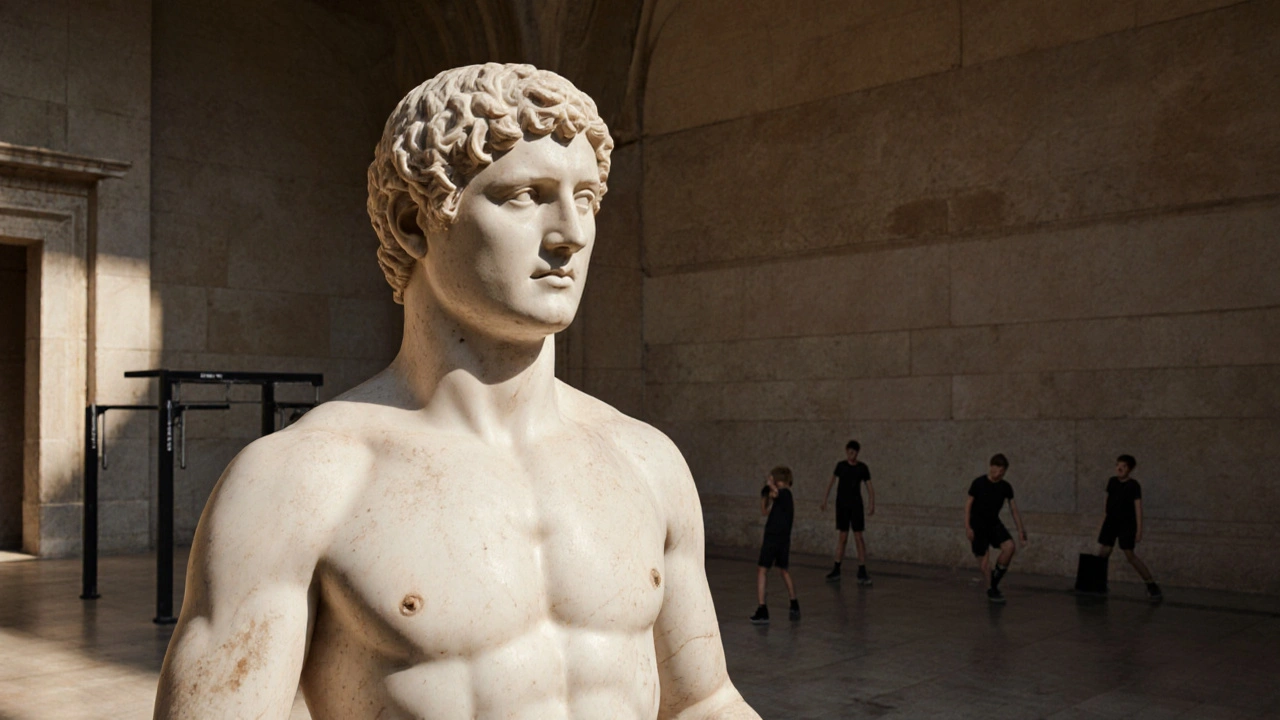
Male Beauty Ideals in Classical Greece: Youth, Kalokagathia, and Desire
Nov 15 2025 / History & ArchaeologyKalokagathia was the ancient Greek ideal that fused physical beauty, moral virtue, and intellectual strength in the male citizen. This article explores how youth, desire, and public training shaped Athenian identity-and why it still echoes today.
VIEW MORE