Constructivism in Sex and Gender History: How Social Forces Shape Desire
When we talk about constructivism, the idea that human experiences like gender, sexuality, and desire are shaped by culture and society rather than biology alone. Also known as social constructionism, it challenges the belief that what we think of as "natural"—like who we love, how we express pleasure, or even what it means to be a man or woman—is really just a product of time, place, and power. This isn’t abstract theory. It’s the reason why Victorian doctors called masturbation a disease, why medieval marriages were about land deals, and why today’s LGBTQ+ people still fight to be seen in legal systems built for a different world.
Constructivism helps us understand why gender socialization, the process by which families, schools, and media teach children what behaviors fit their assigned sex starts the moment a baby is handed a blue or pink blanket. It explains why sexual identity, how people label their own desires and attractions can shift across cultures—bisexual erasure in one society, sacred same-sex rites in another. And it reveals why cultural norms, unwritten rules about what’s acceptable in love, sex, and relationships can silence women’s orgasms, erase lesbian history, or make men feel like failures for not being "tough enough." These aren’t accidents. They’re built.
Look at the posts below. You’ll see how constructivism shows up everywhere: in the steam-powered vibrators sold to cure "hysteria," in the way Elizabethan poets wrote about dildos to mock male impotence, in the legal battles over who gets to marry, who gets housing, who gets to say no. None of these were inevitable. They were chosen—by doctors, lawmakers, poets, and parents. And because they were made, they can be unmade. What you’re about to read isn’t just history. It’s a map of how power works in the bedroom, the courtroom, and the mind—and how people fought back when they were told their desires were wrong.
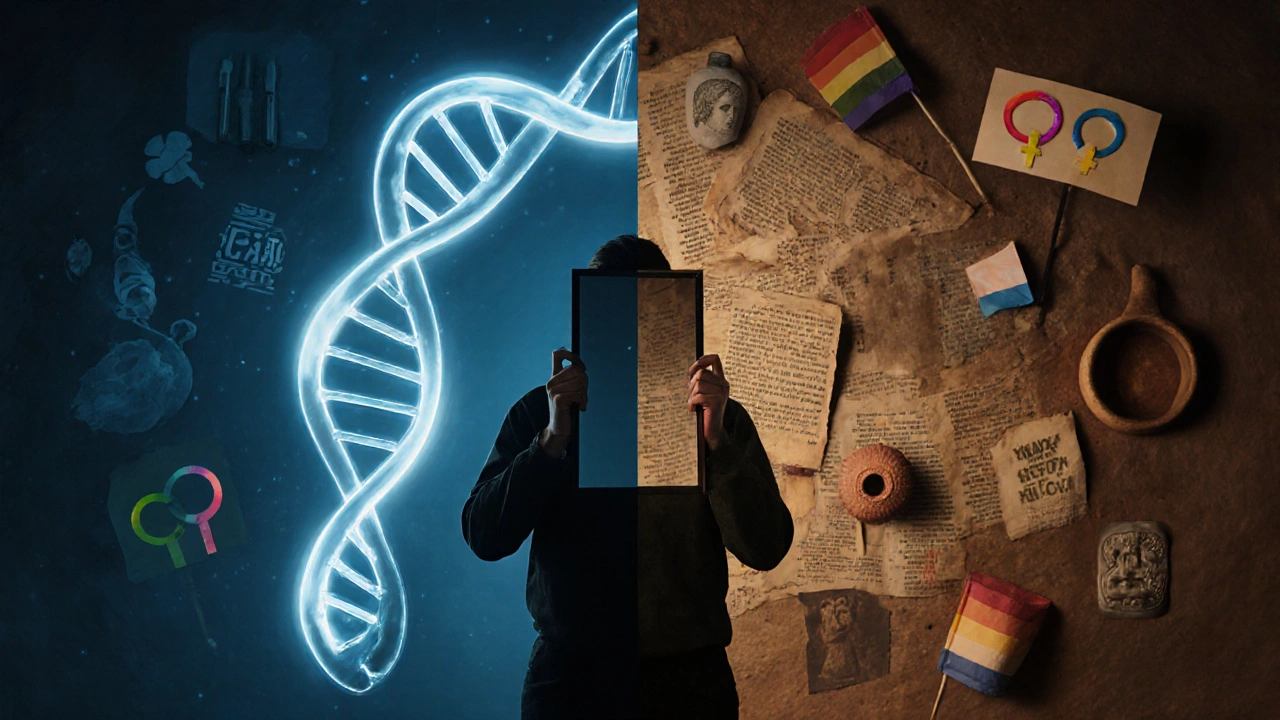
Constructivism vs Essentialism: How We Understand Sexuality Today
Oct 27 2025 / LGBTQ+ HistoryThe debate between constructivism and essentialism shapes how we understand sexual identity. Is sexuality innate or shaped by culture? This article explores the history, politics, and personal impact of both views-and why the truth may lie somewhere in between.
VIEW MORE