Domestic Labor: The Hidden Work That Shaped Gender, Power, and Sex
When we talk about domestic labor, the unpaid work of cooking, cleaning, childcare, and emotional care that keeps households running. Also known as invisible labor, it’s the foundation of every family, economy, and gender system—and yet it’s never been counted as real work. For centuries, this work was treated like a woman’s natural duty, not something that needed pay, recognition, or even discussion. But domestic labor didn’t just happen in the kitchen—it shaped laws, sex, power, and who got to be seen as human.
Think about the Victorian separate spheres ideology, the idea that men belonged in public life and women were confined to the home. Also known as private vs. public roles, this system turned housework into a moral obligation, not a job. Women who stayed home weren’t just caring—they were being controlled. And that control bled into sex. If a woman’s value was tied to her ability to manage a home, her body became another space to be managed. That’s why the myth of the "passive" woman, the "hysterical" woman, even the "frigid" woman, took root. Her sexuality was only relevant if it served the household—marriage, reproduction, obedience.
Domestic labor didn’t just silence women—it erased their pleasure. When your entire identity was built around cleaning, feeding, and soothing others, your own needs became an afterthought. That’s why the fight for female orgasm wasn’t just about anatomy—it was about reclaiming time, space, and autonomy. Anne Koedt didn’t just write about the clitoris; she challenged the idea that a woman’s worth was measured by how well she served others. And when feminists in the 1970s demanded wages for housework, they weren’t asking for a paycheck—they were demanding to be seen as full people.
Today, domestic labor still hides in plain sight. Men still do less than half the housework, even when they work full-time. LGBTQ+ couples still navigate who cleans, who remembers birthdays, who holds the emotional weight—often without ever talking about it. And in sex work, the line between care work and sexual labor blurs. Escorts often do more than sex—they listen, cook, comfort, manage schedules. That’s domestic labor too, just paid. The same system that made women’s unpaid work invisible now tries to shame women for doing similar work for money.
What you’ll find below isn’t just history. It’s the story of how domestic labor built the rules of sex, power, and gender—and how people are finally rewriting them. From steam-powered vibrators sold to treat "hysteria" to medieval marriages that were really property deals, these posts show you how the kitchen, the bedroom, and the courtroom are all connected. You’ll see how silence around housework led to silence around desire. How economic control led to sexual control. And how breaking one chain meant breaking them all.
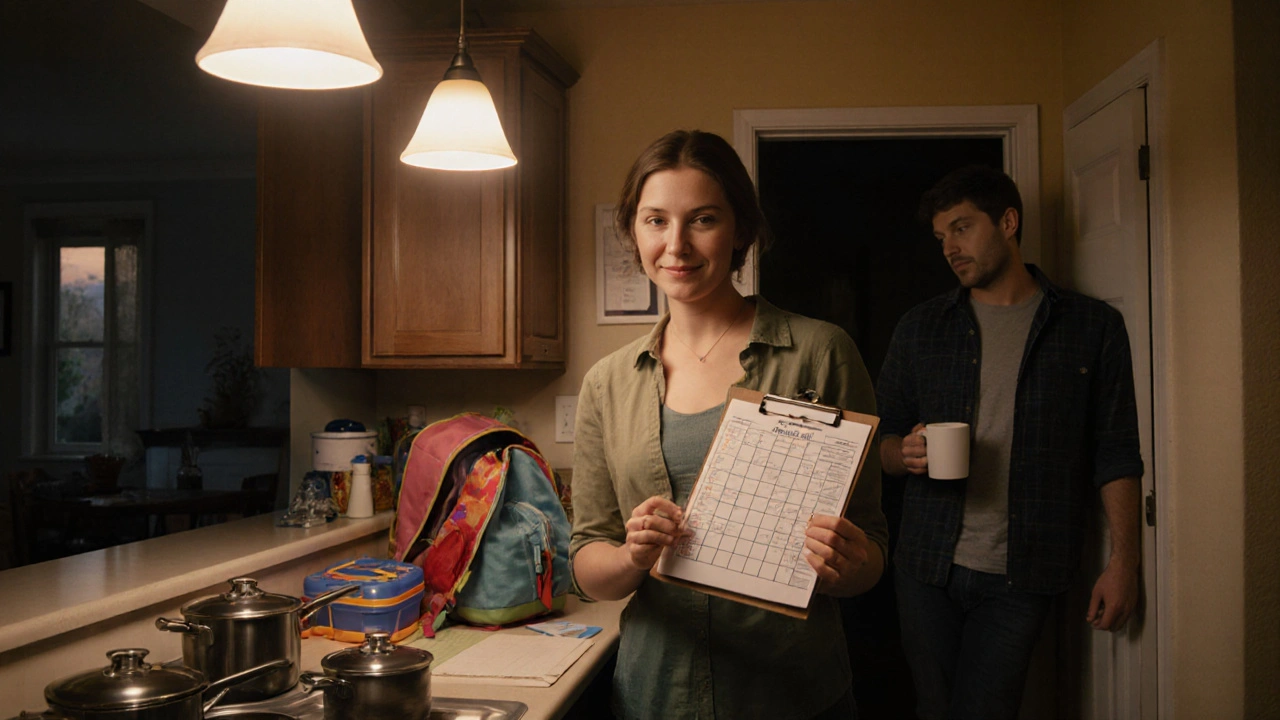
Domestic Labor and the Second Shift: Who Does What at Home?
Oct 24 2025 / EconomicsWomen still do nearly twice as much unpaid housework and childcare as men-even when they work full-time. This 'second shift' drains time, energy, and mental health. Data shows the gap persists across races and income levels, and real change requires more than good intentions.
VIEW MORE