Ediacaran fossils: Ancient life that changed how we see evolution
When you think of ancient life, you probably picture dinosaurs or woolly mammoths. But long before those creatures walked the Earth, Ediacaran fossils, the earliest known complex multicellular organisms from 635 to 541 million years ago. Also known as Ediacaran biota, these strange, soft-bodied creatures left behind impressions in rock that stunned scientists when they were first discovered in the 1940s. They didn’t have bones, shells, or even clear heads and tails. Some looked like fronds, others like tires or pancakes. And yet, they were alive—feeding, growing, and reproducing in shallow seas before the Cambrian explosion turned life into something we’d recognize today.
These fossils aren’t just odd shapes in stone. They’re proof that complex life didn’t suddenly appear with the Cambrian explosion. For decades, scientists thought animals emerged out of nowhere around 540 million years ago. But Ediacaran fossils, a collection of soft-bodied organisms from the late Precambrian era show that evolution had been quietly building for tens of millions of years. Some researchers believe these creatures were early animals, others think they were a failed experiment in multicellular life—something entirely different from anything alive now. Either way, they challenge the idea that evolution moves in straight lines. They also connect to deeper questions about early multicellular organisms, the first life forms to develop specialized cells working together, and how they survived without predators, eyes, or nervous systems.
The Cambrian explosion, the rapid diversification of animal life that followed the Ediacaran period didn’t come out of thin air. It was built on the groundwork laid by these quiet, ancient forms. Some Ediacaran species may have been ancestors to modern animals; others vanished without a trace. Their existence forces us to rethink what counts as "life" and how evolution works—not just as progress, but as trial, error, and survival under extreme conditions. These fossils remind us that the history of life isn’t a ladder. It’s a tangled bush, full of dead ends and surprises.
What you’ll find in the posts below isn’t just about rocks and fossils. It’s about how we interpret the past—how science, power, and culture shape what we call "truth." From how sexual identity was medicalized to how consent became a legal concept, these stories show that history isn’t fixed. It’s rewritten as new evidence appears. Just like Ediacaran fossils forced scientists to start over, the articles here challenge old assumptions about gender, sexuality, and power. You’ll read about censorship, medical abuse, forgotten identities, and hidden truths—all rooted in the same idea: what we think we know today might be overturned tomorrow.
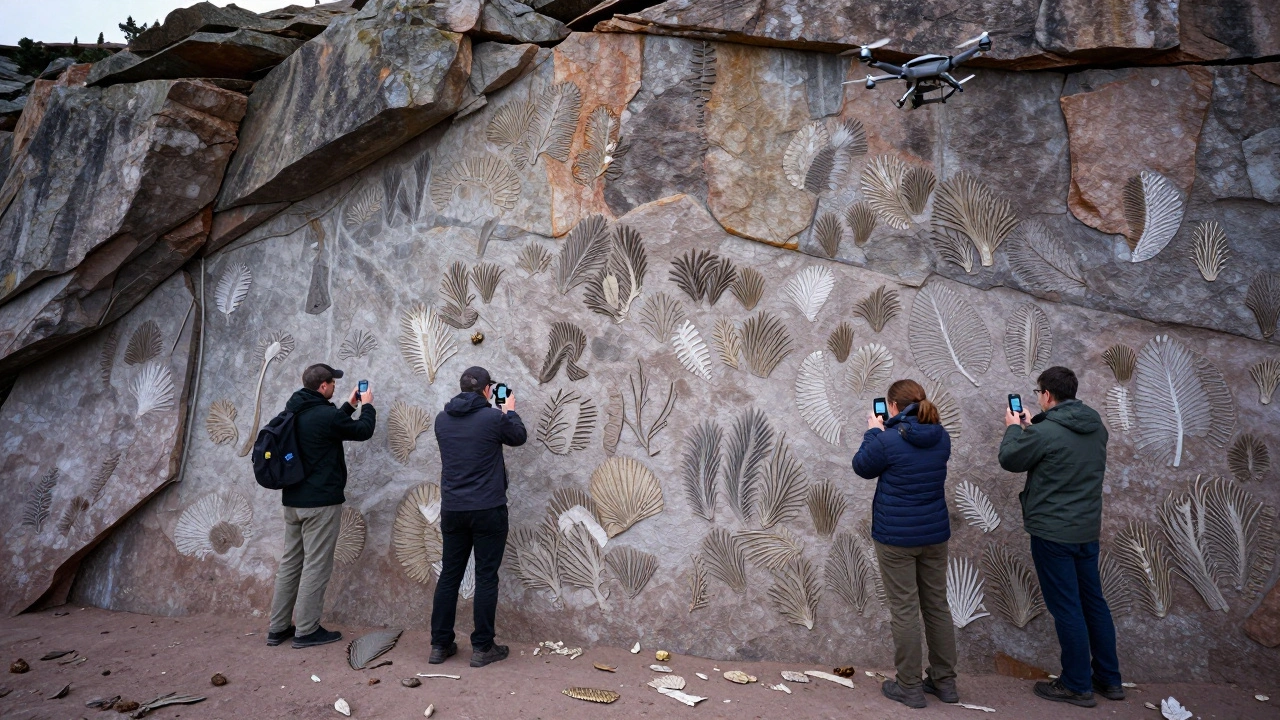
The Fossil Record of Sex: How Scientists Uncover Ancient Reproductive Strategies
Dec 7 2025 / History & ArchaeologyPaleontologists are uncovering how ancient life reproduced over 500 million years ago using spatial analysis, embryonic fossils, and advanced imaging. Discover how sex evolved long before dinosaurs-and why it changes everything we thought about early life.
VIEW MORE