Fa'afafine: Understanding Samoa's Third Gender and Its Cultural Roots
When we talk about gender, we often think in binary terms—man or woman. But in Samoa, there’s another way: Fa'afafine, a recognized gender identity in Samoan culture that encompasses individuals assigned male at birth who live as a blend of masculine and feminine roles. Also known as fa'afafine, they are not seen as a deviation, but as a natural and valued part of the social fabric. Unlike Western labels like transgender or non-binary, fa'afafine are rooted in centuries of Polynesian tradition, where gender is fluid, functional, and deeply tied to community needs.
Fa'afafine are often raised from childhood to take on roles typically associated with women—caring for elders, managing households, organizing ceremonies—while still being fully accepted as men in other contexts. They don’t seek to "become" women; they simply exist outside the strict binary. This identity isn’t about sexuality—it’s about social function, kinship, and cultural continuity. Their presence is so normalized in Samoa that families often celebrate their arrival, seeing them as a gift that brings balance. This contrasts sharply with how many Western societies still pathologize gender nonconformity. The fa'afafine identity also connects to broader Pacific Islander concepts like māhū in Hawai‘i and a third gender role that carries spiritual and cultural responsibilities, and fakaleiti in Tonga, showing a regional pattern of gender diversity long before Western terms existed.
What makes fa'afafine so powerful isn’t just their visibility—it’s how they’ve resisted erasure. While colonial missionaries tried to stamp out non-binary identities in the 1800s, fa'afafine held on, adapting without losing their meaning. Today, they’re teachers, artists, activists, and caregivers who keep Samoan traditions alive. Their existence challenges the idea that gender must be fixed, and their history reminds us that human diversity has always been part of our world—not a modern invention. The posts below explore how gender roles have been shaped, suppressed, and reclaimed across cultures—from Victorian ideals to Etruscan tomb art, from feminist breakthroughs to the quiet resilience of identities like fa'afafine. These stories aren’t just history. They’re living proof that gender has never been as simple as two boxes.
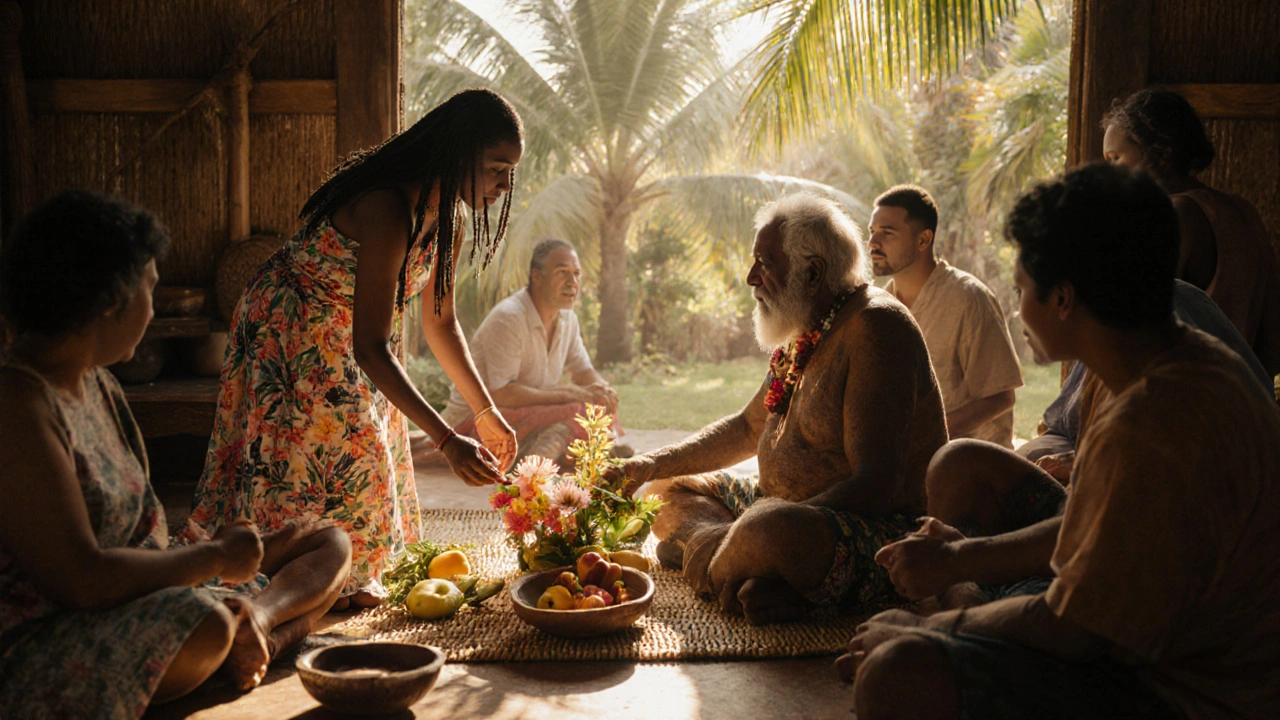
Fa'afafine of Samoa: Understanding the Traditional Third Gender Role
Nov 12 2025 / LGBTQ+ HistoryFa'afafine are a traditional third gender in Samoa, with roles in caregiving, ceremony, and family life that predate colonial influence. Unlike Western gender models, they exist outside the male-female binary and are culturally accepted-not as deviant, but as essential.
VIEW MORE