Fa'afafine Population Calculator
Estimate Fa'afafine Population
The Samoan culture has a long-standing tradition of fa'afafine, recognized as a third gender category. Based on estimates, approximately 0.5% of Samoa's population identify as fa'afafine.
Estimated fa'afafine population:
0 people
0.00% of total population
Important note: This calculator is based on the article's estimate that approximately 0.5% of Samoa's population identify as fa'afafine. The actual number may vary based on regional and cultural differences.
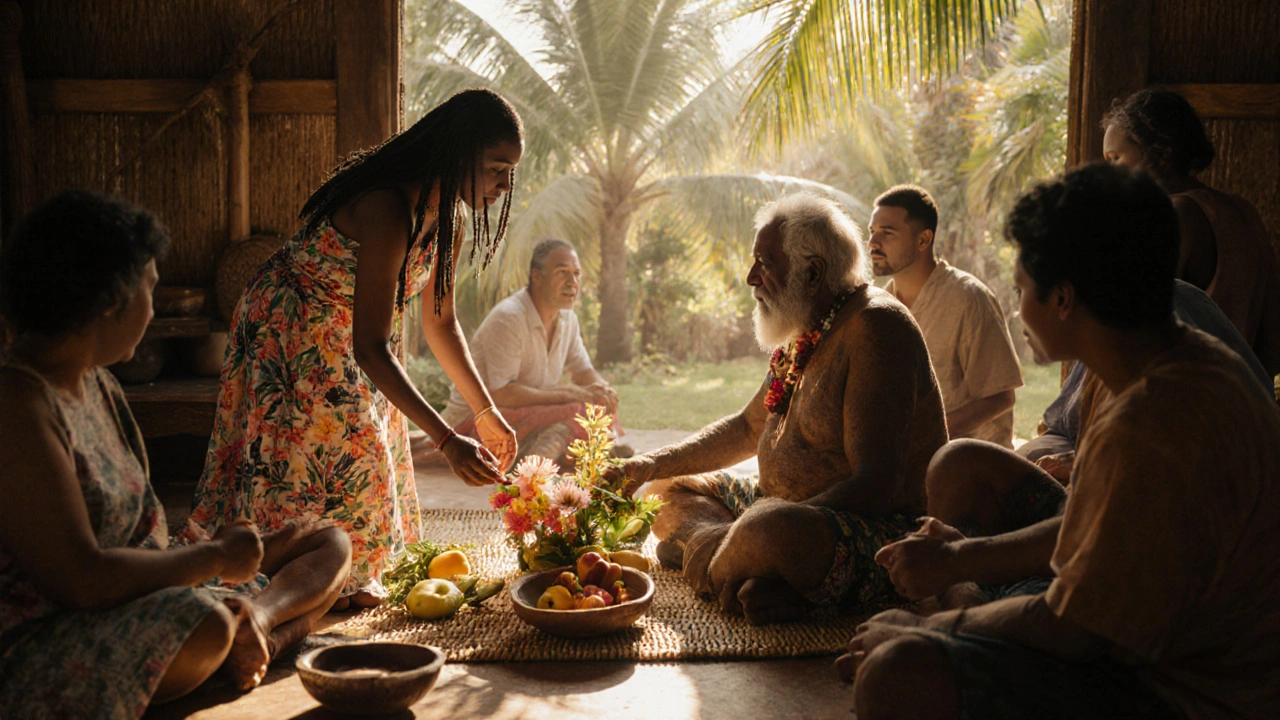
When you think of gender, you probably think of two options: male or female. But in Samoa, there’s a third path-long before Western ideas of transgender identity ever took root. The fa'afafine aren’t a modern invention. They’re not a trend. They’re a deeply rooted part of Samoan life, woven into family, ceremony, and community for centuries. And they’re still here today, living, working, and shaping culture in ways that challenge everything Western society assumes about gender.
What Exactly Is a Fa'afafine?
| Aspect | Description |
|---|---|
| Assigned at birth | Typically male, but not always identified early |
| Gender expression | Feminine in manner, dress, and speech; often blends traits |
| Identity category | Third gender-separate from male and female |
| Sexual orientation | Not defined by it; may be attracted to men, women, or both |
| Cultural role | Family caregiving, elder care, cultural mediation, ceremonial performance |
Some families recognize a child as fa'afafine from a young age. Others notice it later-when a boy naturally takes on cooking, cleaning, or caring for siblings. It’s not forced. It’s often welcomed. In families with many sons and no daughters, raising one boy as fa'afafine fills a practical need: someone to handle domestic duties, care for elders, and keep the household running smoothly. This isn’t seen as a loss or a mistake. It’s a contribution.
A Role Rooted in Pre-Colonial Samoa
Before missionaries arrived, before colonial laws tried to erase it, fa'afafine were already part of Samoan society. There’s no record of them being "invented" or "discovered." They were simply there. Samoan elders have said plainly: "We have always been around." This isn’t just folklore. Anthropological studies from the 2010s confirm that fa'afafine roles existed before Christianity took hold in the Pacific. Colonial powers tried to label them as deviant or immoral, but Samoan communities never fully accepted that view. The role survived because it served a real purpose.
Unlike Western transgender identities, which often involve medical transition or a shift from one binary gender to another, fa'afafine don’t see themselves as becoming something else. They are what they are. Their identity isn’t about rejecting masculinity or embracing femininity-it’s about existing outside that binary entirely. They move between worlds, but they don’t belong to either.
How Fa'afafine Serve Their Communities
What makes fa'afafine so accepted isn’t just tolerance-it’s value. They do work that others often avoid. They care for aging parents. They teach younger generations about hygiene, relationships, and sexuality-topics that are too sensitive for men or women to discuss openly. In a culture where direct talk about sex is taboo, fa'afafine use humor, storytelling, and performance to open the door.
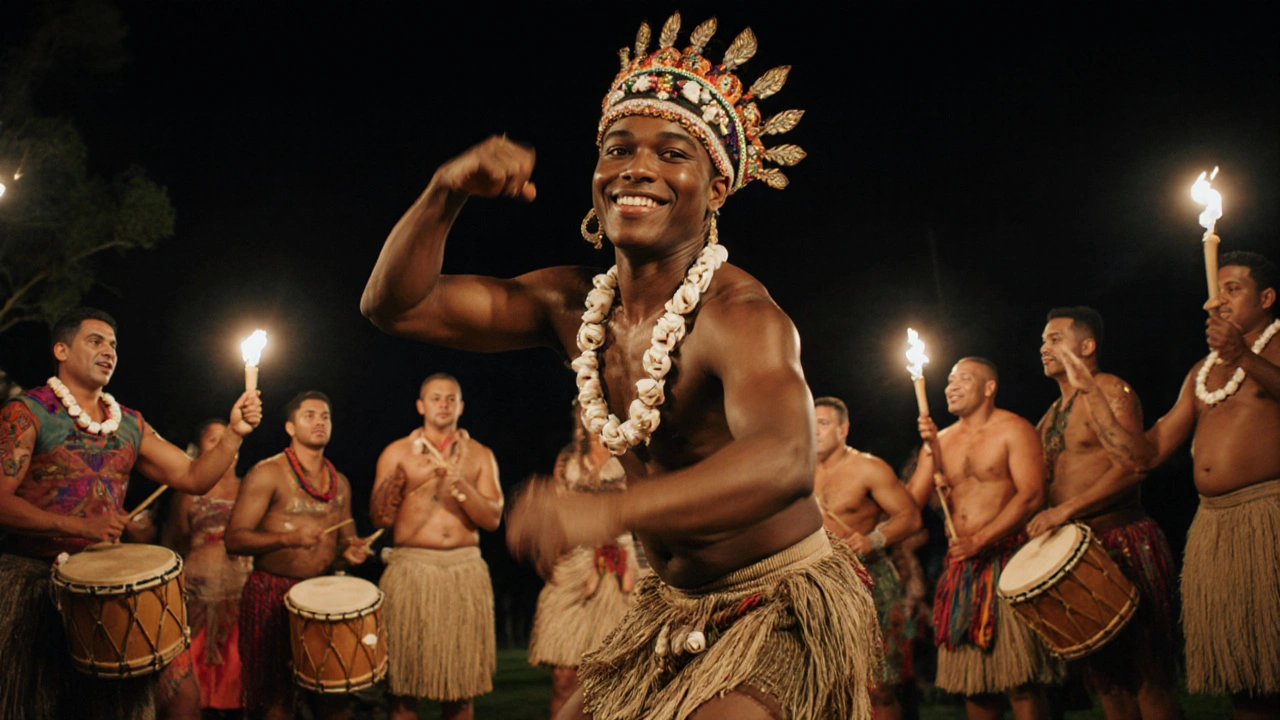
They also perform in traditional dances. One example is the taupou, a ceremonial dance usually performed by young women. Fa'afafine take on this role with grace, but they also add subtle satire-mocking colonial ideals of purity and modesty through exaggerated movements and playful gestures. It’s not just performance. It’s commentary. It’s resistance wrapped in beauty.
In many families, a fa'afafine is the glue. They organize events, mediate arguments, remember birthdays, and keep traditions alive. Their presence is so normalized that heterosexual men who form relationships with fa'afafine don’t see themselves as gay. They see themselves as being with a woman-because in Samoan terms, that’s what a fa'afafine is: a woman in function, spirit, and social role.
Fa'afafine and Sexual Orientation: A Crucial Distinction
One of the biggest misunderstandings outside Samoa is assuming fa'afafine are gay men. They’re not. Their identity is about gender, not who they love. A fa'afafine can be attracted to men, women, or neither. Their sexuality is separate from their gender role.
This distinction matters because Western frameworks force everything into one box: if you’re attracted to men, you’re gay. If you’re assigned male at birth and dress femininely, you’re transgender. But in Samoa, those boxes don’t overlap. You can be fa'afafine and straight. You can be fa'afafine and in a long-term relationship with a man. Neither changes your identity.
This clarity is rare. In many parts of the world, gender identity and sexual orientation are tangled together, causing confusion, stigma, and mislabeling. Fa'afafine offer a different model-one where gender is about social function, not attraction.
Challenges and Limits to Acceptance
Acceptance doesn’t mean total freedom. Fa'afafine are valued for their roles-but only if they stay within expected boundaries. Those who openly express romantic desires, flirt too boldly, or reject caregiving duties often face quiet disapproval. Public decorum matters. Cultural acceptance has limits.
Some fa'afafine who perform in ways that challenge conservative norms-like wearing very revealing outfits or making overt sexual jokes-can be seen as undermining the very respect their role depends on. It’s not about being "too feminine." It’s about disrupting the balance that keeps the system working.
There’s also the issue of migration. When fa'afafine move to Australia, New Zealand, or the U.S., they often find no equivalent role. In Western cities, they’re labeled as gay men or transgender women-and neither fits. One fa'afafine in Sydney told an interviewer: "In Samoa, in that Samoan context, it might not work here. It probably won’t work here." That’s the reality for many in the diaspora.
The Broader Pacific Picture
Samoa isn’t alone. Across Polynesia, similar roles exist. In Tahiti, there’s the mahu. In Tonga, it’s the fakalaiti. In Hawaii, there’s the māhū. These aren’t random similarities. They’re cultural patterns-indigenous systems that recognized gender diversity long before Western science tried to classify it.
These roles all share key traits: they’re socially assigned, culturally functional, and not tied to Western medical models. They don’t require hormones or surgery. They’re about behavior, responsibility, and community contribution. And they’ve survived colonization, missionary pressure, and globalization-not because they were trendy, but because they worked.
Modern Fa'afafine: Beauty Pageants and Advocacy
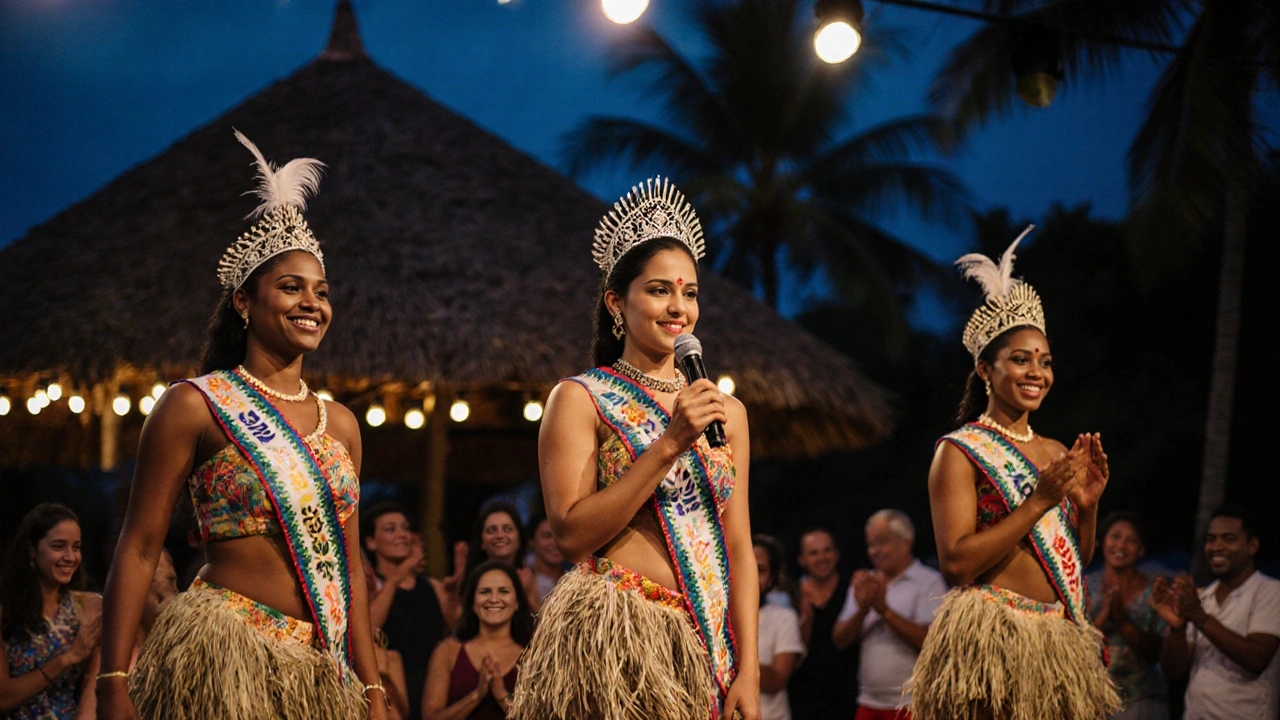
Today, the fa'afafine community is organizing. The Samoan Fa'afafine Association, led by Ymania Brown, runs beauty pageants-not just for fun, but to raise money for elderly care homes. These events blend tradition with modern activism. Contestants wear elaborate costumes, perform traditional dances, and speak about mental health, education, and family acceptance.
These pageants are more than entertainment. They’re a way to reclaim visibility on their own terms. They’re not trying to be like Western drag queens or transgender activists. They’re asserting their place in Samoan culture, using tools that already exist-beauty, performance, charity-to reinforce their value.
There are an estimated 2,000 to 3,000 fa'afafine in Samoa today-about half a percent of the population. That might sound small, but in a tight-knit society where everyone knows everyone, that’s a significant presence. And it’s growing, not fading.
Why Fa'afafine Matter Beyond Samoa
What the world needs to understand is that fa'afafine aren’t a curiosity. They’re a living example of how gender can be understood differently. They prove that gender diversity isn’t a Western invention. It’s not new. It’s not rare. It’s been part of human societies for centuries.
For LGBTQ+ people in places where being openly queer means losing your family, your job, or your safety, fa'afafine offer something rare: a model of acceptance rooted in culture, not politics. They show that gender doesn’t have to be a battleground. It can be a role. A duty. A gift.
As cultural critic Leilani Holmes said, "Fa'afafine offers valuable insight into how other cultures have long understood and accepted gender beyond a male/female dichotomy." In a world increasingly obsessed with labels and categories, fa'afafine remind us that sometimes, the most powerful thing you can do is simply exist-and let your existence serve others.