Fa'afafine Culture: Gender Diversity in Samoa and Beyond
When we talk about gender, we often assume it’s just male or female. But in Samoa, there’s a long-standing identity called Fa'afafine, a recognized third gender in Samoan society that embodies both masculine and feminine qualities, accepted as a natural part of community life. Also known as fa'afafine, this identity isn’t seen as a choice or a phase—it’s a lived reality passed down through generations.
Fa'afafine people are often assigned male at birth but grow into roles that include caregiving, household management, and community leadership—traditions once thought to belong only to women. Unlike Western ideas that treat gender as a binary, Fa'afafine culture doesn’t pathologize or erase this identity. Instead, it integrates it. This isn’t just about identity—it’s about social function. Fa'afafine individuals often serve as mediators, storytellers, and caretakers, filling gaps that rigid gender roles leave open. Their presence challenges the idea that gender must be fixed, and their history stretches back centuries, long before modern LGBTQ+ movements existed.
This cultural framework connects directly to other global traditions like the Two-Spirit people of Indigenous North America, the Hijra of South Asia, and the Kemane of Thailand. Each of these identities shows that gender diversity isn’t new or rare—it’s been part of human societies for as long as we have records. The Fa'afafine experience stands out because it’s not hidden or stigmatized in the same way. In Samoa, being Fa'afafine doesn’t mean you’re fighting for acceptance—you’re already part of the fabric. That’s why looking at Fa'afafine culture isn’t just about understanding Samoa. It’s about rethinking what gender even means.
What you’ll find in the posts below are stories that echo this same truth: gender has never been simple. From Victorian ideas that locked women into the home, to ancient Etruscan tombs that celebrated pleasure as sacred, to feminist breakthroughs that redefined female orgasm—these histories show how power, culture, and silence have shaped who we’re allowed to be. The Fa'afafine way isn’t an outlier. It’s a mirror. And what it reflects is a world where gender isn’t a cage—it’s a spectrum, lived with dignity, history, and joy.
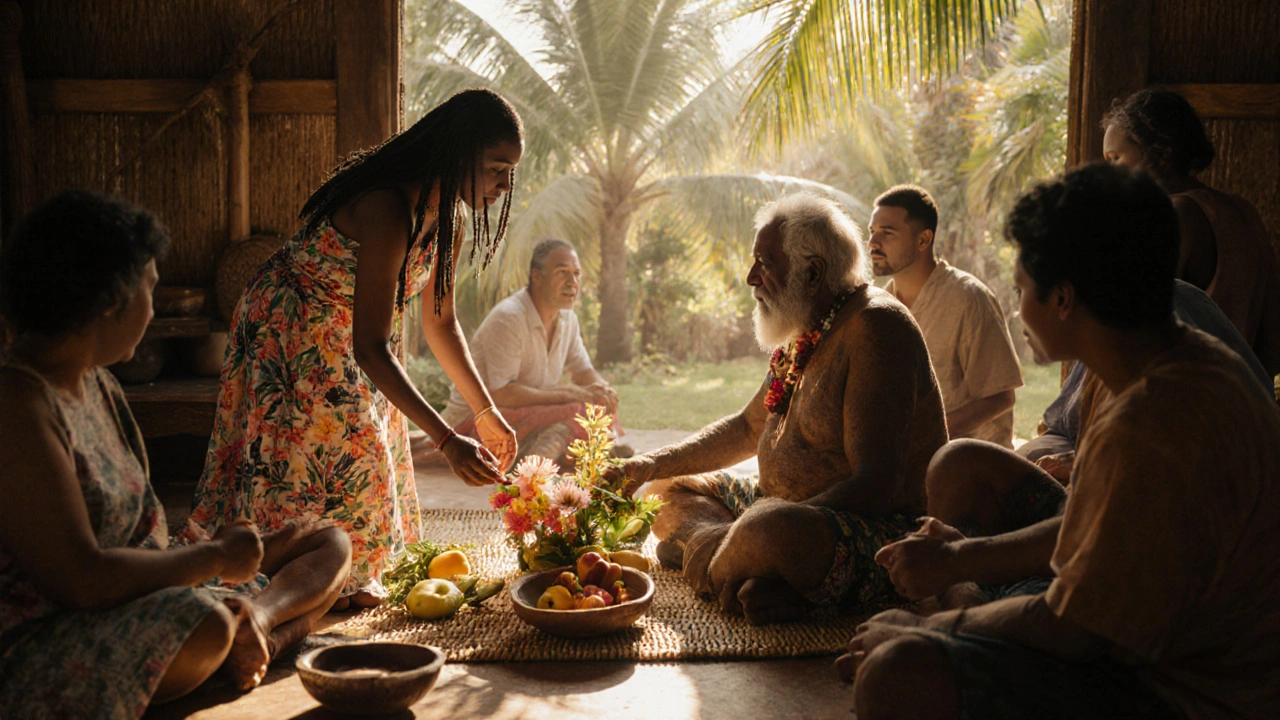
Fa'afafine of Samoa: Understanding the Traditional Third Gender Role
Nov 12 2025 / LGBTQ+ HistoryFa'afafine are a traditional third gender in Samoa, with roles in caregiving, ceremony, and family life that predate colonial influence. Unlike Western gender models, they exist outside the male-female binary and are culturally accepted-not as deviant, but as essential.
VIEW MORE