Fossil Record of Sex: How Evolution, Culture, and Power Shaped Human Desire
When we talk about the fossil record of sex, the physical and cultural evidence left behind by how humans and their ancestors reproduced, expressed desire, and organized intimacy. Also known as the archaeological trace of sexuality, it includes everything from ancient tomb paintings to legal codes banning masturbation—evidence that sex has never been just biology, but always power, belief, and survival. This isn’t about bones alone. It’s about what those bones were doing, who was allowed to do it, and why society kept trying to control it.
The two-fold cost of sex, the evolutionary disadvantage where sexual reproduction requires twice the energy of cloning, yet still dominates complex life is one of biology’s biggest puzzles. Why did sex stick around? Because it helped us fight parasites, clean out bad mutations, and adapt faster. But while evolution favored sex for survival, culture turned it into a tool for control. In medieval Europe, marriage wasn’t about love—it was a dowry system, a legal and economic contract between families to transfer land, wealth, and political influence. In Victorian times, female pleasure was erased from medicine because it threatened the idea that women were pure, passive, and meant only for childbearing. Even today, the consent, the legal and moral agreement that makes sexual contact ethical we take for granted was once unheard of—women had no legal right to refuse their husbands until the late 1900s.
What you’ll find here isn’t a dry list of ancient facts. It’s the messy, real story of how sex became weaponized, hidden, celebrated, and banned—from the fossil record of sex in Etruscan tombs to the courtroom battles over who gets to define obscenity. You’ll see how the Hicklin Test, a 19th-century legal standard that banned anything that might corrupt vulnerable readers censored medical books, how non-consensual surgeries on intersex babies were called "corrections," and how lesbian history was scrubbed from archives because it didn’t fit the male-centered narrative. These aren’t footnotes. They’re the reasons we still fight over sex education, bodily autonomy, and who gets to speak about desire.
This collection doesn’t just show you what happened. It shows you how we got here—and why understanding the past is the only way to change what’s still broken. The fossil record of sex isn’t buried in rock. It’s in the laws, the silence, the myths, and the movements that refused to stay quiet.
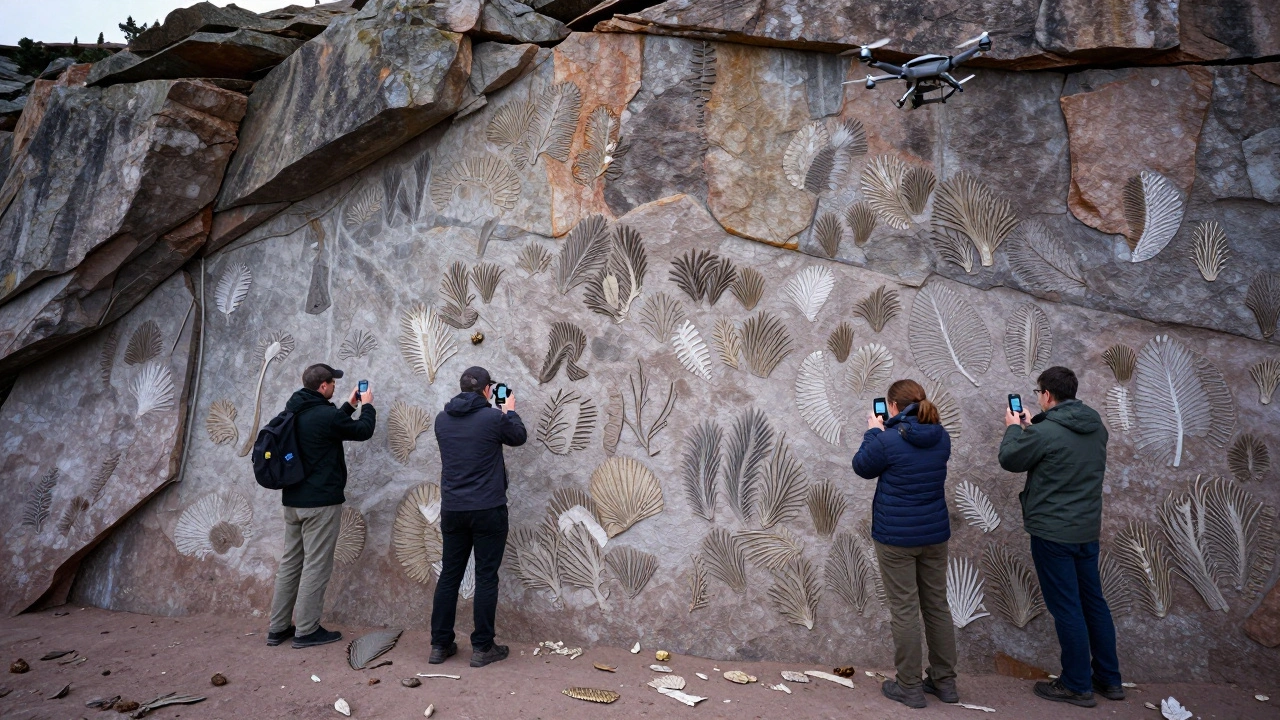
The Fossil Record of Sex: How Scientists Uncover Ancient Reproductive Strategies
Dec 7 2025 / History & ArchaeologyPaleontologists are uncovering how ancient life reproduced over 500 million years ago using spatial analysis, embryonic fossils, and advanced imaging. Discover how sex evolved long before dinosaurs-and why it changes everything we thought about early life.
VIEW MORE