Gametes: The Biological Basis of Sex, Reproduction, and Sexual History
When we talk about gametes, the specialized reproductive cells—sperm and egg—that combine to create new life. Also known as sex cells, they’re not just biological building blocks—they’re the reason sex exists at all. Without gametes, there’d be no reproduction, no evolution of sexual behavior, no cultural rituals around fertility, and no modern IVF clinics. They’re the silent drivers behind every human connection that leads to a child, every ancient fertility symbol, and every medical breakthrough in reproductive science.
Think about it: sperm, the tiny, mobile male gamete designed to travel and penetrate and egg, the large, nutrient-rich female gamete that waits and chooses aren’t just cells—they’re evolutionary strategies. The egg carries the tools to start a new life. The sperm’s only job is to get there first. That imbalance shaped everything: mating rituals, gender roles, even how societies viewed female fertility as something to control or worship. Ancient cultures didn’t just pray to fertility gods—they were reacting to the mystery of how a single sperm could change a woman’s body forever. The Etruscans painted sex scenes in tombs because they saw reproduction as sacred. Victorian doctors treated "hysteria" with vibrators because they didn’t understand ovulation—but they knew something happened inside women when gametes were involved.
Modern science still wrestles with gametes. Why does the female orgasm exist if it’s not needed for reproduction? Because our ancestors’ eggs required clitoral stimulation to release. Why do IVF clinics use HCG triggers? To mimic the natural signal that tells the egg to mature and be ready. Why do some people fear AI-generated porn? Because it simulates desire without gametes—without biology, without consequence. Gametes are the original sex technology. They’re why we have sex, why we fear it, why we celebrate it, and why we try to control it. Every article in this collection—whether it’s about Victorian masturbation myths, lesbian erasure, or Etruscan tomb paintings—connects back to this: life begins with two cells, and history begins with how we’ve tried to understand them.
What follows isn’t just a list of articles. It’s a map of how humans have tried to explain, control, celebrate, and erase the power of gametes across time. You’ll find stories of women using steam-powered vibrators to induce ovulation before doctors understood it. You’ll see how medieval dowries were about securing the future of gamete-driven lineages. You’ll learn why the female orgasm was dismissed for centuries, and how science finally caught up. This is the real history of sex—not just the acts, but the cells that made them matter.
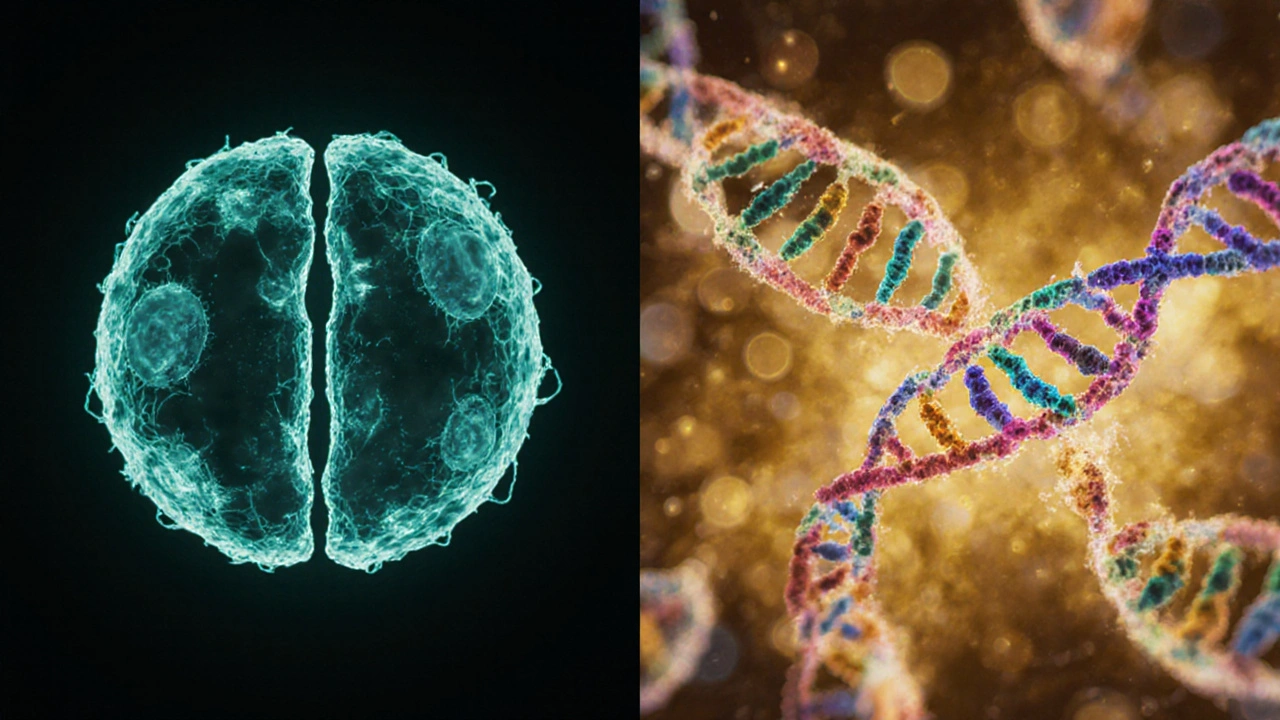
From Asexual Cloning to Gametes: How Sexual Reproduction Changed Evolution Forever
Nov 12 2025 / Health & WellnessSexual reproduction, despite its costs, dominates life on Earth because it creates genetic diversity that helps species survive parasites, disease, and change. This evolutionary shift from cloning to gametes reshaped biology forever.
VIEW MORE