Gender Relations in Ancient Rome
When we think of gender relations in ancient Rome, the structured, often rigid ways men and women interacted in public life, family, and sexuality under Roman law and custom. Also known as Roman gender dynamics, it wasn’t just about who did what—it was about who controlled what, and how sex, status, and shame kept the system running. This wasn’t a society of equals. Men held legal power, owned property, and could divorce wives at will. Women, even those from wealthy families, were legally minors under male guardianship until they had three children. But power wasn’t always visible. Roman women ran households, managed finances, and influenced politics through marriage alliances and social networks. Their influence was real—but always indirect.
The line between public and private was sharp, but not absolute. While men dominated the Senate and the battlefield, women shaped the home as a center of political strategy. A wife’s ability to produce heirs wasn’t just personal—it was economic and dynastic. Roman masculinity, the expectation that men be dominant, sexually active, and emotionally controlled. Also known as virtus, it was tied to military success and self-mastery, but also to controlling the sexuality of others—wives, slaves, and boys. Meanwhile, Roman women, the diverse group of freeborn, enslaved, and elite women navigating a system built for male authority. Also known as matronae, they were praised for modesty but often lived complex, sexually active lives behind closed doors. Prostitutes, entertainers, and even some wives had more sexual freedom than society admitted. Sex wasn’t just pleasure—it was a marker of status, a tool of control, and sometimes a form of rebellion.
What you’ll find here isn’t a dry history lesson. It’s the messy, real stories behind the statues and laws: how women used cosmetics as political signals, how male anxiety over sexual performance shaped medical myths, and how same-sex relationships were accepted in some contexts but punished in others. These articles pull back the curtain on what Roman men and women actually did in private—when no one was watching, and the law couldn’t reach. You’ll see how power flowed through bedrooms, brothels, and burial tombs, and how the same tensions—control, shame, desire, and resistance—are still alive today.
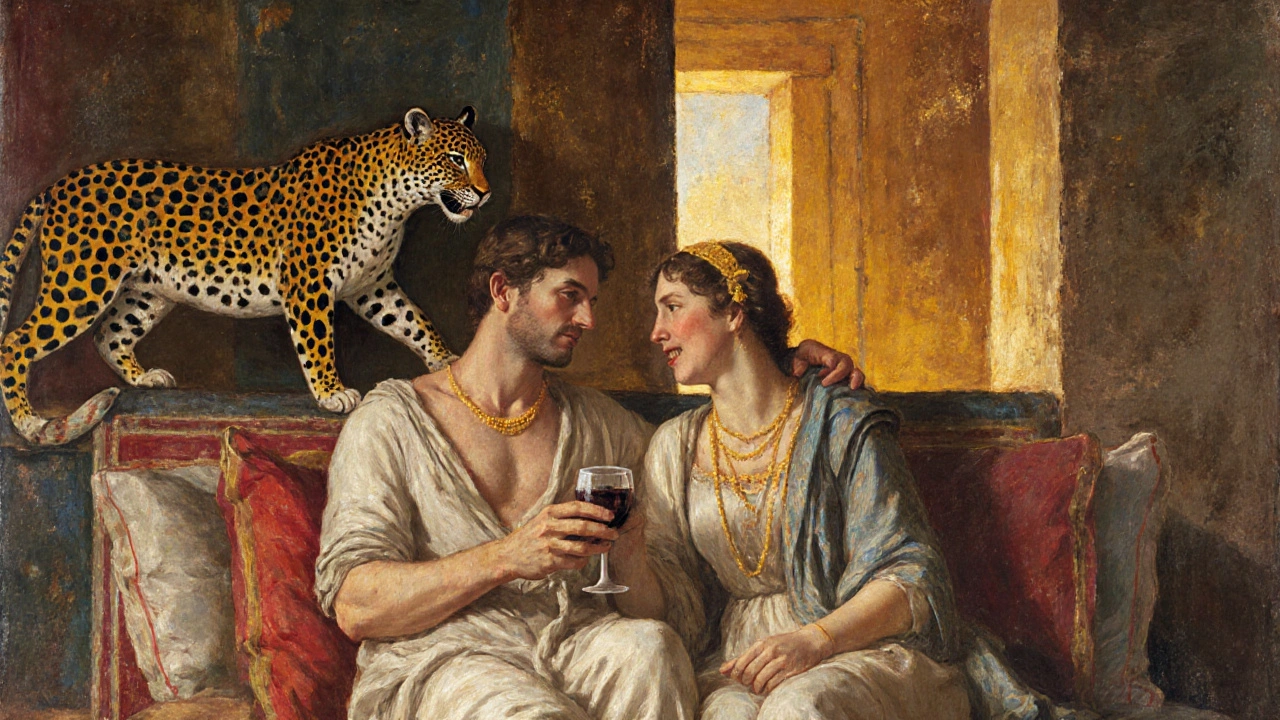
Banquet Scenes and Shared Reclining: How Etruscan Gender Relations Differed from Ancient Greece
Nov 4 2025 / History & ArchaeologyEtruscan banquet scenes reveal women reclining alongside men - a stark contrast to the male-only symposia of classical Athens. This difference reflects deeper cultural values around gender, power, and social equality in ancient Italy.
VIEW MORE