Ancient Gender Equality Comparison Tool
Comparison Results
Select an aspect and culture to view details.
When Etruscans Ate Together, Women Sat Right Beside Men
In ancient Greece, the symposium was a male-only affair - or so everyone thought for over a century. Textbooks, museum labels, even TV documentaries told us that respectable Greek women stayed home while men drank wine, debated philosophy, and reclined on couches in special rooms called androns. But if you walk into a museum in Rome, Florence, or Tarquinia and look at an Etruscan tomb painting from 500 BCE, you’ll see something different. Men and women, side by side, reclining on the same couches, holding cups, laughing, touching shoulders. No separation. No hidden rooms. Just shared space - and it wasn’t rare.
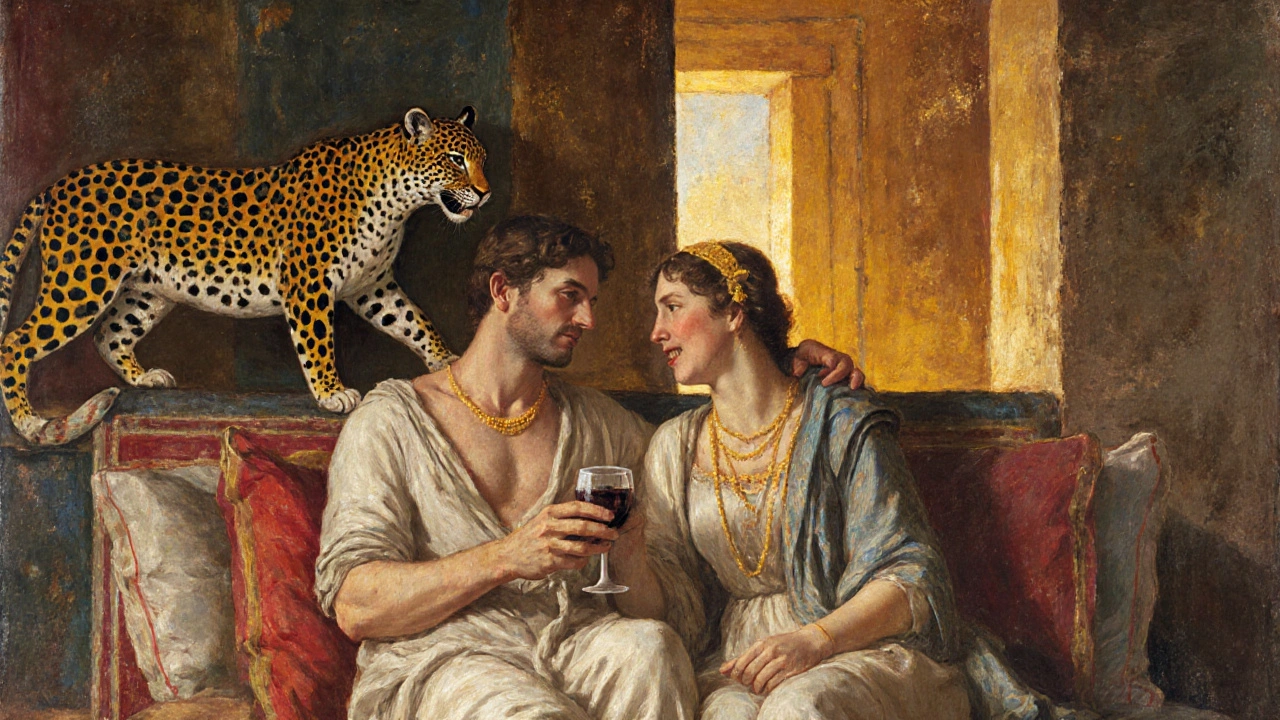
This wasn’t just artistic license. Archaeologists have found over 120 Etruscan banquet scenes across tombs in central Italy. In the Tomb of the Leopards (Tarquinia, c. 470 BCE), a woman reclines next to her husband, her hand resting on his arm. She wears jewelry, a fine robe, and a crown-like headband. She’s not serving. She’s not an entertainer. She’s a guest. And she’s not alone. In the Tomb of the Augurs, a woman holds a wine jug and leans into the conversation, her gaze fixed on the man across from her. These aren’t exceptions. They’re the norm.
Greece: The Myth of the Male-Only Symposium
For decades, scholars believed Greek women were completely excluded from symposia. The evidence seemed clear: Athenian pottery showed only men reclining, and literary sources like Xenophon’s Symposium described all-male gatherings. But that picture was incomplete - and misleading. The truth? Greek dining customs changed over time and varied wildly between city-states.
In classical Athens (5th-4th centuries BCE), respectable citizen women rarely appeared at symposia. They lived mostly indoors, managing households, weaving wool, and raising children. When men hosted parties, they hired hetairai - educated, often foreign women who could sing, dance, and converse. These women weren’t slaves, but they weren’t equals either. They were hired companions, separate from wives and daughters.
But earlier in Greek history? Things were different. In Homer’s Odyssey, Queen Arete dines openly with Odysseus and his guests. Helen of Sparta joins the conversation at a banquet with strangers. Even in Sophocles’ Oedipus the King, Oedipus mentions his daughters eating with him regularly. The Parthenon frieze, carved in 432 BCE, shows gods and goddesses sitting together at a feast - a visual statement that mixed-gender dining wasn’t unthinkable, even in Athens.
Outside Athens? Spartan women dined with men. Thessalian elites hosted mixed gatherings. By the Hellenistic period, women like Cynisca - a royal athlete - were known to leave symposia on their own terms, challenging male authority. The rigid separation we associate with Greek culture was mostly an Athenian invention, not a universal rule.
Etruria: A Culture Built on Equality at the Table
The Etruscans didn’t just tolerate mixed-gender dining - they celebrated it. Unlike the Greeks, who built separate rooms for men’s parties, Etruscan homes had one dining area. Everyone sat together. Everyone reclined together. And everyone was treated as an equal guest.
Etruscan women weren’t just present - they were active participants. They owned property. They conducted business. They were named on inscriptions alongside their husbands. In one tomb inscription from Caere, a woman is listed as the primary heir: “Tinia, son of Larth, and his wife, Velia, inherited this house.” That kind of language simply doesn’t appear in Greek records.
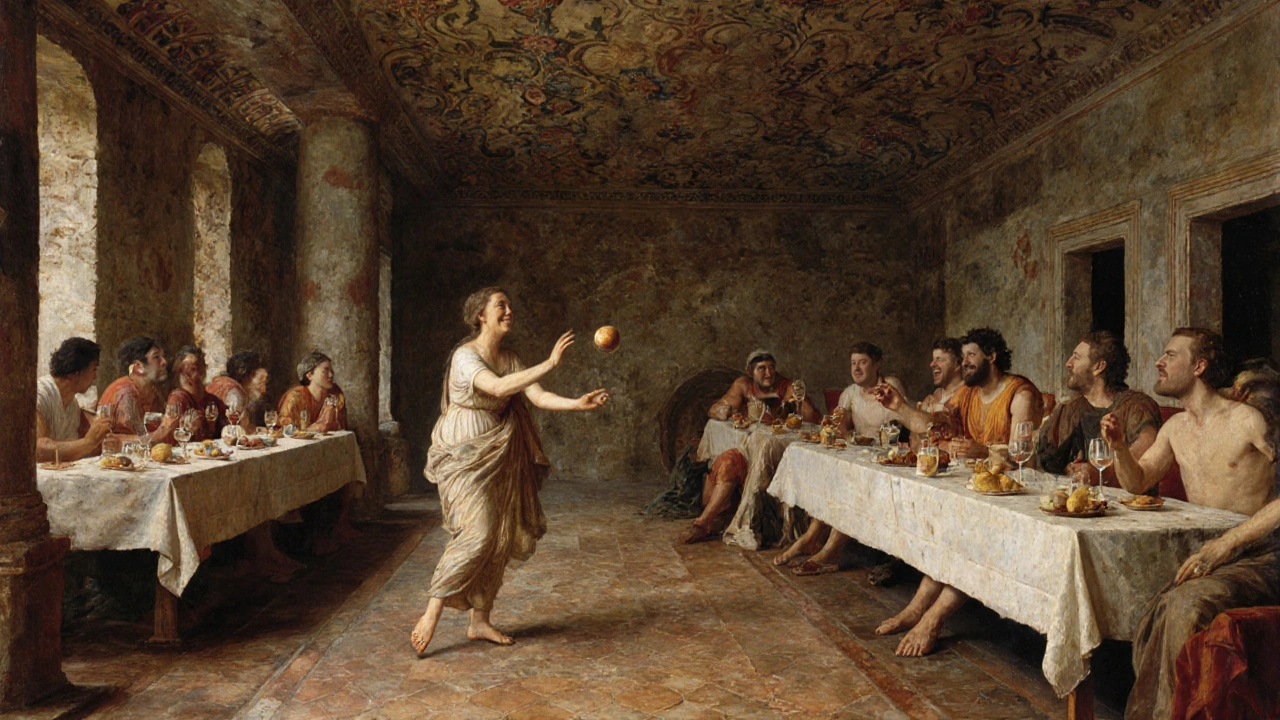
At banquets, Etruscan women wore the same fine linens and gold jewelry as men. They drank wine from the same cups. They played games like kottabos - a drinking game where you fling wine dregs at a target. In the Tomb of the Triclinium, a woman is shown tossing a ball to a man, both laughing. No veil. No silence. No subservience.
Why? Because Etruscan society didn’t separate public and private life the way Athens did. Women weren’t locked into the home because the home wasn’t seen as a separate sphere. Family, politics, religion, and feasting were all part of one interconnected world. And women were part of it - fully.
Why the Difference? It Wasn’t Just Culture - It Was Power
The contrast isn’t just about manners or aesthetics. It’s about who held power.
In Athens, citizenship was tied to male lineage. Only men could vote, own land outright, or represent the family in public. Women were under the legal guardianship of fathers or husbands. Their role was to produce legitimate heirs - not to be seen in public spaces with strangers.
In Etruria, inheritance passed through both lines. Women could inherit and transmit property. They were buried with the same grave goods as men - bronze mirrors, jewelry, wine sets. Some even held religious offices as priestesses. Their presence at banquets wasn’t a privilege granted by men - it was a right.
When Greek colonists arrived in southern Italy around 700 BCE, they brought their symposium culture with them. But the Etruscans didn’t adopt it. They kept their own customs. Why? Because their society didn’t need to exclude women to maintain order. Their social structure was built on partnership, not hierarchy.
Modern scholars like Larissa Bonfante and Nancy de Grummond have shown that Etruscan women had legal autonomy unmatched in the Greek world. One inscription from Vetulonia reads: “This tomb was made by Tarchuna, daughter of Velthur, for herself and her husband.” She didn’t need her husband’s permission to build her own memorial. She didn’t need his name to claim identity.
What the Art Tells Us - And What It Doesn’t
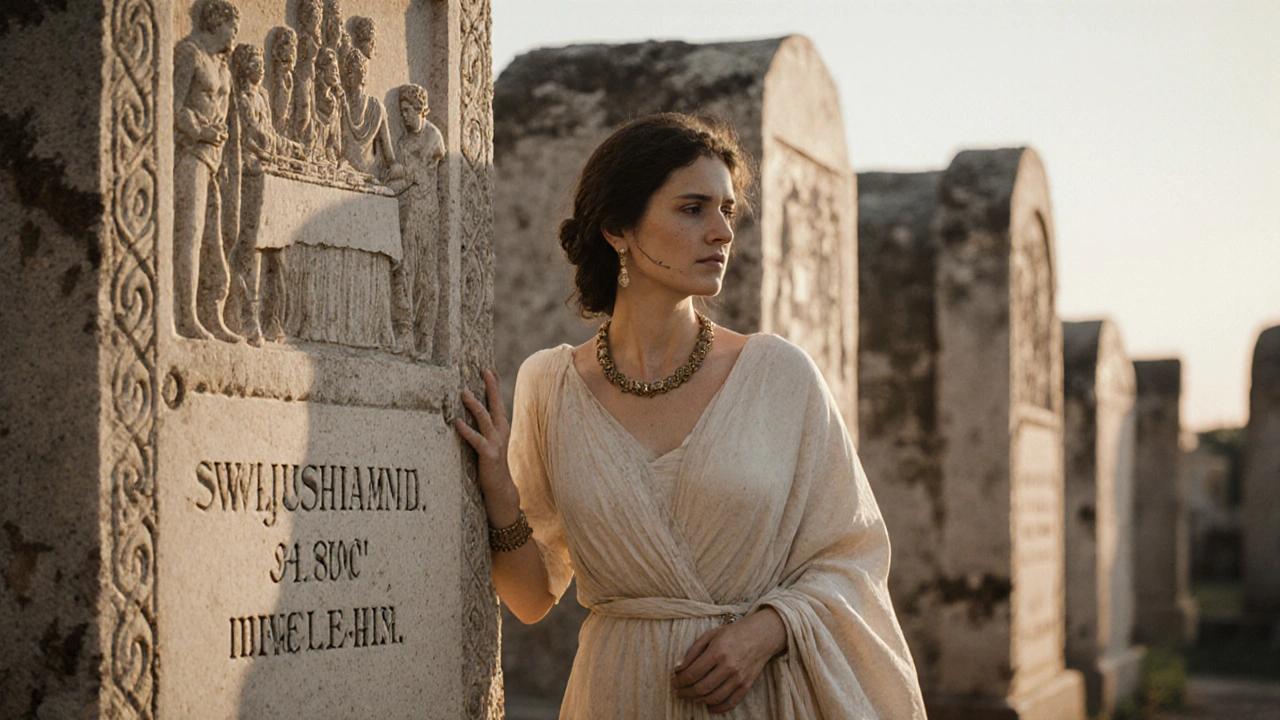
Etruscan tomb paintings aren’t just decorative. They’re declarations. They show what the dead wanted to be remembered for: community, joy, equality. The scenes are lively, colorful, intimate. People kiss. They hold hands. They lean in to whisper. A woman offers a man a grape. A man lifts a cup to toast his wife.
Compare that to Greek symposium scenes. They’re stiff. Men recline in rigid rows. Hetairai are shown separately, often near the door. The focus is on male bonding, intellectual debate, or sexual conquest. Even when women appear, they’re in the background - musicians, servants, or objects of desire.
The difference isn’t accidental. It reflects two fundamentally different worldviews. The Greeks saw the symposium as a space to reinforce male identity. The Etruscans saw the banquet as a space to affirm family and social harmony.
And yet, we’ve spent centuries misreading the Etruscans. Early archaeologists assumed their women must have been “degenerate” or “barbaric” for being so visible. They called their art “vulgar” or “excessive.” Today, we know better. The Etruscans weren’t wild. They were confident.
Legacy: Why This Still Matters
When we think of ancient gender roles, we default to Greece. But the Etruscans prove that another model existed - one where women weren’t excluded from public life, but integrated into it. Their banquet scenes aren’t just art. They’re evidence of a society that valued partnership over control.
Modern archaeology confirms this. Excavations at Poggio Civitate in the 2020s found dining tables with identical pottery for men and women, placed side by side. No separate vessels. No marked differences. Just shared meals, shared space, shared lives.
Today, scholars are rethinking the entire narrative of ancient gender. The old idea that “all ancient societies were patriarchal” is crumbling. The Etruscans show us that patriarchy wasn’t inevitable. It was a choice - one made by some, rejected by others.
Next time you see a Greek vase showing men reclining alone, remember: that wasn’t the whole story. Across the sea, in the hills of Tuscany, women reclined beside their husbands - not as guests, not as ornaments, but as equals. And they were proud of it.