Genetic Recombination: How Sex Shapes Evolution and Human Sexuality
When you think about sex, you might picture intimacy, pleasure, or even taboo—but at its core, genetic recombination, the process by which DNA from two parents mixes to create unique offspring. Also known as sexual recombination, it’s the reason no two humans are genetically identical, even among siblings. This isn’t just biology—it’s the reason complex life survives. Without it, we’d be clones, stuck with the same mutations, same weaknesses, same vulnerabilities. And that’s exactly what happens in asexual reproduction—where organisms copy themselves perfectly. But over time, those perfect copies accumulate errors. That’s where Muller’s ratchet, the irreversible buildup of harmful mutations in asexual populations comes in. Sexual reproduction breaks that cycle. It shuffles genes like a deck of cards, flushing out bad ones and keeping the good.
Why does this matter for human sexuality? Because the two-fold cost of sex, the idea that sexual reproduction is twice as costly as asexual reproduction because only half your genes get passed on should’ve made it extinct. Yet here we are. Evolution kept it because the long-term payoff is massive: resistance to parasites, faster adaptation, and cleaner DNA. This isn’t abstract science—it’s why we crave variety, why attraction feels so powerful, and why even ancient cultures linked sex to spiritual renewal. Etruscan tomb paintings, tantric rituals, and Victorian medical myths all revolve around the same truth: sex isn’t just about babies. It’s about survival. And that survival instinct runs deep. It’s in the way women’s orgasms evolved not for reproduction, but as a leftover mechanism from when ovulation needed stimulation. It’s in the way IVF clinics use HCG triggers to time egg retrieval with surgical precision. It’s even in the way bisexual erasure and lesbian invisibility in history try to deny the natural diversity that genetic recombination depends on.
What you’ll find below isn’t just a list of articles. It’s a map of how genetic recombination—this quiet, powerful force—shaped everything from marriage as an economic tool in medieval Europe to the rise of AI porn and the fight for consent. You’ll see how shame, science, and survival are tangled together, and why understanding this one biological process changes how you see every sexual act, every relationship, every law, and every taboo that came before it.
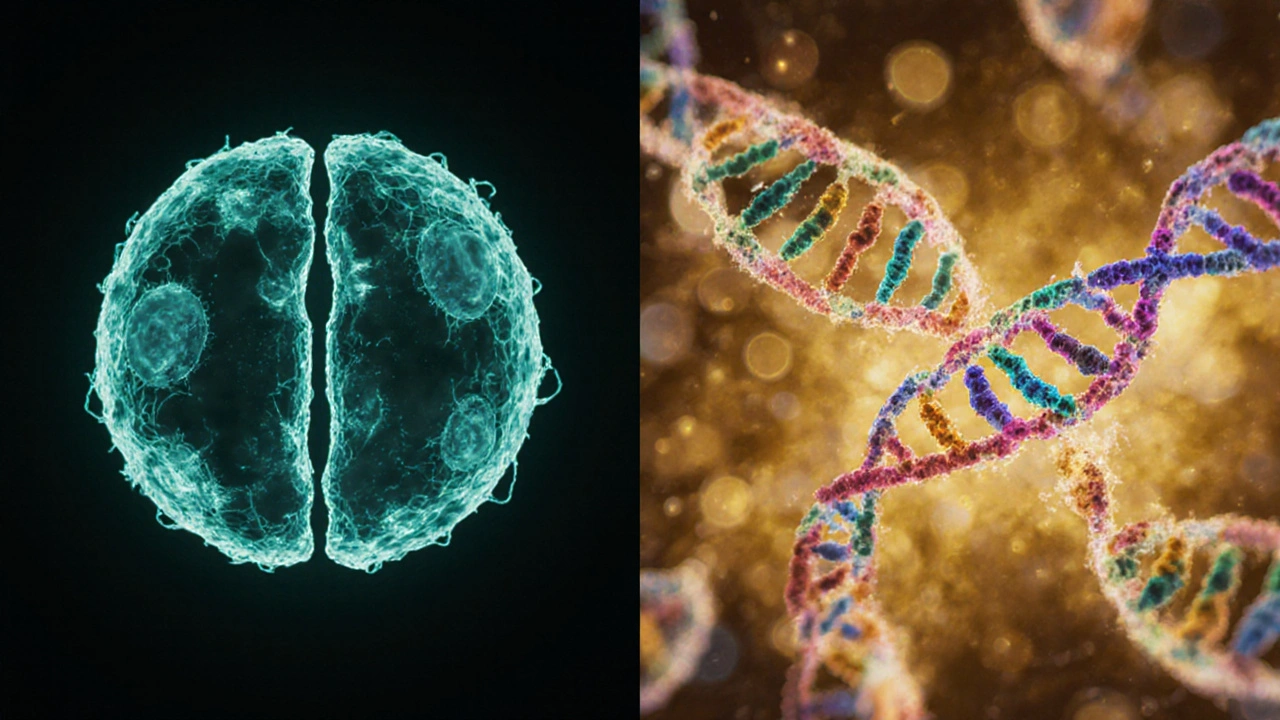
From Asexual Cloning to Gametes: How Sexual Reproduction Changed Evolution Forever
Nov 12 2025 / Health & WellnessSexual reproduction, despite its costs, dominates life on Earth because it creates genetic diversity that helps species survive parasites, disease, and change. This evolutionary shift from cloning to gametes reshaped biology forever.
VIEW MORE