Greek male beauty: The History, Ideals, and Cultural Legacy of Ancient Masculinity
When we talk about Greek male beauty, the idealized male form celebrated in ancient Greece through sculpture, poetry, and philosophy. Also known as classical masculinity, it wasn’t just about physical perfection—it was tied to virtue, discipline, and civic duty. This wasn’t a random aesthetic. It was a political and spiritual statement. The naked male body in Greek art wasn’t erotic for shock value—it was sacred. Temples, gymnasiums, and public squares displayed these figures as living symbols of arete—excellence in body and mind.
These ideals didn’t exist in a vacuum. They were shaped by ancient Greek masculinity, a system of values that linked physical strength, intellectual control, and social dominance. Also known as homoerotic culture, it included relationships between older mentors and younger men, where beauty was both admired and cultivated as part of education. This wasn’t about lust—it was about transmission: how one generation passed down wisdom, courage, and discipline through the body. Meanwhile, Greek sculpture, the primary medium through which these ideals were preserved and exported. Also known as classical art, it set standards that Renaissance artists would later copy, and modern fitness culture still unconsciously follows. The athletes in the Olympic Games, the warriors in battle scenes, the gods in marble—each was a version of the same ideal: lean muscle, balanced proportions, calm expression. Even today, when you see a man in a gym posing in front of a mirror, you’re seeing a echo of a 2,500-year-old standard.
But Greek male beauty wasn’t universal. It excluded slaves, foreigners, and those who didn’t meet the physical or social criteria. It was a tool of power, not just art. The same statues that celebrated the male form also reinforced who belonged—and who didn’t—in public life. This tension—between admiration and exclusion—is why these ideals still matter. They’re not just relics. They’re living codes that shape how we see strength, sexuality, and identity today.
What you’ll find in the posts below aren’t just stories about statues. They’re deep dives into how beauty, power, and control intertwined in ancient times—and how those patterns still shape modern views on gender, desire, and the body. From the hidden meanings behind nude athletes to how shame and pride were built into the very structure of Greek society, these articles uncover what was celebrated… and what was erased.
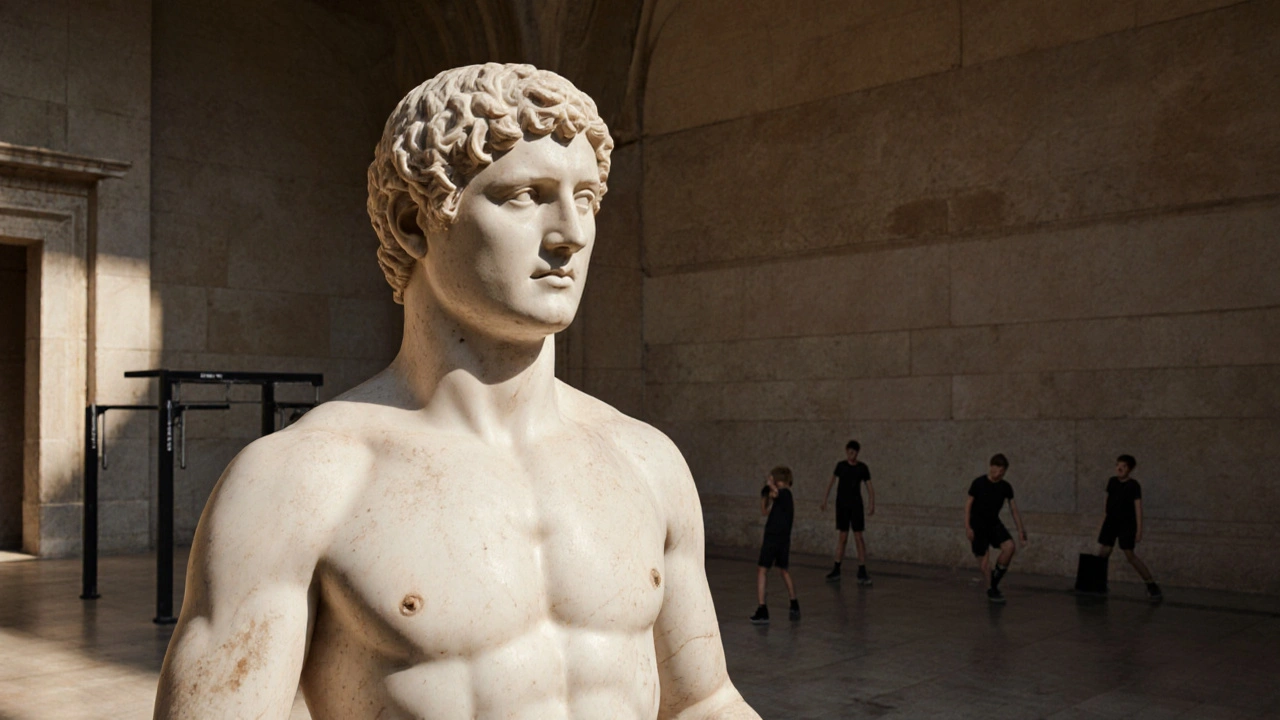
Male Beauty Ideals in Classical Greece: Youth, Kalokagathia, and Desire
Nov 15 2025 / History & ArchaeologyKalokagathia was the ancient Greek ideal that fused physical beauty, moral virtue, and intellectual strength in the male citizen. This article explores how youth, desire, and public training shaped Athenian identity-and why it still echoes today.
VIEW MORE