Historical Marriage Traditions
When you think of historical marriage traditions, systematic union practices shaped by law, economy, and social hierarchy across cultures and centuries. Also known as arranged unions, these were never just about two people—they were alliances between families, clans, and sometimes entire nations. In medieval Europe, a marriage was a business deal written in land deeds and gold, not love letters. The dowry system, a payment from the bride’s family to secure her place in the groom’s household wasn’t a gift—it was insurance. If the husband died, the dowry often returned to her family or funded her widowhood. If he mistreated her, it gave her leverage. In places like Renaissance Italy or Qing China, a woman’s worth was measured in silver, not sentiment.
By the 1800s, the Victorian gender roles, the rigid separation of men into public life and women into domestic duty turned marriage into a moral performance. Men worked, women nurtured. A wife’s job was to be pure, quiet, and obedient. Her body wasn’t her own—it was tied to her husband’s reputation. Yet even here, beneath the lace and corsets, women found ways to maneuver. Some used marriage to escape poverty. Others used it to gain legal control over property, especially if they were widows with inheritance rights. The economic marriage, a union structured primarily for financial or political gain didn’t vanish—it just got quieter. In the U.S., until the 1970s, married women couldn’t open bank accounts without their husband’s signature in many states. That wasn’t tradition—it was law.
These aren’t just old stories. The echoes are still here: in how we talk about prenups, in the pressure to marry by a certain age, in the way we still link marriage with stability, status, or even moral worth. The historical marriage traditions you read about in books weren’t just customs—they were power structures dressed in ceremony. And they shaped how we think about commitment, ownership, and gender even now.
Below, you’ll find real stories from the past—how brides in ancient Egypt used lipstick as a marriage signal, how medieval widows fought for their dower rights, how Victorian doctors pathologized desire, and how same-sex unions were hidden in plain sight. These aren’t footnotes. They’re the hidden blueprint of how we got here.
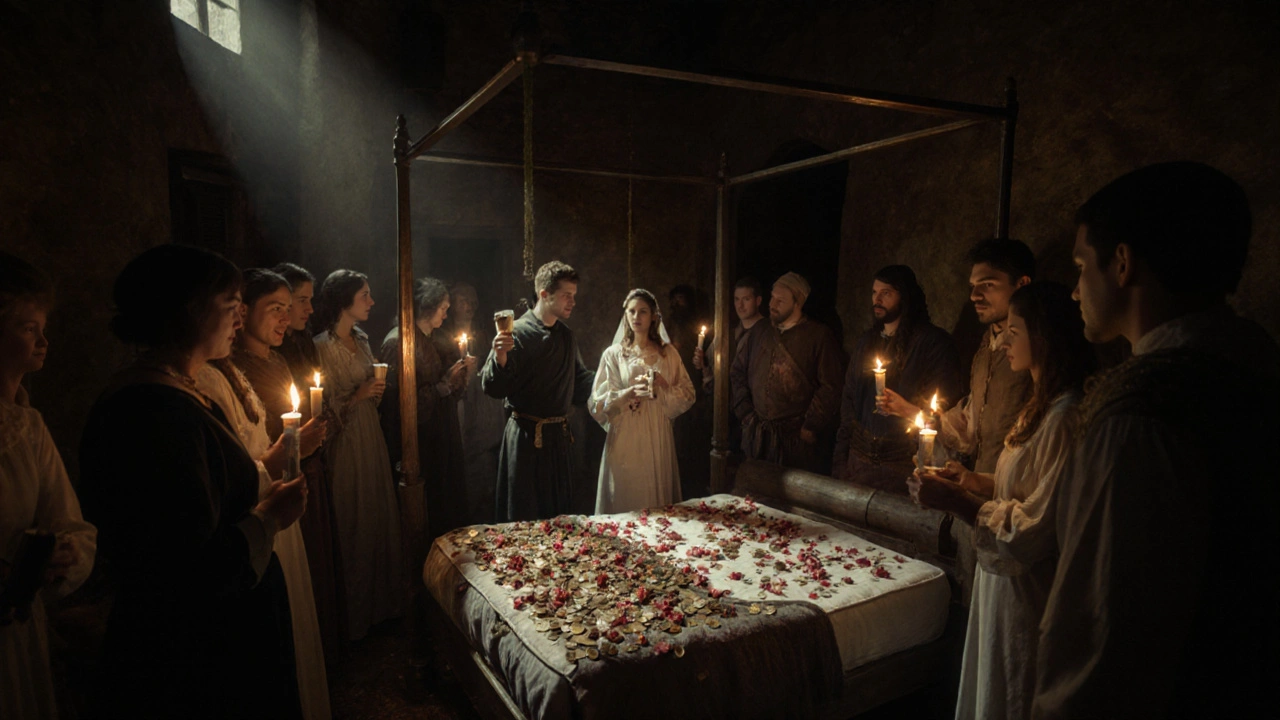
Bedding Ceremonies: How Communities Once Validated Marriage Through Consummation Rituals
Nov 24 2025 / EconomicsBedding ceremonies were once common in medieval Europe, where communities watched newlyweds consummate their marriage to legally validate the union. This practice shaped inheritance, religion, and gender norms-and its echoes survive in today's wedding traditions.
VIEW MORE