Huanjing Bunao: The History of Sexual Energy, Spiritual Practices, and Ancient Chinese Concepts
When people talk about huanjing bunao, a traditional Taoist practice of returning semen to nourish the body and conserve vital energy. Also known as returning the essence to replenish the brain, it’s not just about avoiding ejaculation—it’s a system for controlling sexual energy to boost vitality, mental clarity, and spiritual awareness. This idea didn’t come from fantasy or mysticism. It was developed over centuries by Daoist monks, healers, and alchemists who saw sex not as a release, but as a source of power that could be redirected.
Related to this are practices like Taoist sexuality, a holistic approach to sexual health rooted in balancing yin and yang through breath, movement, and mindful intimacy. Unlike Western views that often separate sex from spirituality, Taoist traditions treated sexual energy as a physical force—like blood or breath—that needed careful management. sexual energy, the life force known as jing in Chinese medicine, believed to be stored in the kidneys and transformed through discipline. The goal of huanjing bunao wasn’t abstinence—it was mastery. Men were taught to orgasm without ejaculation, preserving jing to fuel longevity, memory, and even martial skill. Women’s practices, though less documented, focused on internal circulation and breath control to harmonize with male energy during intercourse.
These ideas didn’t stay locked in temples. They influenced traditional Chinese medicine, where ancient Chinese medicine, a system of healing based on qi flow, organ meridians, and energy conservation. linked sexual excess to kidney depletion, fatigue, and premature aging. Texts like the Neiye and Daozang warned that losing semen was like draining a well—once gone, it couldn’t be fully replaced. Modern science doesn’t confirm all these claims, but it does show that stress, sleep loss, and hormonal imbalance can mimic the symptoms ancient practitioners described. What’s striking is how these practices still echo today—in tantric yoga, biohacking communities, and even some fertility clinics that advise reducing ejaculation frequency for sperm quality.
What you’ll find in the posts below isn’t just history. It’s a chain of ideas—how societies have tried to control, celebrate, or suppress sexual energy across time. From Victorian doctors calling masturbation a disease, to Etruscan tomb paintings showing sex as sacred, to modern debates about consent and AI porn—this collection traces how we’ve always been wrestling with the same question: What do we do with our desire? And who gets to decide?
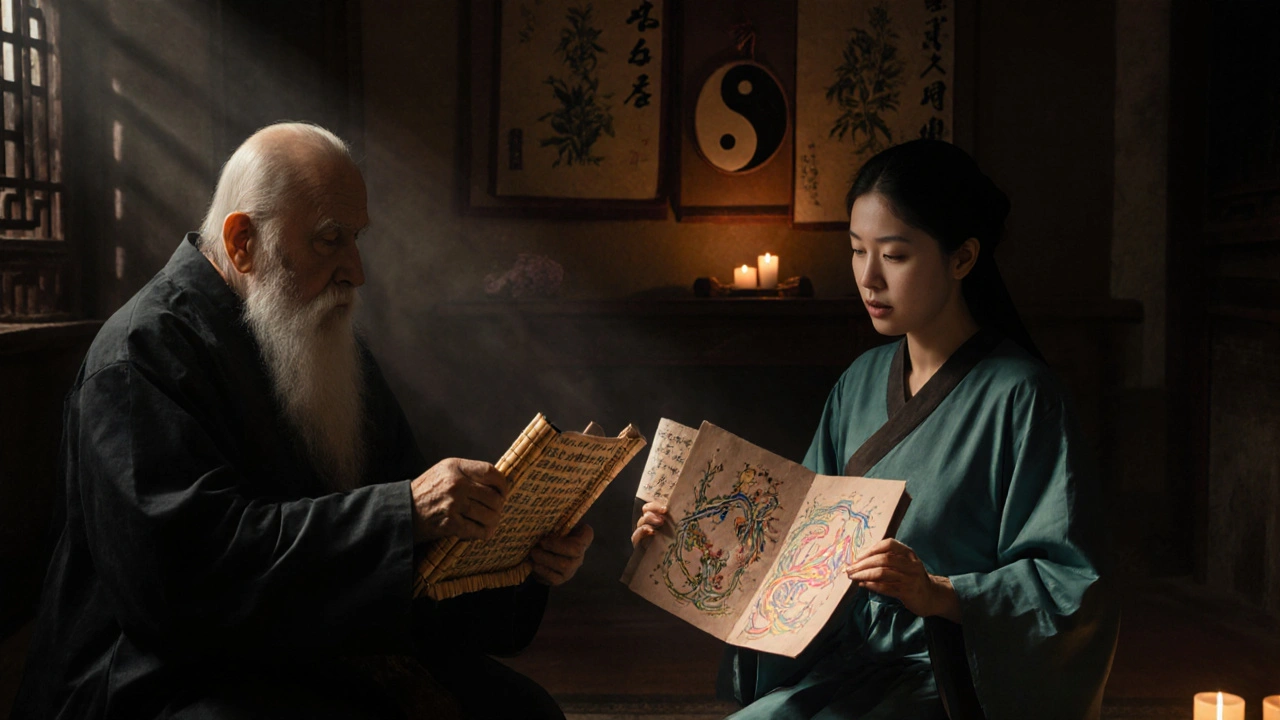
Sexuality in Ancient China and Southeast Asia: Medicine, Method, and Social Roles
Oct 22 2025 / Global TraditionsAncient China and Southeast Asia developed sophisticated systems of sexual medicine, blending spirituality, herbalism, and body awareness. From energy conservation techniques to early recognition of STIs, their methods reveal a deep, practical understanding of human sexuality long before modern science.
VIEW MORE