Khajuraho Temples: Ancient Sex Art, Sacred Pleasure, and the History of Erotic Spirituality
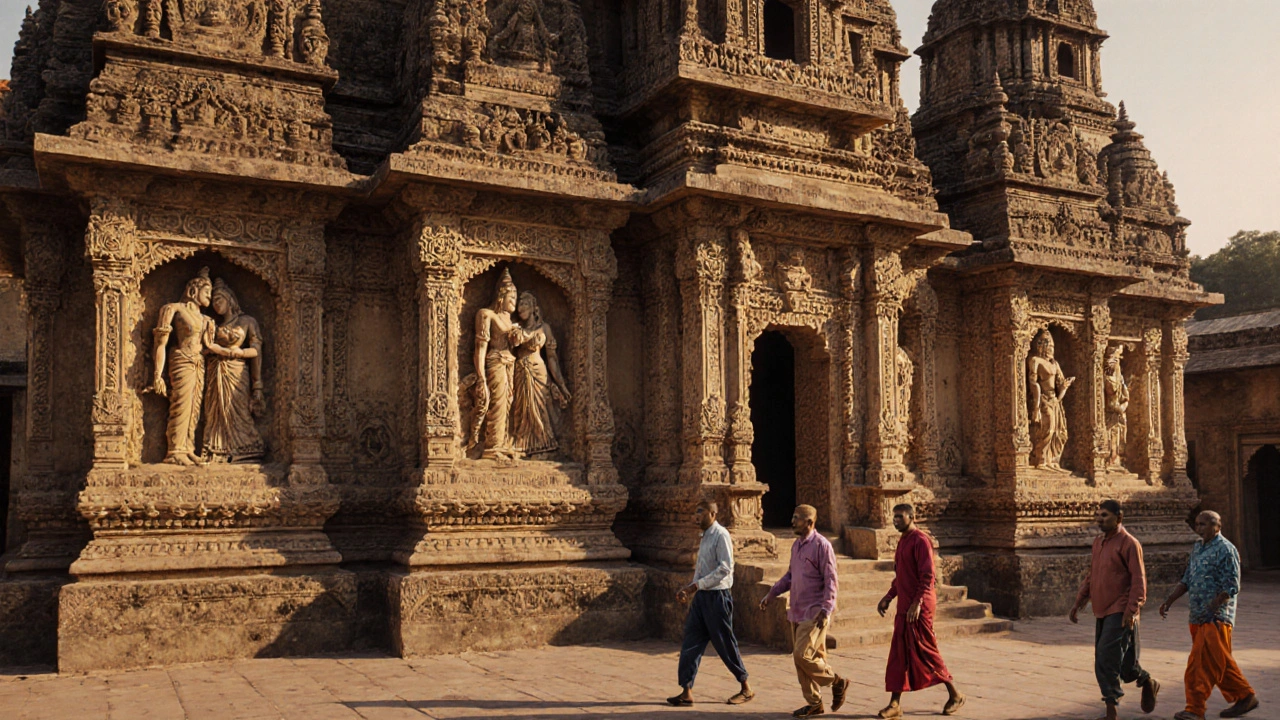
When you think of the Khajuraho temples, a group of 10th-century Hindu and Jain temples in Madhya Pradesh, India, renowned for their intricate erotic sculptures. Also known as Khajuraho group of monuments, they were built by the Chandela dynasty and once served as centers of spiritual practice, not just worship. These aren’t just carvings of naked bodies—they’re part of a deeper belief system where pleasure, death, and divinity were seen as deeply connected. Unlike modern views that separate sex from spirituality, the builders of Khajuraho saw eroticism as a path to enlightenment, a way to transcend the physical and touch the divine.
The erotic temple art, the explicit sculptures found on temple walls depicting sexual acts, dancers, and mythological figures wasn’t meant to shock. It was meant to teach. In Hindu philosophy, the body is a temple, and sexual energy—called kama—is one of the four legitimate goals of life, alongside duty, wealth, and liberation. These carvings weren’t hidden in back rooms; they were on the outer walls, visible to all, as reminders that desire is natural, sacred, and part of the cosmic order. Nearby, you’ll find scenes of daily life—musicians, warriors, farmers—showing that sex wasn’t isolated from the rest of existence. It was woven into it. The ancient Indian sexuality, a complex, open, and ritualized approach to desire in pre-colonial India, where texts like the Kama Sutra and temple art reflected a society that didn’t shame pleasure stood in sharp contrast to the Victorian-era attitudes that would later colonize India and label these sculptures as obscene.
What’s often missed is that these temples weren’t built by priests alone—they were funded by kings, merchants, and artisans who believed in a world where the sacred and the sensual coexisted. The sculptures include not just heterosexual acts but same-sex pairings, transgender figures, and non-reproductive intimacy, suggesting a far more inclusive view of desire than many modern societies still hold. The temple sculptures, the detailed stone carvings that cover the outer walls of Khajuraho’s temples, blending religious iconography with erotic imagery also served as a kind of visual scripture, teaching about balance, mindfulness, and the cycle of life. They weren’t about lust—they were about awareness.
Today, the Khajuraho temples are a UNESCO World Heritage site, visited by millions who come for the art, the history, or the curiosity. But few understand what they’re really seeing: a culture that once honored sex as part of the divine, not as something to hide. The carvings survived colonial censorship, missionary outrage, and modern moral panic—not because they were forgotten, but because they were too powerful to erase. What you’ll find in the posts below is a collection of stories that connect these ancient carvings to the broader history of sex, shame, and liberation—from Etruscan tomb paintings to Victorian sex toys, from bisexual erasure to the feminist reclamation of pleasure. These aren’t random threads. They’re all part of the same long conversation: how societies have tried to control desire, and how people have always found a way to reclaim it.
Tantric Traditions and Sexual Symbolism: Separating Myth from Historical Reality
Nov 6 2025 / Global TraditionsTantra is often misunderstood as a sexual practice, but historically it was a profound spiritual path using sex as one tool among many for awakening. This article separates myth from reality, exploring its origins, rituals, and modern distortions.
VIEW MORE