When people hear the word Tantra, most think of sex. That’s not wrong-but it’s wildly incomplete. The truth is, Tantra was never about pleasure for pleasure’s sake. It was a radical spiritual path that used every part of human experience-including sex-to break through illusion and awaken deeper awareness. But over the last century, that path got stripped down, repackaged, and sold as a quick fix for intimacy. The real story? It’s far older, far deeper, and far more powerful than most modern workshops admit.
Where Tantra Really Came From
Tantra didn’t start as a bedroom technique. It emerged in India between the 5th and 9th centuries CE, during a time of major religious and social change. As orthodox Brahmanical rituals became rigid and exclusive, Tantra offered something different: a path open to everyone, regardless of caste, gender, or social status. It wasn’t a fringe movement-it was a revolution. Early Tantric texts, like the Hevajra Tantra from the late 800s CE, didn’t just talk about sex. They laid out full systems of meditation, breath control, ritual, mantra, and deity visualization. These weren’t optional extras-they were the foundation. Sexual symbolism was one tool among many, used to represent the union of consciousness (Shiva) and energy (Shakti). That union wasn’t just physical. It was metaphysical. It was the core of the universe, mirrored inside the human body.The Real Meaning Behind the Carvings
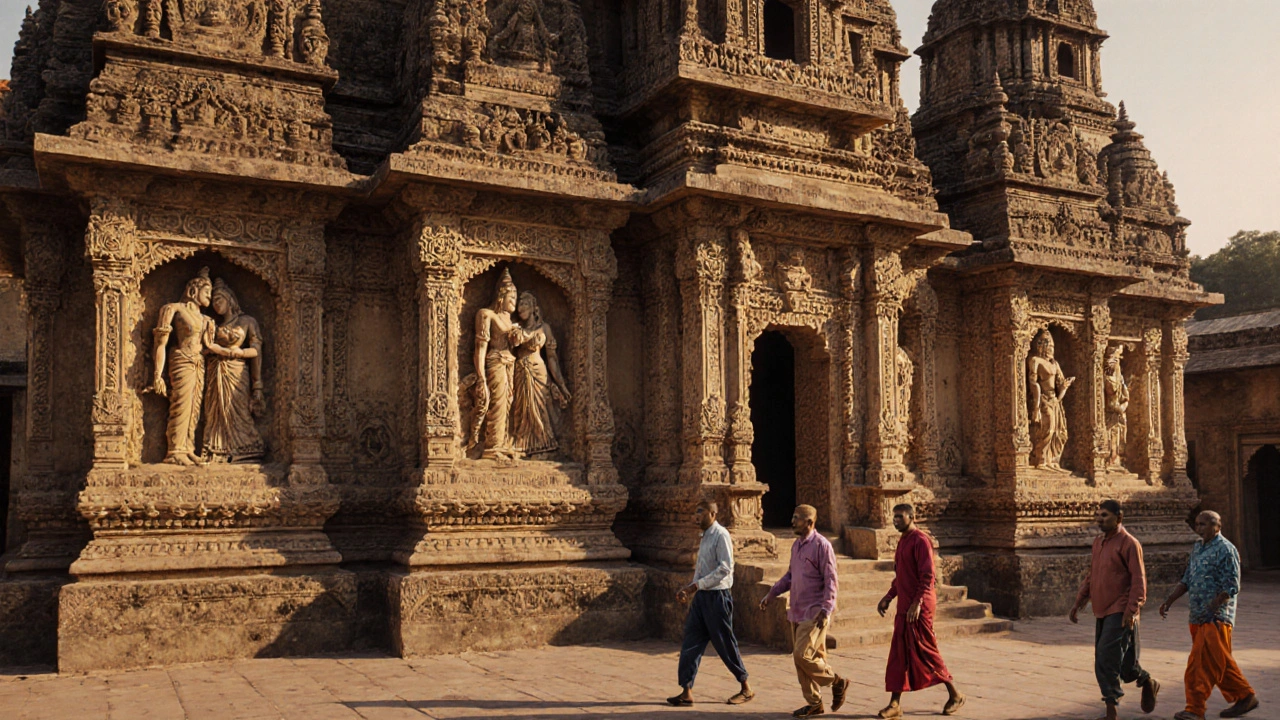
Visit Khajuraho in central India, and you’ll see hundreds of stone carvings of couples in intimate poses. Many tourists snap photos, laugh, or blush. But those images weren’t meant to titillate. They were sacred teaching tools. The temples at Khajuraho and Konark, built between the 10th and 13th centuries, were places of worship, not pleasure palaces. The erotic imagery served a specific purpose: to show that desire is not something to be denied, but something to be understood. A goddess standing atop a copulating couple? That wasn’t about domination-it was about transcendence. The divine doesn’t reject the body; it transforms it. These carvings weren’t hidden in back rooms. They were displayed openly, because Tantra taught that enlightenment isn’t found by escaping the world, but by fully engaging with it. Sex was one of the most powerful experiences a human could have-and if you could remain aware during it, you could use it to wake up.Sex as Ritual, Not Technique
In authentic Tantra, sexual practice wasn’t about performance or pleasure. It was ritual. And like any ritual, it required preparation, context, and guidance. Practitioners didn’t just jump into sexual union. They spent years mastering breath control (pranayama), purification rituals (shodhana), energy channeling (kundalini), and ethical discipline (yamas and niyamas). Only then, under the supervision of a qualified guru, might they be introduced to sexual practices. Even then, the goal wasn’t orgasm. It was awareness. The Hevajra Tantra says plainly: “Sexual union was not taught for the sake of enjoyment, but for the examination of one’s own thought, whether the mind is steady or wavering.” Some traditions, like Kashmiri Shaivism, taught that the mingling of sexual fluids was a sacred offering to the divine. Others, like the Natha tradition, focused on internal visualization-couples never even touched, but imagined themselves as deities in union. That’s right: celibate monks and nuns practiced Tantric sex without physical contact, using the mind as their temple.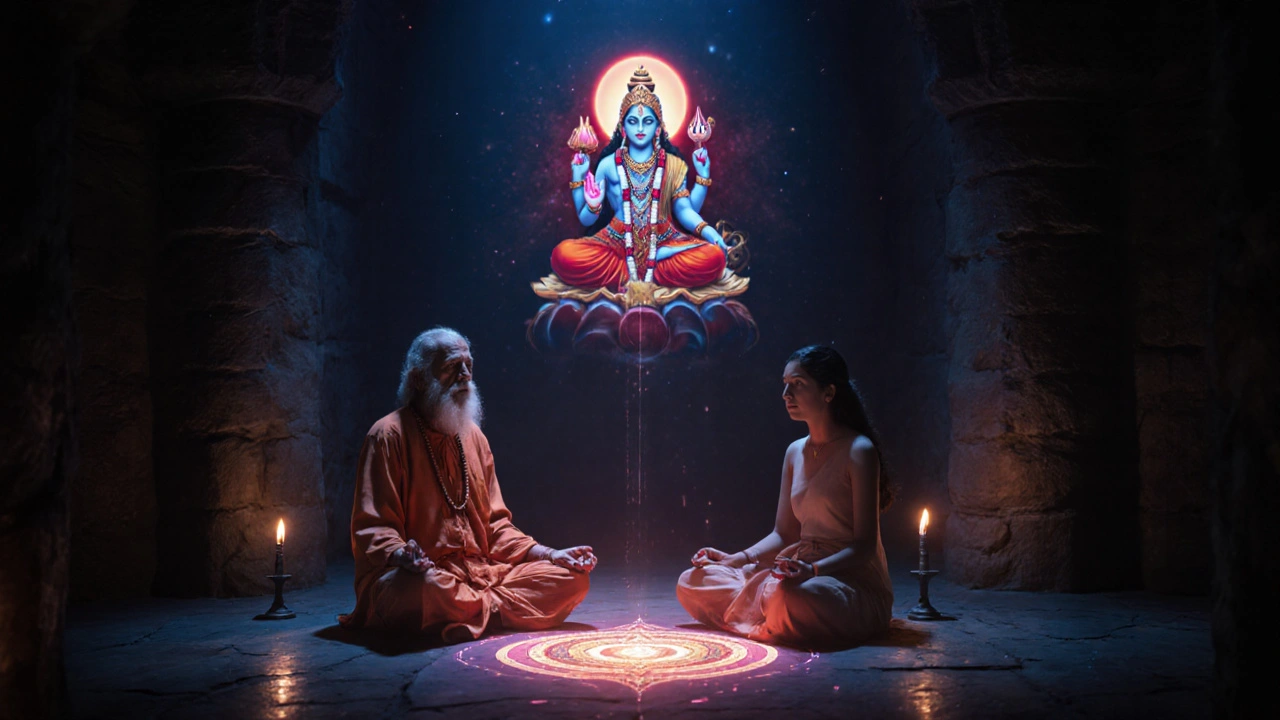
The Great Divide: Tantra vs. Neo-Tantra
There’s a huge difference between historical Tantra and what’s sold today as “Tantric sex.” The modern version-called Neo-Tantra-began in the 1960s, when Western figures like Aleister Crowley and Pierre Bernard mixed bits of Tantra with Taoism, Freudian psychology, and New Age mysticism. They took the symbols and dropped the system. No initiation. No guru. No years of preparation. Just “feel the energy” and “go slow.” This version stripped Tantra of its philosophical backbone. It ignored the non-dual teachings of Abhinavagupta, the ritual complexity of the Kularnava Tantra, and the disciplined path laid out in classical texts. What remained? A set of techniques marketed as a way to “enhance intimacy”-which, ironically, makes it just another product in the wellness industry. Today, over 3,200 self-proclaimed Tantra teachers operate in the U.S. alone. Fewer than 5% have any verifiable connection to an authentic lineage. Most workshops cost hundreds of dollars and last a weekend. They teach breathing and touch-but not the philosophy behind them. They sell connection, but not liberation.Why the Misunderstanding Lasts
How did we get here? Three forces pushed Tantra into the shadows-and then pulled it out as a caricature. First, British colonial administrators in the 1800s saw Tantric rituals and sexual imagery and called them “degenerate.” They labeled Tantra as “superstitious” and “immoral,” ignoring its spiritual depth. Their reports became the foundation of Western understanding. Second, Victorian moralists, horrified by anything that linked spirituality and sexuality, erased the tradition from mainstream religious discourse. Tantra became taboo-not because it was dangerous, but because it challenged their idea of purity. Third, capitalism stepped in. In the 1990s, the wellness industry discovered Tantra. It was perfect: exotic, mysterious, and easy to package. Suddenly, “Tantric massage” and “sacred sex retreats” were everywhere. Companies made millions selling the idea that Tantra could fix your relationship-or your libido. But none of this had anything to do with the original tradition.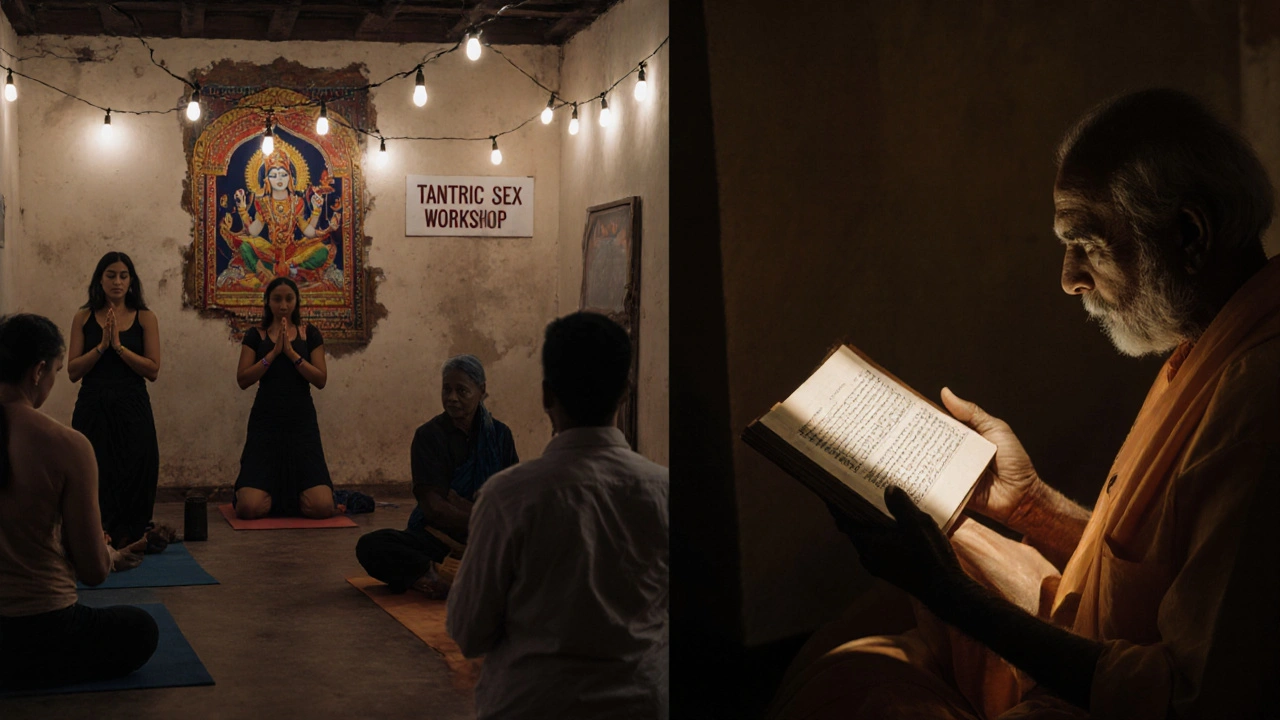
What’s Left of the Real Tantra?
Authentic Tantra still exists. It’s just not on Instagram. In Kashmir, Nepal, and parts of South India, small lineages continue to teach the full path. Students spend years studying Sanskrit, meditating daily, performing rituals, and serving their teachers. Sexual practices-if they’re taught at all-come after a decade or more of preparation. The goal isn’t better sex. It’s freedom-from fear, from craving, from the illusion that you’re separate from the divine. Sex, in this context, is just one mirror. The real work happens inside. Modern practitioners like Christopher Wallis and Mark Dyczkowski emphasize that Tantra requires understanding non-dual philosophy. Without it, even the most “sacred” touch becomes just touch. Without the context, the symbol loses its power.What You Can Actually Learn Today
You don’t need to join a centuries-old lineage to benefit from Tantra’s core insights. Here’s what still holds true:- Presence is more important than technique. Slow down. Notice your breath. Feel your body.
- Desire isn’t the enemy. Ignorance of desire is.
- Intimacy grows when you stop performing and start being.
- Sexual energy is powerful. Channel it with awareness, not just arousal.
Why This Matters Beyond the Bedroom
Tantra’s biggest lesson isn’t about sex. It’s about how we relate to everything. It teaches that nothing is inherently sacred or profane. It’s our awareness that transforms the ordinary into the divine. A meal. A conversation. A moment of anger. A breath. All can be portals-if we’re awake enough to see it. When we reduce Tantra to sex, we miss its radical potential. It’s not a technique for better intimacy. It’s a path to see the sacred in the messy, the mundane, the human. The carvings at Khajuraho weren’t there to shock. They were there to say: This is your life. This is your body. This is your path. Don’t run from it. Wake up inside it. That’s still true today. And it always will be.Is Tantra just about sex?
No. While sexual symbolism appears in some Tantric practices, it represents a much deeper spiritual principle-the union of consciousness and energy. In authentic Tantra, sex is one of many tools used for awakening, not the goal itself. Most historical Tantric texts focus on meditation, ritual, breathwork, and philosophy. Sexual practices were advanced, rarely taught, and always embedded in a full spiritual framework.
Are the erotic carvings at Khajuraho pornographic?
No. The carvings are ritual art meant to convey spiritual truths. They depict the sacred interplay of masculine and feminine energies, the cycle of life and death, and the transcendence of desire. In Hindu and Tantric cosmology, the body and sexuality are not impure-they are expressions of divine energy. These images were placed on temple walls to remind worshippers that enlightenment comes through embracing, not rejecting, the fullness of human experience.
Can you practice Tantra without a guru?
You can learn principles like presence, breath awareness, and mindful touch without a guru. But authentic Tantric practice-especially sexual rituals-requires initiation and guidance from a qualified teacher. These practices involve subtle energy work and psychological transformation that can be misunderstood or misused without proper context. Modern workshops that offer Tantra as a quick fix often lack this essential lineage and depth.
What’s the difference between Tantra and Hatha Yoga?
Hatha Yoga evolved from early Tantra but diverged around the 11th century. While Tantra embraced sexual energy as a sacred force to be used in ritual, Hatha Yoga began emphasizing the retention of sexual energy (called bindu) to build spiritual power. Tantra sees union as the goal; Hatha Yoga often sees separation from desire as the goal. They share roots, but their methods and philosophies are different.
Why do so many Westerners think Tantra is about sex?
Colonial British officials misinterpreted Tantric rituals as eroticism and labeled them immoral. Later, Victorian moralists suppressed any spiritual connection to sex. In the 20th century, Western occultists like Aleister Crowley mixed Tantra with other ideas to create Neo-Tantra-focused on technique, not transformation. The wellness industry then commercialized it, reducing a complex spiritual path to a sexual service. The result? A myth that stuck.
Is Tantra a religion?
No. Tantra is not a religion. It’s a set of spiritual technologies that can be practiced within Hinduism, Buddhism, or independently. It doesn’t require belief in a god. Instead, it focuses on direct experience-using the body, breath, and mind to realize a deeper reality. It’s more like a science of consciousness than a faith system.
Can women practice Tantra?
Yes-and in many Tantric traditions, women were central. Unlike orthodox Hinduism, which often restricted spiritual access to men, Tantra gave women equal status. The feminine principle (Shakti) was revered as the source of all energy. In rituals, the woman was often seen as the embodiment of the divine. Many Tantric lineages were led by female teachers, and texts like the Kularnava Tantra explicitly affirm the spiritual authority of women.