Kouros Statues: Ancient Greek Sculpture and the Birth of Male Idealism
When you see a kouros statue, a standing nude male youth from ancient Greece, typically carved in marble between 600 and 480 BCE. Also known as Archaic Greek youth figures, they represent the first serious attempt in Western art to capture the human body in balanced, idealized form—before realism, before movement, before emotion. These weren’t portraits. They were symbols.
Kouros statues were tied to Archaic Greece, a period of rapid cultural development in the 7th and 6th centuries BCE, when city-states like Athens and Sparta were forming their identities. They often stood at gravesites, honoring dead young men, or in sanctuaries as offerings to gods like Apollo. Their rigid stance—left foot forward, arms at sides, fists clenched—was borrowed from Egyptian art, but the Greeks stripped away the rigidity and added something new: a sense of potential. These figures weren’t dead. They were becoming. Every kouros carried the promise of strength, purity, and divine favor. Their nudity wasn’t erotic—it was sacred. In a world where civic virtue and physical excellence were linked, the perfect male body was the ultimate expression of arete—excellence.
These statues also reveal how male idealism, the cultural belief that male physical perfection reflected moral and social superiority was built into Greek society from the ground up. Unlike later classical sculptures that showed muscles in motion or faces in thought, kouroi were frozen in time—calm, silent, untouchable. They didn’t express individuality. They expressed norms. And those norms shaped everything: from athletic training in the gymnasium to how boys were raised to be citizens. This wasn’t just art. It was propaganda. The same values that shaped these statues also shaped laws, education, and even sexual relationships in ancient Greece.
What’s striking is how little changed in the centuries after. The kouros laid the groundwork for the later, more naturalistic statues of athletes and gods. But the core idea stayed: the male body as a vessel of order, control, and divine beauty. Even today, when you see a statue of a naked man in a museum or a university courtyard, you’re seeing the legacy of the kouros. It’s in the posture, the symmetry, the silence. And it’s still tied to how we think about masculinity—not just in art, but in culture.
Below, you’ll find a curated collection of articles that dig into the deeper roots of how ancient ideals of the body, gender, and power still echo in modern sexuality, identity, and social norms—from Victorian ideas of manhood to how female pleasure was erased from history, and why consent, once a communal agreement, is now a legal battleground. These aren’t just old stories. They’re the bones beneath today’s debates.
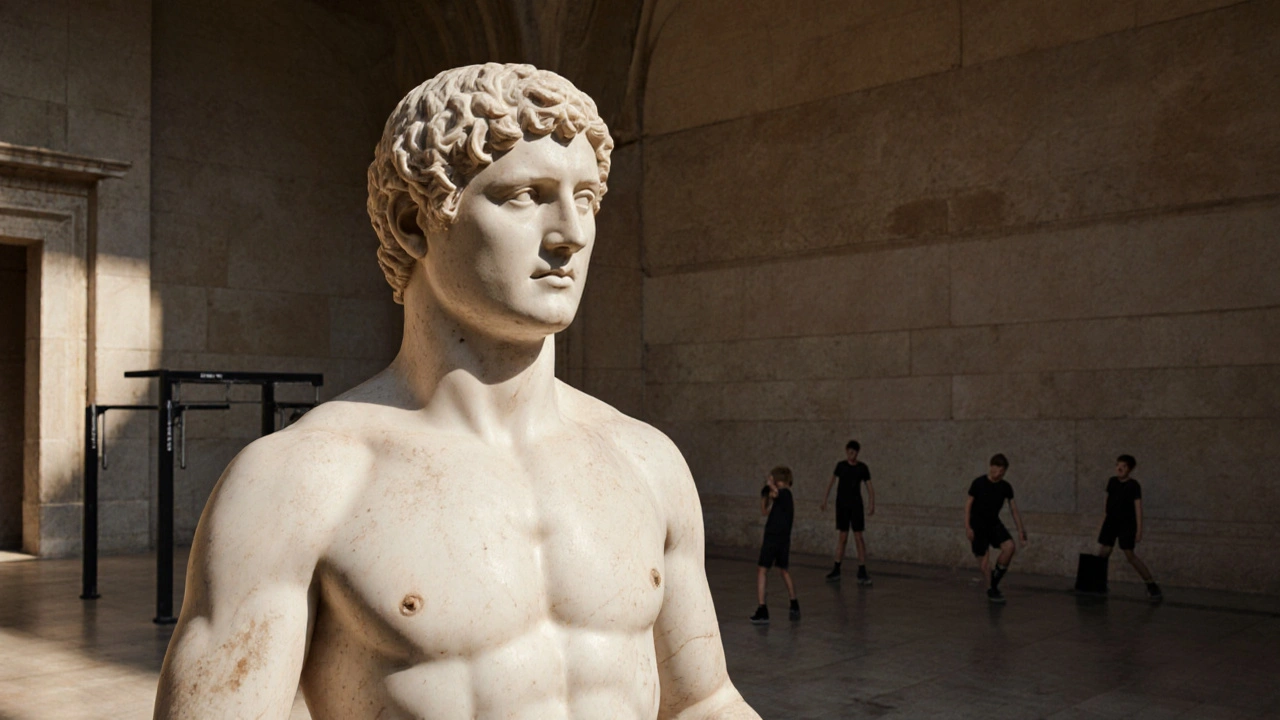
Male Beauty Ideals in Classical Greece: Youth, Kalokagathia, and Desire
Nov 15 2025 / History & ArchaeologyKalokagathia was the ancient Greek ideal that fused physical beauty, moral virtue, and intellectual strength in the male citizen. This article explores how youth, desire, and public training shaped Athenian identity-and why it still echoes today.
VIEW MORE