Lesbian History: From Hidden Bonds to Public Resistance
When we talk about lesbian history, the lived experiences, relationships, and resistance of women who love women across time. Also known as female same-sex relationships, it’s not a footnote in queer history—it’s a full chapter written in secret codes, whispered confessions, and defiant acts. For centuries, women who loved women didn’t just hide their feelings—they had to invent ways to survive without being labeled, punished, or erased. Unlike male homosexuality, which was often criminalized in clear laws, lesbian existence was ignored, dismissed, or pathologized as a phase, a mistake, or a medical condition. That silence wasn’t accidental. It was a tool of control.
But silence doesn’t mean absence. In 18th-century England, women like Mary Hamilton lived openly as men to marry other women, and their court records became rare proof of their lives. In 1920s Paris, queer women gathered in underground clubs, wore short hair and tailored suits, and wrote poetry that celebrated each other’s bodies—long before the word "lesbian" was widely used. In the U.S., the Daughters of Bilitis, founded in 1955, was the first national lesbian organization, publishing newsletters and offering safe spaces when being out could cost you your job, your family, or your freedom. These weren’t just social groups—they were survival networks. And they laid the groundwork for everything that came after, including the fight for marriage equality and the push to include lesbian voices in sex education and medical research.
What ties all these moments together? queer women, women who form intimate, romantic, or sexual bonds with other women, often outside of heterosexual norms. Also known as same-sex female partners, they’ve always existed—but their stories were rarely recorded by historians who didn’t believe they mattered. Their love wasn’t just personal—it was political. From the coded letters between Emily Dickinson and Susan Gilbert to the radical activism of Audre Lorde, lesbian relationships challenged the idea that women’s lives should revolve around men. And when medical journals called lesbianism a disorder, or when police raided bars where women danced together, those women didn’t back down. They organized. They wrote. They fought.
What you’ll find in the posts below isn’t a dry timeline. It’s the real, messy, powerful truth of how women claimed their desire, their bodies, and their place in history—despite being told to stay quiet. You’ll see how LGBTQ+ resistance, the organized efforts by queer communities to challenge discrimination, censorship, and violence. Also known as queer activism, it’s the engine behind legal change and cultural visibility shaped modern views on gender and sex. You’ll read about how female intimacy, emotional and physical closeness between women, often misunderstood or minimized in historical records. Also known as women’s romantic bonds, it’s been both a source of strength and a target of erasure was hidden in diaries, painted in art, and whispered in brothels. This isn’t just history. It’s the foundation of who we are today.
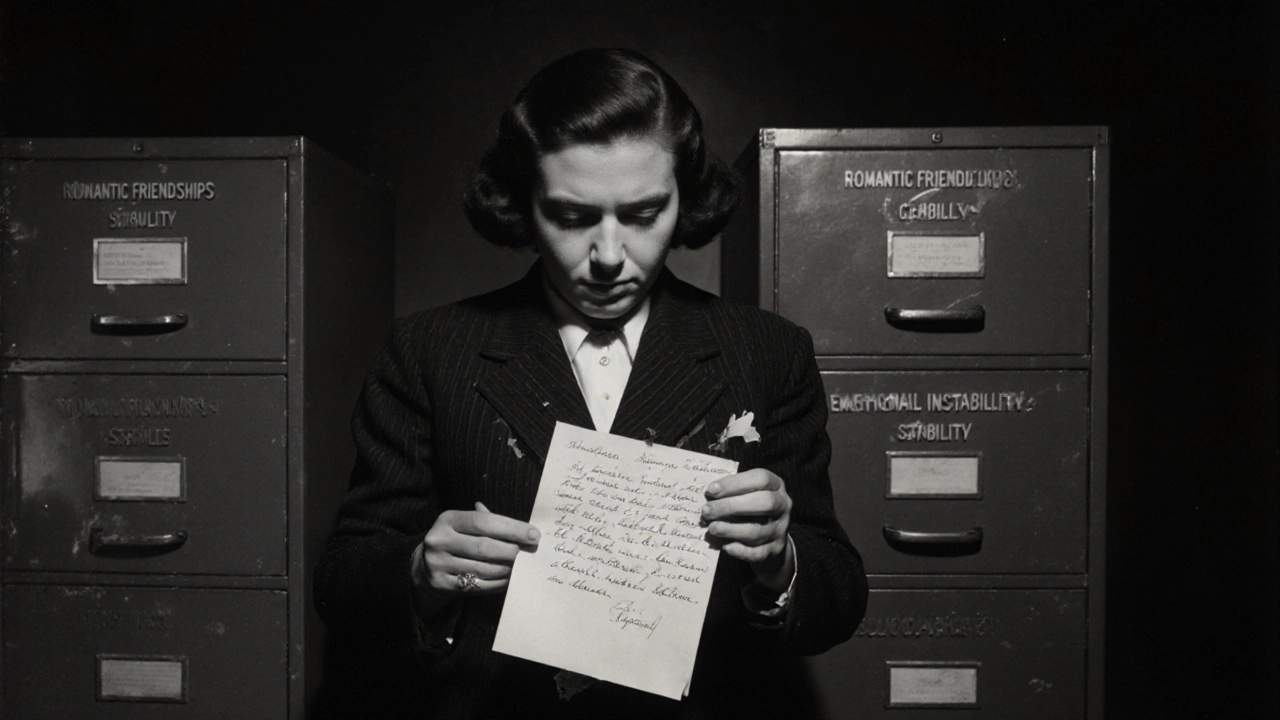
Female-Female Sex in the Archives: Why Lesbianism Was Erased from History
Nov 23 2025 / LGBTQ+ HistoryLesbianism was systematically erased from historical archives through censorship, coded language, and institutional neglect. This is the story of how activists fought back - and why their work still matters today.
VIEW MORE