Low-Hormone Birth Control: What It Is, How It Works, and Why It Matters
When you hear low-hormone birth control, a category of contraceptive methods that use minimal synthetic hormones to prevent pregnancy. Also known as low-dose hormonal contraception, it’s designed to give you control over your cycle without flooding your body with estrogen or progestin. Unlike older pills that packed in 30 to 50 micrograms of estrogen, today’s low-hormone options often contain 20 micrograms or less—sometimes none at all. This shift didn’t happen by accident. It came from women pushing back against brain fog, mood crashes, and libido loss that came with high-dose regimens.
Low-hormone birth control isn’t just one thing. It includes progestin-only pills, a daily tablet with no estrogen, often called the mini-pill. Also known as POP, it’s ideal for people who can’t take estrogen due to migraines, blood clots, or breastfeeding. Then there are low-dose combination pills, patches, and rings that use just enough hormone to block ovulation without triggering the side effects that made older versions unpopular. These methods rely on subtle shifts—not brute force—to stop pregnancy. The goal isn’t to shut down your body. It’s to work with it.
But here’s the thing: low hormone doesn’t mean no side effects. Some people still get spotting, breast tenderness, or irregular cycles. Others feel better than ever. It depends on your body’s sensitivity. That’s why switching isn’t just about dosage—it’s about matching your physiology. A 2021 study in the Journal of Women’s Health found that women on low-hormone pills reported fewer anxiety symptoms and more consistent energy than those on standard doses. Not because the pill was "better," but because it was less disruptive.
And it’s not just about pills. The hormonal IUD, like Mirena or Liletta, releases progestin directly into the uterus—so your blood levels stay low while the local effect stays strong. That’s why many women on IUDs report lighter periods or none at all, without the systemic highs and lows of daily pills. It’s a smart design: targeted action, minimal fallout.
What you won’t find in the ads is how often doctors still push high-dose options by default. Even today, many patients aren’t told low-hormone choices exist—until they ask. Or until they have a bad reaction. The truth? You deserve options that fit your life, not just your diagnosis. Whether you’re managing acne, heavy periods, or just want to avoid feeling like a different person every month, low-hormone birth control gives you room to breathe.
Below, you’ll find real stories and science-backed insights about how hormonal contraception shapes women’s lives—not just as a tool for prevention, but as a force that affects mood, energy, and even long-term health. From the rise of the mini-pill in the 1970s to today’s personalized regimens, these articles unpack what’s changed, what hasn’t, and why your next prescription shouldn’t be a guess.
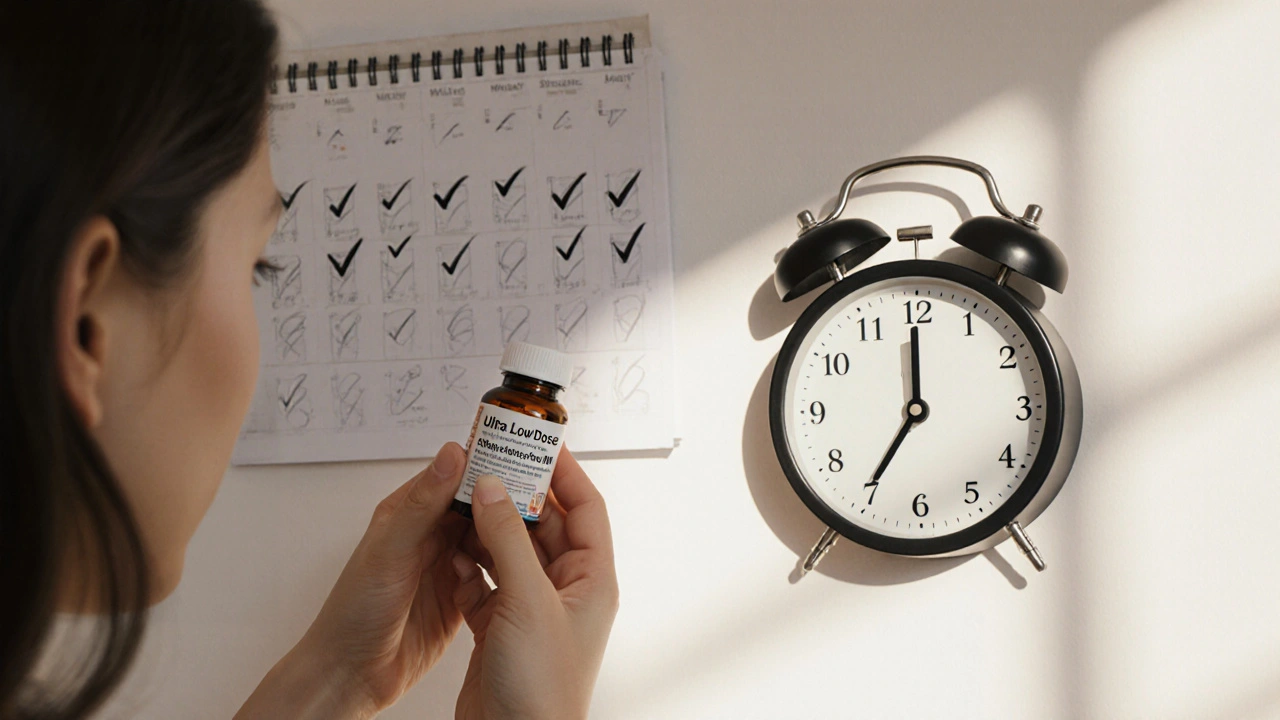
Modern Low-Hormone Birth Control Pills: Safety, Effectiveness, and What You Need to Know
Nov 17 2025 / Health & WellnessModern low-hormone birth control pills offer fewer side effects than older versions, but require strict daily use. Learn how they work, who they’re best for, and why timing matters more than dose.
VIEW MORE