Medieval Wedding Customs: Marriage as Power, Money, and Survival
When you think of medieval wedding customs, the formal rituals and social rules surrounding marriage in Europe between the 5th and 15th centuries. Also known as arranged marriage practices, it was never just about two people falling in love—it was about two families securing their future. Weddings weren’t celebrations of romance. They were business deals, signed in blood, land, and silver. A bride wasn’t given away—she was transferred, like property, from her father’s control to her husband’s. And if you think that sounds harsh, you’re right. But it was survival.
At the heart of every medieval marriage, a legally binding union designed to consolidate family wealth and political influence. Also known as alliance marriage, it was the backbone of nobility and the path to power for commoners who dared to rise. The dowry system, the payment or property a bride’s family gave to the groom or his family upon marriage. Also known as bride price, it wasn’t a gift—it was insurance. If the husband died, the dowry could keep the widow from starving. If the marriage failed, it could be reclaimed. And if the bride came from a poor family? Sometimes she brought nothing but her labor—and her body. Meanwhile, the dower rights, the portion of a husband’s estate guaranteed to a widow after his death. Also known as widow’s portion, it was the only legal protection most women had against being cast out into poverty. These weren’t romantic traditions. They were legal safeguards in a world where women had almost no rights outside of marriage.
Weddings happened in churches, yes—but the real ceremony was the signing of contracts, the counting of livestock, the transfer of farmland. Betrothals were signed as early as childhood. A girl might be promised to a man she’d never met, often to settle a debt or end a feud. A nobleman might marry his daughter to a minor lord just to get his foot in the door of a richer family. Even peasants married for practical reasons: to combine fields, share tools, or ensure someone would care for them in old age. Love? It was a bonus, not a requirement.
And yet, behind these cold arrangements, people still found ways to love. Letters survive from wives begging their husbands to return from war. Poems were written by men mourning their wives who died in childbirth. Children were named after lovers lost. The system was brutal, but human hearts still beat inside it.
What you’ll find below are articles that pull back the curtain on these hidden worlds—how families used marriage to build empires, how women fought for control within the system, and how the echoes of medieval rules still shape marriage today. No fairy tales here. Just history, raw and real.
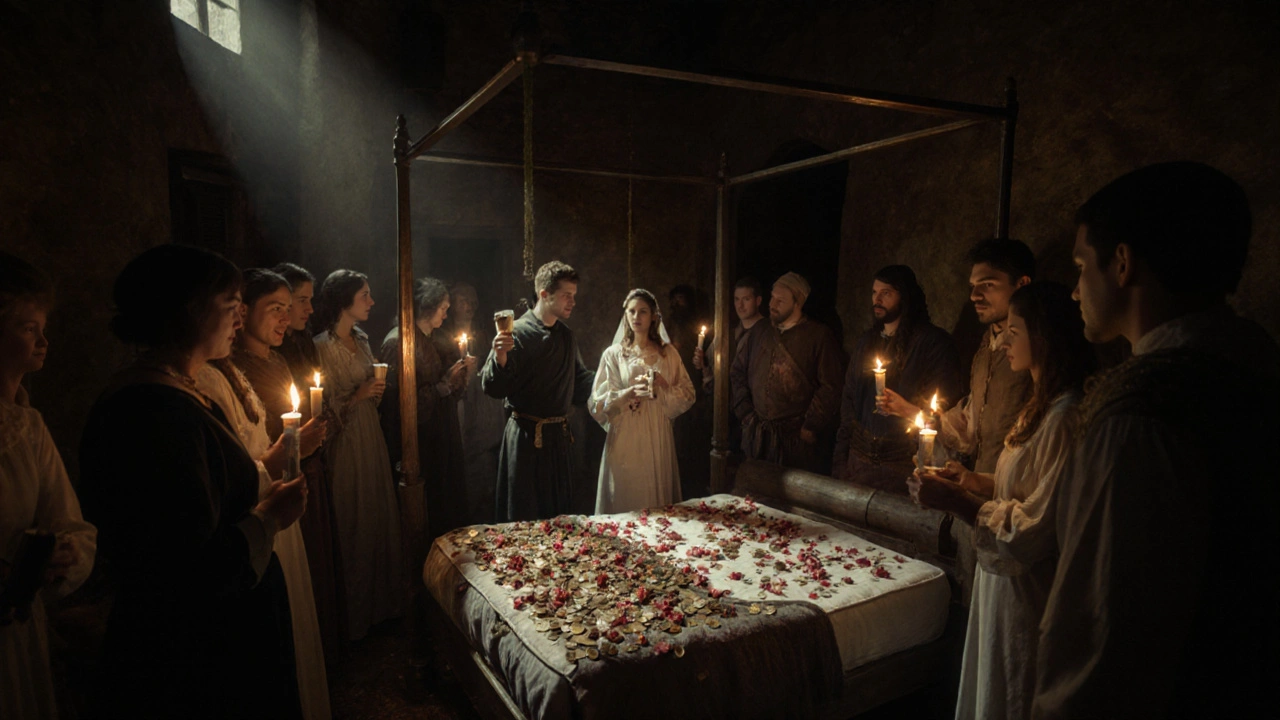
Bedding Ceremonies: How Communities Once Validated Marriage Through Consummation Rituals
Nov 24 2025 / EconomicsBedding ceremonies were once common in medieval Europe, where communities watched newlyweds consummate their marriage to legally validate the union. This practice shaped inheritance, religion, and gender norms-and its echoes survive in today's wedding traditions.
VIEW MORE