Monotremes: The Strange Egg-Laying Mammals That Rewrote Evolution
When you think of mammals, you picture fur, milk, and live birth. But monotremes, a rare group of mammals that lay eggs instead of giving live birth. Also known as egg-laying mammals, they defy everything we assume about what makes a mammal—and they’re still alive today. There are only five species left: the duck-billed platypus and four kinds of echidna. They don’t just look weird—they operate on a completely different biological playbook. While every other mammal on Earth carries its young inside until they’re ready to be born, monotremes lay leathery eggs like reptiles, then nurse their babies with milk secreted through patches of skin. No nipples. No placenta. Just pure evolutionary oddity.
Why do they exist? Scientists think monotremes split off from other mammals over 160 million years ago, before live birth became the norm. That makes them living fossils—walking proof that evolution doesn’t follow one path. The platypus, a semi-aquatic mammal with a bill, webbed feet, and venomous spurs has electroreceptors in its snout to detect prey underwater, something no other mammal can do. The echidna, a spiny, ant-eating mammal found in Australia and New Guinea can lower its body temperature to survive cold nights, a trait more common in reptiles. These aren’t mistakes. They’re adaptations that survived because they worked. And they remind us that nature doesn’t care about our categories.
Monotremes aren’t just curiosities—they’re keys to understanding how mammals evolved. Their existence challenges textbooks. Their biology forces us to rethink what’s "normal." If you’ve ever wondered why humans have nipples but platypuses don’t, or why some animals lay eggs while others don’t, the answer lies in these strange survivors. Below, you’ll find articles that dig into the history of reproduction, the science of evolution, and how nature bends rules we thought were set in stone. You’ll see how science, culture, and biology all collide when we try to explain what makes life work—and why monotremes still refuse to play by the rules.
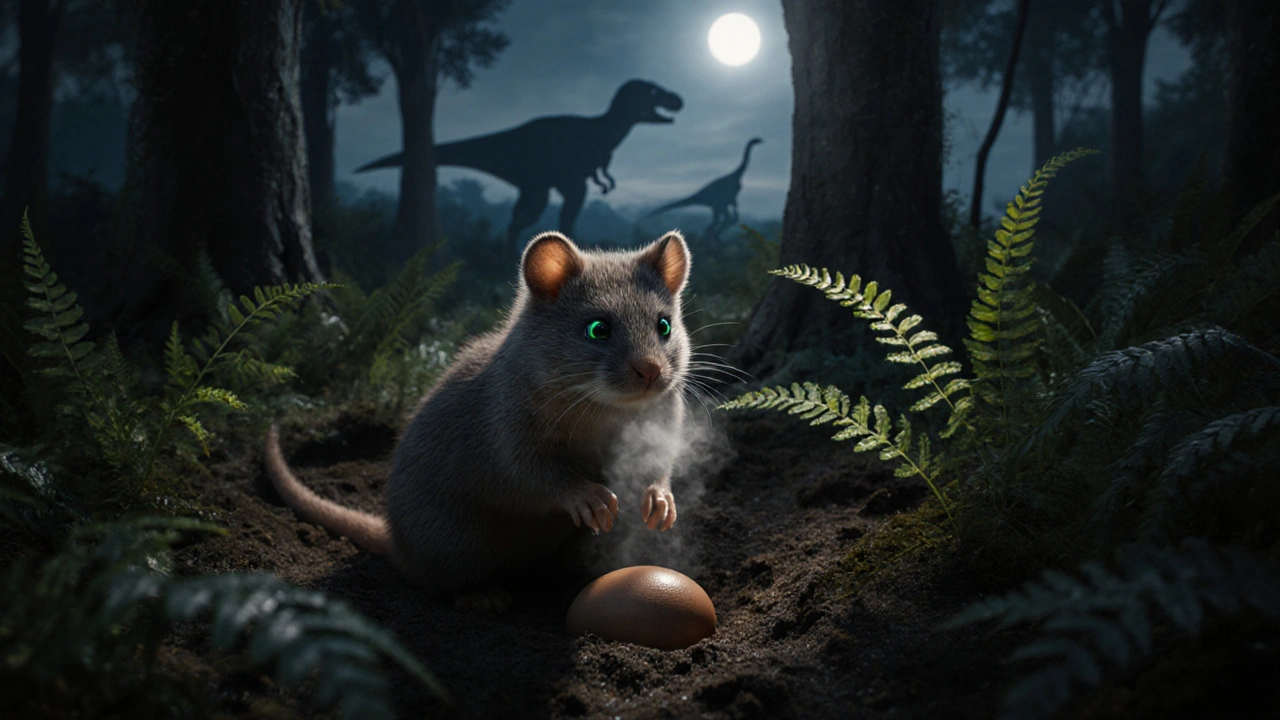
The Origins of Mammalian Reproduction: From Eggs to Live Birth
Oct 31 2025 / History & ArchaeologyMammalian reproduction began with egg-laying and evolved into live birth over 200 million years. Monotremes still lay eggs, while marsupials and placentals developed different ways to nurture young inside and after birth.
VIEW MORE