Peer Education: How Shared Learning Shapes Sexual Knowledge and Consent
When it comes to sex, most of what we learn doesn’t come from textbooks or doctors—it comes from peer education, the informal exchange of sexual knowledge between friends, peers, and community members. Also known as youth-led sexual learning, it’s how teenagers figure out consent, how queer kids find validation, and how women learn what pleasure actually feels like—beyond the myths. Schools often skip the real stuff: how to say no without guilt, why bisexuality isn’t a phase, or how to talk about sex without shame. That’s where peer education steps in—and it’s been doing the heavy lifting for decades.
It’s not just about passing along tips. Gender socialization, the way families and society teach boys and girls what’s expected of them starts at home, but peer groups reinforce it harder. A girl learns she shouldn’t enjoy sex because her friends joke about "sluts." A boy learns to hide his confusion because asking questions makes him seem weak. Peer education can break those cycles, too. When young people share stories—like how they discovered their own orgasm, or how they stood up to coercion—they’re not just talking. They’re rewriting the rules.
And it’s not just about bodies. Consent, the clear, ongoing agreement that makes sex safe and respectful doesn’t come from laws alone. It’s learned in conversations over coffee, in group chats, in the quiet moments after someone says "I didn’t want to, but I didn’t know how to stop." Peer education turns abstract ideas like autonomy and boundaries into real, relatable experiences. It’s why Anne Koedt’s work on the clitoris mattered—not because it was published in a journal, but because women started telling each other: "Your pleasure isn’t imaginary."
Meanwhile, LGBTQ+ validation, the act of recognizing and affirming non-heterosexual identities often happens first among peers. When bisexual erasure silences people in mainstream spaces, it’s friends who say: "That’s real." When lesbian history gets erased from archives, it’s communities who keep the stories alive. Peer education doesn’t wait for permission. It doesn’t need approval from institutions. It just needs people willing to speak up—and listen.
What you’ll find here isn’t theory. It’s the messy, powerful, sometimes uncomfortable truth of how people actually learn about sex—not from lectures, but from each other. From Victorian myths about masturbation to modern AI porn, from Etruscan tomb art to IVF triggers, these stories all connect through one thing: human beings sharing knowledge, challenging lies, and building safer, clearer ways to understand desire, power, and pleasure.
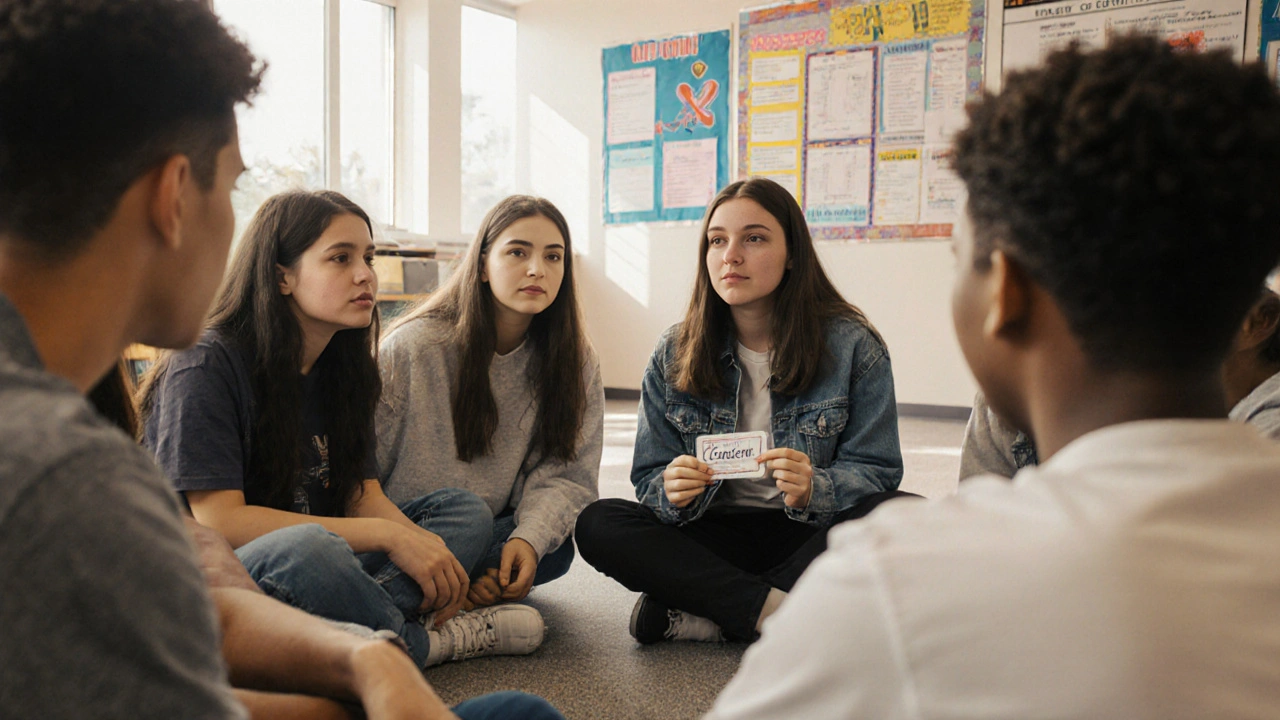
Peer Education Models in Sexual Health: Benefits and How to Implement Them
Nov 23 2025 / Health & WellnessPeer education models in sexual health use trained teens to teach peers about contraception, consent, and STIs. Research shows they improve knowledge, increase condom use, and reduce unintended pregnancies more effectively than traditional sex ed-when properly supervised.
VIEW MORE