Peer Education Impact Calculator
Input Your Program Details
Enter your program specifications to estimate outcomes
Estimated Outcomes
Based on CDC and research data from the article
Enter your program details to see estimated outcomes
- - 38% more comfortable asking questions
- - 23% knowledge retention improvement
- - 72% higher communication skills
- - 33% lower pregnancy rates
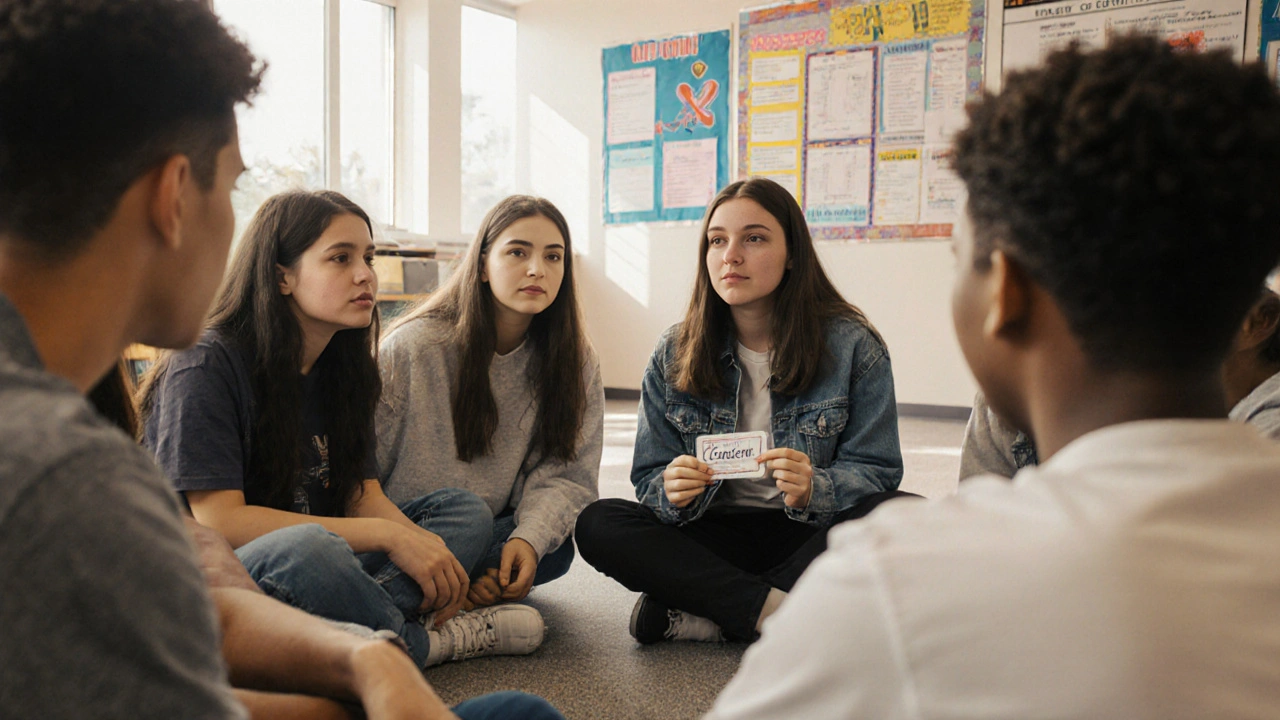
When it comes to talking about sex, teens often don’t feel comfortable asking adults-even teachers or parents. But they’ll talk to their friends. That’s why peer education models in sexual health have become one of the most effective tools in schools and communities across the U.S. These programs train students to teach other students about contraception, consent, STIs, and healthy relationships-not as lecturers, but as peers who’ve been there, learned it, and can explain it in a way that actually sticks.
Why Peer Education Works Better Than Traditional Classes
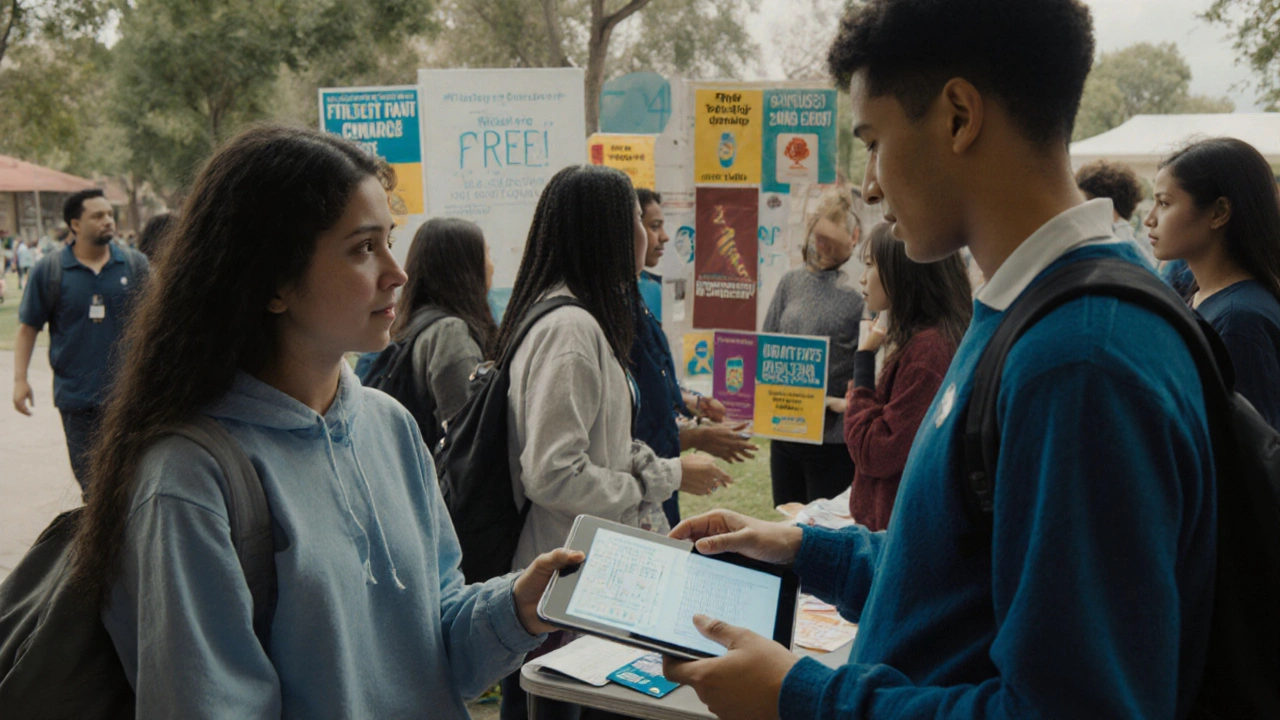
Traditional sex ed often feels like a lecture from someone who doesn’t get your life. Peer education flips that. A 2022 review in the Journal of Adolescent Health found students are 38% more comfortable asking questions about sexual health to someone their own age than to an adult. It’s not just about comfort-it’s about trust. When a 16-year-old tells you how they talked to their partner about using a condom, it doesn’t sound like a textbook. It sounds real.
Studies show peer-led programs increase knowledge retention by 23% compared to teacher-led classes. Condom use knowledge improves even more-by a beta coefficient of 0.31, which means the difference isn’t small. In Teen PEP, a well-documented program in multiple states, students who went through peer education were 72% more likely to practice real-life communication skills around sexual risk reduction. That’s not just theory. That’s skills they can use the next day at a party, on a date, or in a relationship.
And the results show up in behavior. Research from Dr. Susan Stephenson’s 2019 study found female students in peer education programs had 27% fewer sexual encounters and a 33% lower chance of unintended pregnancy over time. These aren’t hypothetical numbers. These are outcomes tracked across hundreds of schools.
How Peer Education Programs Are Built
It’s not as simple as picking a few outgoing kids and handing them a pamphlet. Effective peer education programs follow a clear structure. First, students are recruited-usually between ages 14 and 18. They’re chosen based on leadership potential, not popularity. Some schools use applications. Others rely on teacher nominations.
Then comes training. Most programs require 20 to 40 hours of initial training, with ongoing booster sessions. Teen PEP, for example, uses 30 hours of core training plus 10 hours of follow-up. The curriculum isn’t just facts-it’s practice. Role-playing makes up 89% of sessions. Group discussions? 94%. Brainstorming? 76%. These aren’t filler activities. They’re how students learn to handle real conversations.
The training is grounded in proven theories. Social Cognitive Theory (used in 68% of programs) helps students learn by watching others. The Health Belief Model (37%) helps them understand why they should act. The best programs mix multiple frameworks to cover all angles.
Delivery happens in classrooms (72% of programs), one-on-one (45%), at community events (63%), and now increasingly online (31%, up from 12% in 2018). Digital tools like Teen PEP’s 2024 platform let students access modules anytime, which helps reach those who miss school or feel too shy to speak up in person.
Where Peer Education Shines-and Where It Struggles
Peer education works best in places where adults and teens don’t connect easily. In communities with cultural barriers, language differences, or high student-to-teacher ratios, peer-led programs see up to 34% higher participation from male students compared to adult-led classes. That’s huge. Boys often disengage in traditional sex ed. With peers, they show up.
But peer education has limits. Only 41% of peer educators feel confident discussing STI treatment protocols, compared to 89% of healthcare professionals. Medical accuracy is a real concern. Teacher-led programs still win on that front-97% accuracy vs. 82% for peer-led. That’s why supervision is non-negotiable. Every peer educator needs access to a trained health professional who can answer the hard questions they can’t.
And in rural areas? Implementation drops by 28%. There just aren’t enough students to recruit. That’s why some programs fail-not because the model doesn’t work, but because they didn’t adapt it to their community.
What Makes a Program Successful
Success isn’t about how many kids are trained. It’s about how well they’re supported. The CDC’s 2023 guidelines say peer education is a “best practice”-but only if it’s done right. Only 52% of U.S. schools provide adequate supervision. That’s a problem. Without oversight, misinformation spreads. One ERIC evaluation found poorly run programs led to 15-20% misinformation rates among students.
High-fidelity programs-those that stick to the full training, supervision, and delivery plan-see 40% more knowledge improvement than low-fidelity ones. That’s the difference between a program that changes behavior and one that just checks a box.
Key ingredients for success:
- Professional supervision at a ratio of at least 1:8 (one staff member for every eight peer educators)
- At least 40 contact hours of training
- Weekly check-ins with a health advisor
- Integration with school health services (so students can get tested or get birth control without leaving campus)
- Opportunities for peer educators to lead community events-like 12-15 per year in SHAPE Oklahoma
Costs vary. SHAPE Oklahoma spends $1,250 per peer educator annually. Teen PEP spends about $1,800. That includes training materials, staff time, and ongoing support. It’s not cheap-but it’s cheaper than treating unintended pregnancies or STIs later.
Challenges Peer Educators Face
Being a peer educator isn’t easy. Thirty-two percent report pressure to give medical advice they’re not trained to give. Twenty-four percent face social backlash-being called “weird” or “preachy” for talking about sex. Some get ignored. Others get mocked.
And turnover is high. Nearly 40% of peer educators don’t return the next year. That’s why programs need to invest in their leaders-not just train them, but celebrate them. Offer service hours. Recognize them at school assemblies. Give them leadership roles in other health initiatives.
Parents are mixed on the idea. Sixty-one percent support peer education. But 39% worry about content-especially around LGBTQ+ topics. In conservative areas, 42% of programs modify their materials just to get approval. That’s a compromise. But it’s also a sign of the political pressures these programs face.
The Future of Peer Education
Things are changing. In 2023, the CDC released new implementation guidelines to standardize quality across programs. Teen PEP’s digital platform reached over 12,500 students in its first six months. More programs are adding trauma-informed approaches (41% now) and LGBTQ+ inclusive modules (63% of new programs, per GLSEN’s 2023 survey).
The Society for Public Health Education is working on national certification standards for peer educators-expected by late 2024. That’s a big step. It means peer educators won’t just be volunteers. They’ll be recognized as trained health communicators.
The market for training materials and support services is growing too-now worth $48.7 million annually, with 12% year-over-year growth. That tells you this isn’t a passing trend. It’s becoming a core part of public health strategy.
Long-term data is strong. Teen PEP showed knowledge improvements still present at 12-month follow-ups. That’s rare in health education. Most programs fade after a few months. Peer education sticks.
What Schools and Communities Need to Do Now
If you’re a school administrator, public health worker, or community organizer looking to start or improve a peer education program:
- Don’t skip supervision. Hire a health educator or nurse to oversee the program full-time.
- Use a proven curriculum like Teen PEP or BART-not something you made up.
- Train peer educators in boundaries: “I don’t know” is a valid answer.
- Connect them to on-site health services so students can get tested or pick up condoms after class.
- Measure outcomes-not just attendance, but knowledge gain, behavior change, and student feedback.
- Include LGBTQ+ content. It’s not optional anymore. 63% of new programs are doing it-and students are asking for it.
Peer education isn’t about replacing teachers. It’s about working with them. It’s about giving students a voice in their own health. And when done right, it doesn’t just teach facts-it changes lives.