Sexual Reproduction: Why It Persists Despite Its Costs and How It Shapes Human History
When it comes to passing on genes, sexual reproduction, the process where two parents combine genetic material to produce offspring. Also known as outcrossing, it’s messy, risky, and energy-heavy—yet almost all complex life uses it. Why? Because asexual reproduction—where one parent clones itself—is faster, cheaper, and simpler. But nature chose the harder path. The reason? the two-fold cost of sex, the idea that sexual reproduction halves genetic contribution per parent compared to cloning. If you’re a female, half your genes go to each kid. In asexual reproduction, you pass all of them. So why didn’t we evolve away from it?
The answer hides in evolution’s long game. the Red Queen hypothesis, a theory that species must constantly adapt just to survive against ever-evolving parasites and pathogens. Sex shuffles genes like a deck of cards, making it harder for diseases to lock onto a stable host. Meanwhile, Muller’s ratchet, the gradual buildup of harmful mutations in asexual populations. Without recombination, bad changes pile up until the lineage collapses. Sexual reproduction cleans the genetic slate. This isn’t just theory—it’s why humans, dogs, oak trees, and even some lizards still mate instead of splitting in half.
And it’s not just biology. The way we think about sex, reproduction, and desire is woven into history. Medieval families arranged marriages like business deals. Victorian doctors called masturbation a disease. Ancient Etruscans painted sex scenes on tombs to guide souls. Feminists fought to prove the clitoris matters. IVF now uses hormone triggers to time egg release down to the hour. All of it connects back to the same question: why do we reproduce this way? The posts below dig into these threads—how evolution shaped our bodies, how culture shaped our shame, and how science is now rewriting the rules. You’ll find stories of erased lesbian histories, banned erotic poems, steam-powered vibrators, and why the female orgasm exists even when it’s not needed for pregnancy. This isn’t just about biology. It’s about power, survival, and what we’re still learning about ourselves.

The Red Queen Hypothesis: Why Sex Persists in a World of Ever-Changing Parasites
Feb 25 2026 / History & CultureThe Red Queen hypothesis explains why sexual reproduction persists despite its costs: parasites drive constant evolutionary change, making genetic diversity through sex a survival necessity.
VIEW MORE
Why Sexual Reproduction Won Evolutionary Arms Race Against Asexual Reproduction
Jan 30 2026 / History & CultureSexual reproduction persists despite its higher costs because it generates genetic diversity, helping populations adapt to diseases and environmental changes. Asexual reproduction may be faster, but sex wins in the long run.
VIEW MORE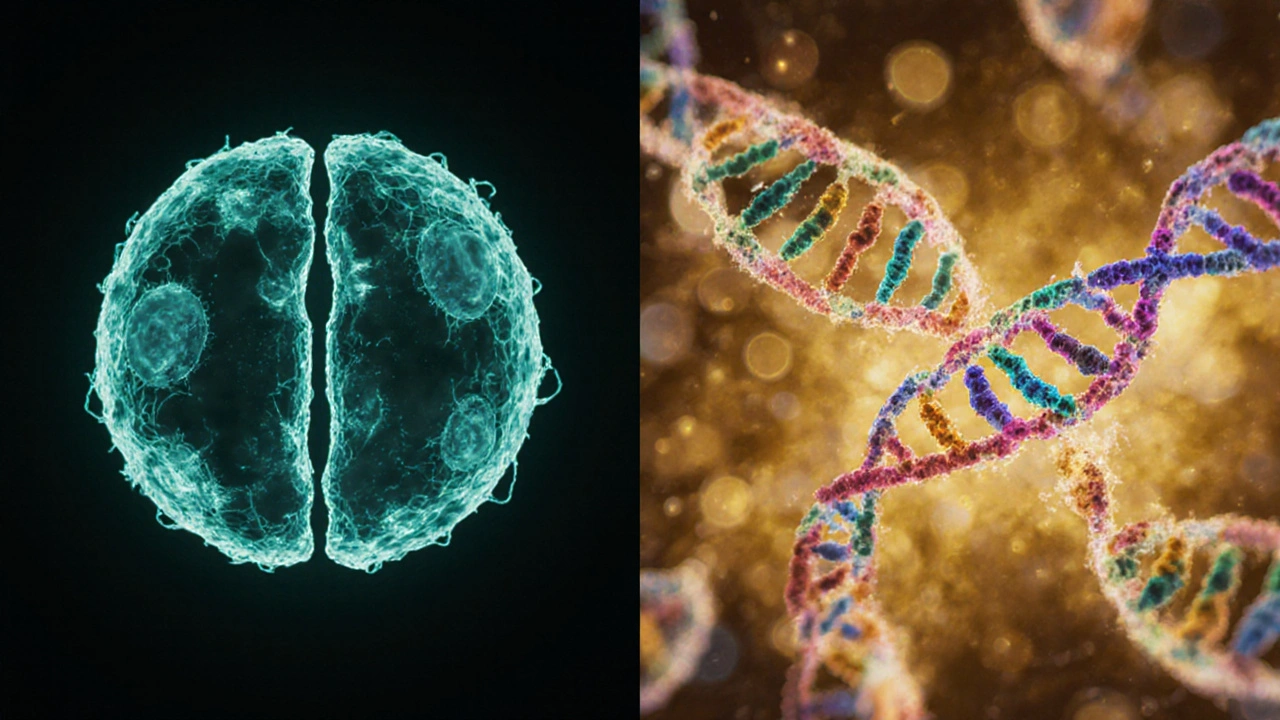
From Asexual Cloning to Gametes: How Sexual Reproduction Changed Evolution Forever
Nov 12 2025 / Health & WellnessSexual reproduction, despite its costs, dominates life on Earth because it creates genetic diversity that helps species survive parasites, disease, and change. This evolutionary shift from cloning to gametes reshaped biology forever.
VIEW MORE