Social Construction: How Society Shapes Gender, Sex, and Identity
When we talk about social construction, the idea that human behaviors, identities, and norms are shaped by culture and institutions rather than biology alone. Also known as socially constructed reality, it means things like gender, sexuality, and even what counts as "normal" aren't written in stone—they're made by people, over time, through power, law, and habit. Think about how men were told to be stoic, women to be nurturing, or how same-sex desire was labeled a disease. None of that came from nature. It came from churches, doctors, courts, and magazines telling us what to believe.
That’s why gender roles, the expectations placed on people based on perceived sex. Also known as traditional masculinity and femininity, it look so fixed—but they’ve changed wildly. In medieval times, marriage was a business deal. In Victorian England, women were told masturbation caused insanity. Today, we know those ideas were tools to control behavior. sexual identity, how people understand and label their own desires and attractions. Also known as sexual orientation, it isn’t something you’re born knowing—it’s something you learn through language, media, and community. Bisexual erasure? Lesbian invisibility? Those aren’t accidents. They’re results of systems that benefit from clear, simple categories.
cultural norms, the unwritten rules that guide behavior in a society. Also known as social expectations, it shape everything from what toys kids get to who gets to speak in a relationship. And power structures, the hidden systems that decide who has control over bodies, laws, and stories. Also known as institutional authority, it decide whose version of history gets printed, whose orgasms get studied, and whose pain gets ignored. That’s why the same act—like a woman masturbating or two men kissing—has been called sinful, sick, or sacred depending on who held the pen, the gavel, or the camera.
You’ll find all of this in the articles below. Not as theory—but as real stories: the steam-powered vibrator sold to cure "hysteria," the lesbian archives burned by librarians, the Victorian doctors who called desire a disease, the mothers who taught their sons to never cry. These aren’t just history. They’re the invisible hands still shaping how you see yourself—and others—today. What you think is natural? It was built. And if it was built, it can be rebuilt.
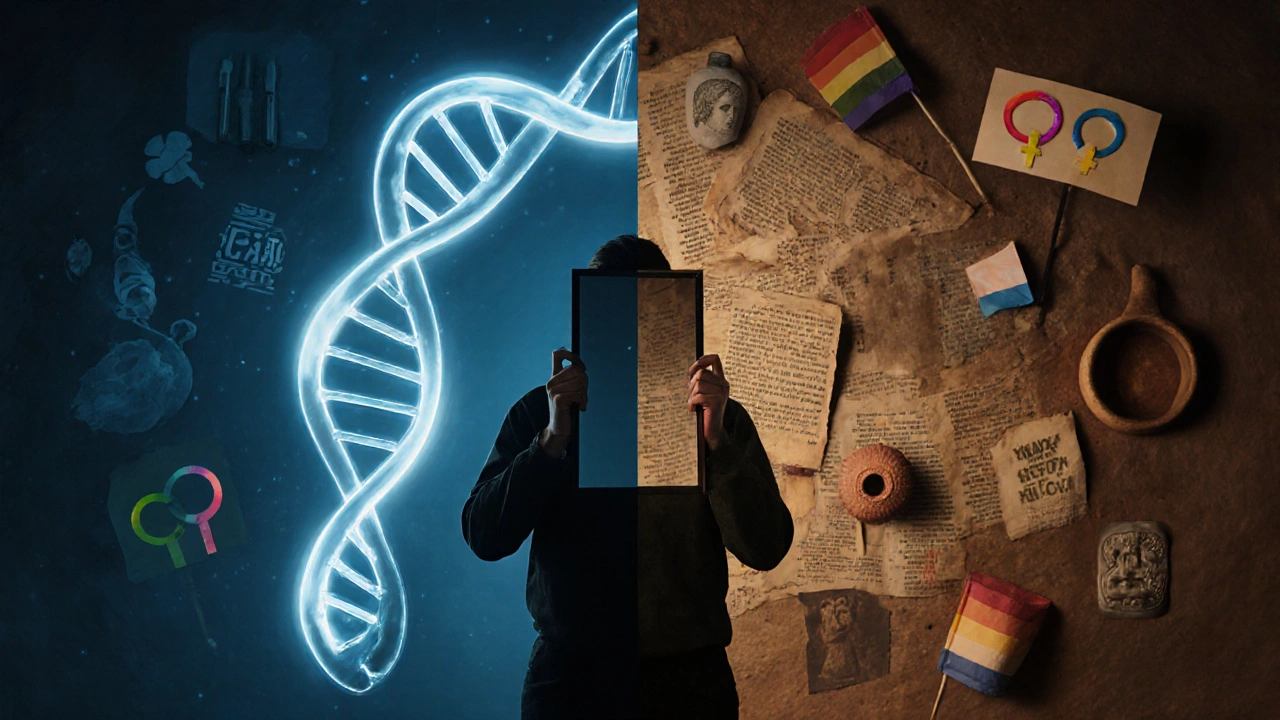
Constructivism vs Essentialism: How We Understand Sexuality Today
Oct 27 2025 / LGBTQ+ HistoryThe debate between constructivism and essentialism shapes how we understand sexual identity. Is sexuality innate or shaped by culture? This article explores the history, politics, and personal impact of both views-and why the truth may lie somewhere in between.
VIEW MORE