Solon's brothels: Ancient sex work, laws, and the birth of regulated prostitution
When we think of prostitution in ancient times, we often picture temples or underground dens—but in 6th century BCE Athens, Solon's brothels, state-sanctioned sex work establishments introduced by the Athenian lawgiver Solon to reduce sexual violence and public disorder. Also known as public brothels, they were one of the earliest examples of a government stepping in to manage sexuality—not to ban it, but to control it. Solon didn’t invent sex work. He made it legal, visible, and taxable. His goal? To protect respectable women from harassment, keep men from assaulting citizens, and channel male desire into a system that also paid for city projects.
These brothels weren’t hidden. They were placed near ports and marketplaces, staffed by enslaved women and some free sex workers, and run under strict rules. Prices were fixed—usually one obol, the cost of a loaf of bread. The money collected didn’t vanish into private pockets; it went straight into the city’s coffers. This wasn’t charity. It was policy. And it worked. Reports from the time suggest a drop in public sexual assaults after the brothels opened. Solon also tied the system to broader reforms: he canceled debts, restructured class roles, and gave the lower classes a voice. His brothels were part of a larger effort to stabilize Athens during a time of deep social unrest.
What’s striking is how modern this feels. Solon understood that outlawing sex work doesn’t make it disappear—it just pushes it into danger. His brothels gave workers a degree of safety, clients a predictable experience, and the state revenue without hypocrisy. This model didn’t last forever, but its influence spread. Later Roman laws, medieval town ordinances, and even modern debates about decriminalization all trace back to this moment. The idea that sex work can be regulated, not eradicated, began here.
Across the posts below, you’ll find how this ancient system connects to today’s struggles over consent, gender, and legal control of sexuality. From Victorian-era medical myths about female desire to the erased histories of lesbian sex workers, the thread is the same: who gets to control bodies, and who profits from it? Solon’s brothels weren’t perfect—but they were a turning point. And understanding them changes how you see every law, every protest, every policy about sex that came after.
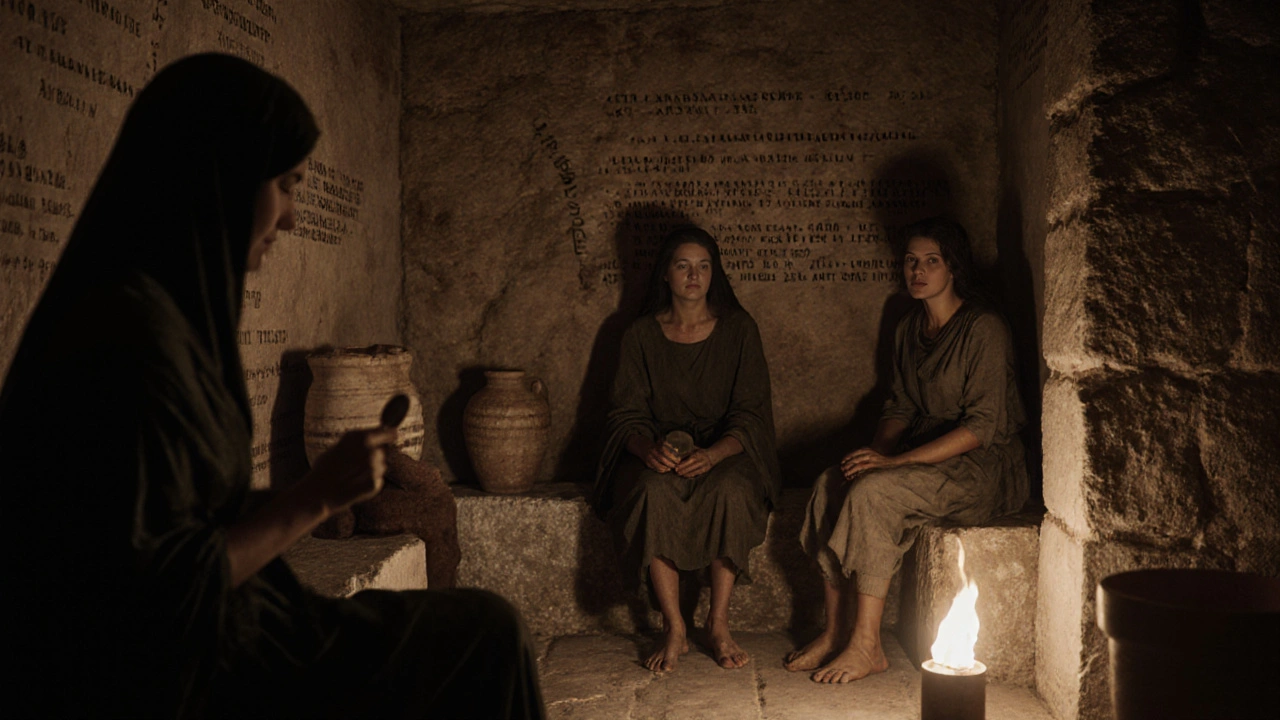
Athenian Prostitution: The Real Categories of Pornai and Hetairai
Oct 22 2025 / Global TraditionsAncient Athens had only two real categories of sex workers: pornai and hetairai. The terms 'chamaitypa'i' and 'perepatetikes' are modern myths. Here's how the system actually worked-and who paid the price.
VIEW MORE