Southeast Asian Erotic Traditions: Ancient Rituals, Sacred Sex, and Cultural Power
When we think of Southeast Asian erotic traditions, ritualized sexual practices tied to spirituality, power, and social order across Thailand, Cambodia, Indonesia, and India. Also known as sacred sexuality in Southeast Asia, these traditions weren’t about taboos—they were about connection: between body and spirit, ruler and divine, lover and cosmos. Unlike Western views that split sex from religion, these cultures saw pleasure as a path to enlightenment, a tool for social stability, and a form of worship.
Take the Khajuraho temples, 10th-century Hindu temples in India with hundreds of carved sexual scenes meant to guide souls through earthly desires toward spiritual liberation. Also known as erotic temple art, these weren’t decorative—they were theological. The same logic applied in ancient Cambodia, where temple dancers (apsaras) performed rituals that blurred the line between devotion and sensuality. In Thailand, Tantric traditions, a spiritual system using breath, movement, and sex to awaken energy. Also known as esoteric Buddhist practices, were adapted into local rites long before Westerners labeled them "sexual yoga." These weren’t fringe acts—they were mainstream spiritual discipline.
Then there’s the role of sex workers in sacred spaces. In ancient Southeast Asia, temple-prostituted women weren’t stigmatized—they were trained in music, dance, and ritual intimacy, serving as intermediaries between the divine and the human. Their role was institutional, not criminal. This system lasted for centuries, until colonial powers labeled it immoral and shut it down. The legacy? Today’s underground sex economies still echo those ancient structures—only now, they’re hidden, not honored.
What’s missing in most Western discussions is the political layer. Erotic art wasn’t just about pleasure—it was about control. Kings commissioned carvings to show their mastery over desire. Queens used dance to assert spiritual authority. Sex symbols were currency: who touched whom, when, and why, dictated social hierarchies. These traditions didn’t just reflect culture—they built it.
What you’ll find below isn’t just history. It’s a mirror. The same forces that shaped ancient temple rites—shame, power, silence, and reclaiming agency—are still at work today. From how women’s pleasure was erased from records to how modern media distorts Tantra, these articles trace the roots of what we think we know about sex in Asia—and why it’s time to look closer.
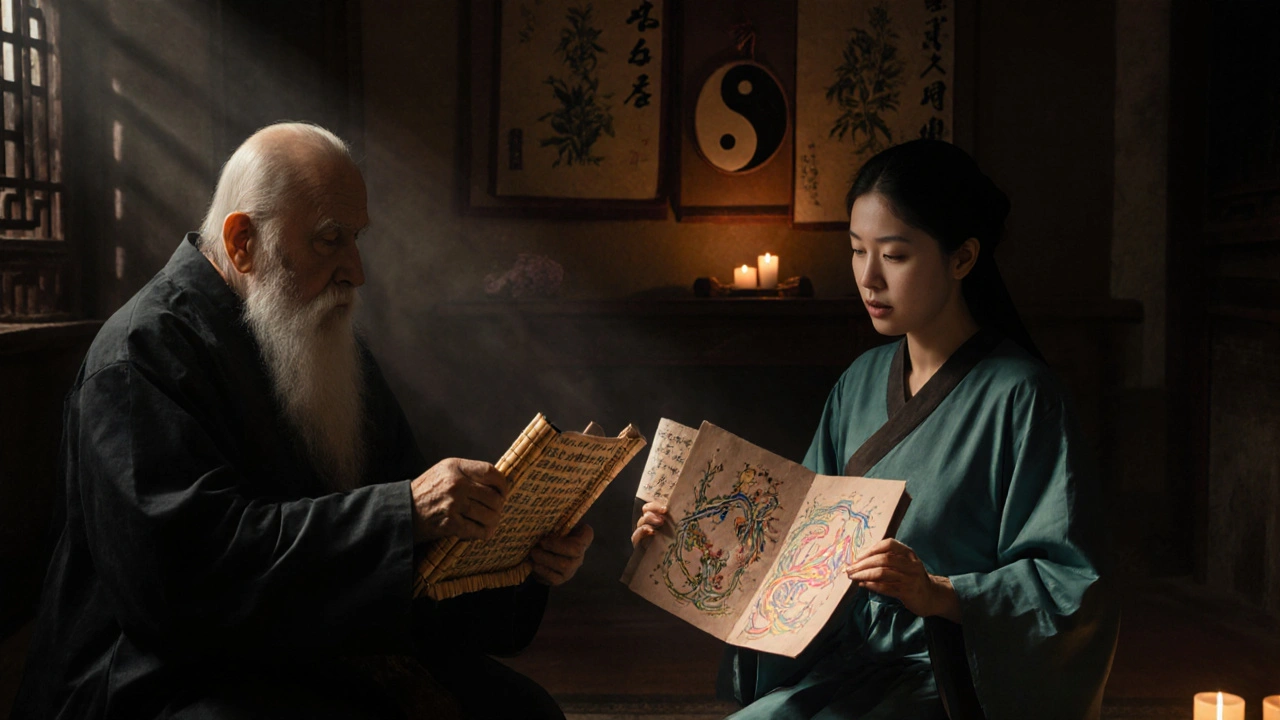
Sexuality in Ancient China and Southeast Asia: Medicine, Method, and Social Roles
Oct 22 2025 / Global TraditionsAncient China and Southeast Asia developed sophisticated systems of sexual medicine, blending spirituality, herbalism, and body awareness. From energy conservation techniques to early recognition of STIs, their methods reveal a deep, practical understanding of human sexuality long before modern science.
VIEW MORE