Unpaid Housework: The Hidden Labor That Shaped Gender, Power, and Sex
When we talk about unpaid housework, the daily labor of cleaning, cooking, caregiving, and emotional management that goes uncompensated and often unacknowledged. It's not just laundry and dishes—it's the foundation of how families, economies, and gender roles have been built for centuries. This work, mostly done by women, isn't optional. It's essential. And yet, it's never counted in GDP, never paid in wages, and rarely treated as real work—even though it keeps society running.
Think about the Victorian gender roles, the rigid system that locked women into the home while men dominated public life. That divide didn’t happen by accident. It was designed to make unpaid housework invisible, so men could claim the public sphere as their own. Women’s labor at home became a moral duty, not an economic contribution. This idea didn’t vanish with corsets—it lives on in how we still assume women will handle the kids, the meals, the emotional labor, even when they work full-time jobs. Meanwhile, men who do housework are often praised as "helping," as if it’s a favor, not a shared responsibility.
And here’s the real link to sex: when one person carries the weight of unpaid labor, it changes power in relationships. It affects who gets tired, who gets angry, who has time for pleasure—or even just rest. That imbalance shows up in the orgasm gap, in how often women say "no" to sex because they’re emotionally drained, and in how little men understand what it’s like to manage a household on top of a job. This isn’t about blame. It’s about systems. The same systems that labeled women’s sexuality as "hysterical" in the 1800s are the ones that still treat their labor as background noise today.
What you’ll find below isn’t just a list of articles. It’s a chain of connections—how domestic roles shaped medical myths about masturbation, how marriage was once an economic contract, how feminism fought to make invisible labor visible, and why consent can’t be separated from who’s doing the dishes. These stories aren’t about the past. They’re about why, right now, your kitchen, your bedroom, and your paycheck are all tied to the same hidden history.
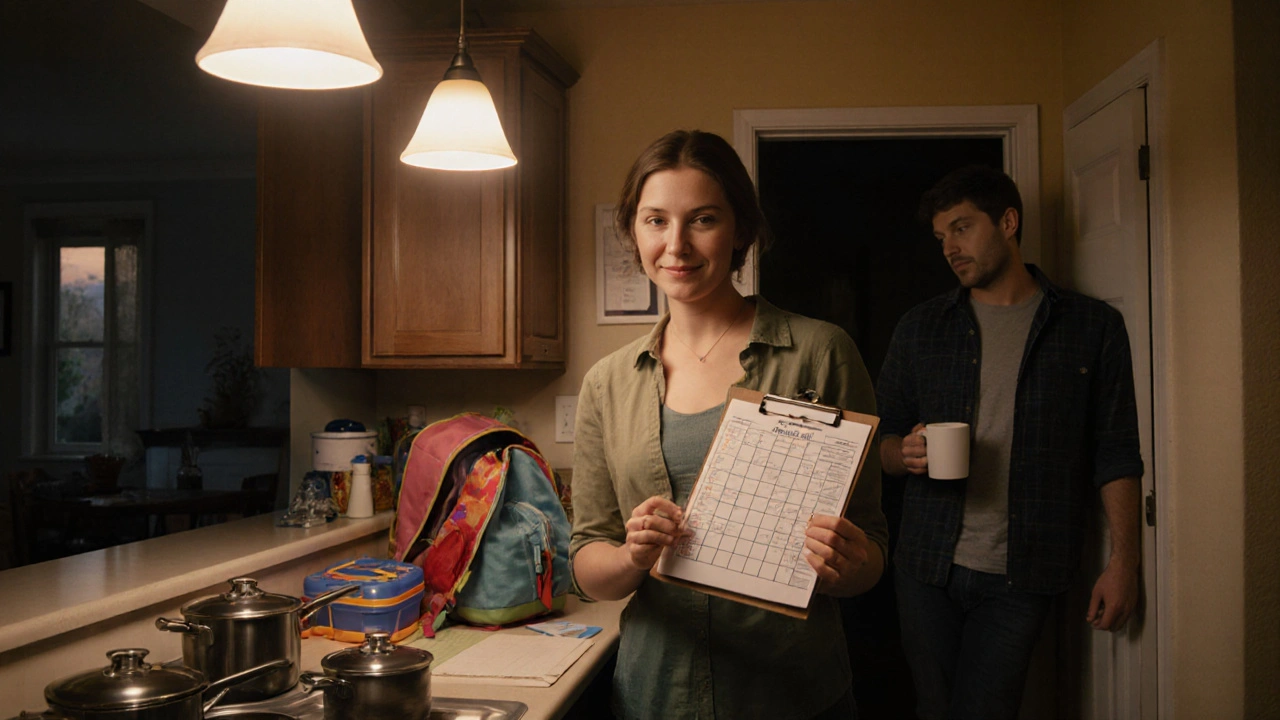
Domestic Labor and the Second Shift: Who Does What at Home?
Oct 24 2025 / EconomicsWomen still do nearly twice as much unpaid housework and childcare as men-even when they work full-time. This 'second shift' drains time, energy, and mental health. Data shows the gap persists across races and income levels, and real change requires more than good intentions.
VIEW MORE