Wedding Bedding Tradition: History, Symbols, and Hidden Meanings
When you think of a wedding bedding tradition, a ceremonial act where newlyweds are put to bed together in front of witnesses, often involving symbolic items like coins, herbs, or special linens. Also known as bedding ceremony, it was once a standard part of marriage across Europe and beyond—not romance, but a public contract. This wasn’t about privacy. It was about proof. Communities needed to know the marriage was consummated, or the union could be annulled. The bedding wasn’t sweet—it was legal.
The dowry system, the transfer of goods or money from the bride’s family to the groom’s as part of the marriage agreement often dictated what went into that bed. A bride’s trousseau wasn’t just clothes—it included embroidered linens, wool blankets, even herbs like rosemary for luck or rue to ward off evil. These weren’t gifts. They were assets. In medieval times, if a husband abandoned his wife, the bedding could be reclaimed as part of her dower rights, the legal entitlement a widow held to a portion of her husband’s estate. The bed wasn’t just where sex happened—it was where property changed hands.
Wedding bedding rituals varied wildly. In 16th-century England, guests would strip the couple, carry them to bed, and toss coins onto the mattress for prosperity. In rural France, the groom’s mother might place a loaf of bread under the sheets to ensure fertility. In some German villages, the bride’s garter was pinned to the bedpost as a symbol of her transition from daughter to wife. These weren’t quirky customs—they were social insurance. They protected families from fraud, ensured lineage, and reinforced gender roles. The woman’s body became a site of public verification. The man’s role? To perform, not to choose.
By the 1800s, Victorian ideals of modesty killed the tradition. The bed became private. The ritual became taboo. But the underlying power dynamics didn’t disappear—they just got quieter. Today, when couples buy matching sheets or gift each other luxury bedding, they’re echoing a ritual that once demanded witnesses, coins, and sometimes, a priest’s blessing. The marital symbolism, the use of objects, rituals, and spaces to encode social meaning in marriage still lingers. The bed still holds meaning. It’s just no longer watched.
What you’ll find in the posts below are stories that connect this tradition to bigger truths: how marriage was once an economic contract, how women’s bodies were policed through ritual, and how the things we think of as romantic are often just relics of control. You’ll see how the same forces that shaped wedding bedding also shaped gender roles, sexual shame, and even how we think about consent today. These aren’t old stories. They’re the foundation of what we still live with.
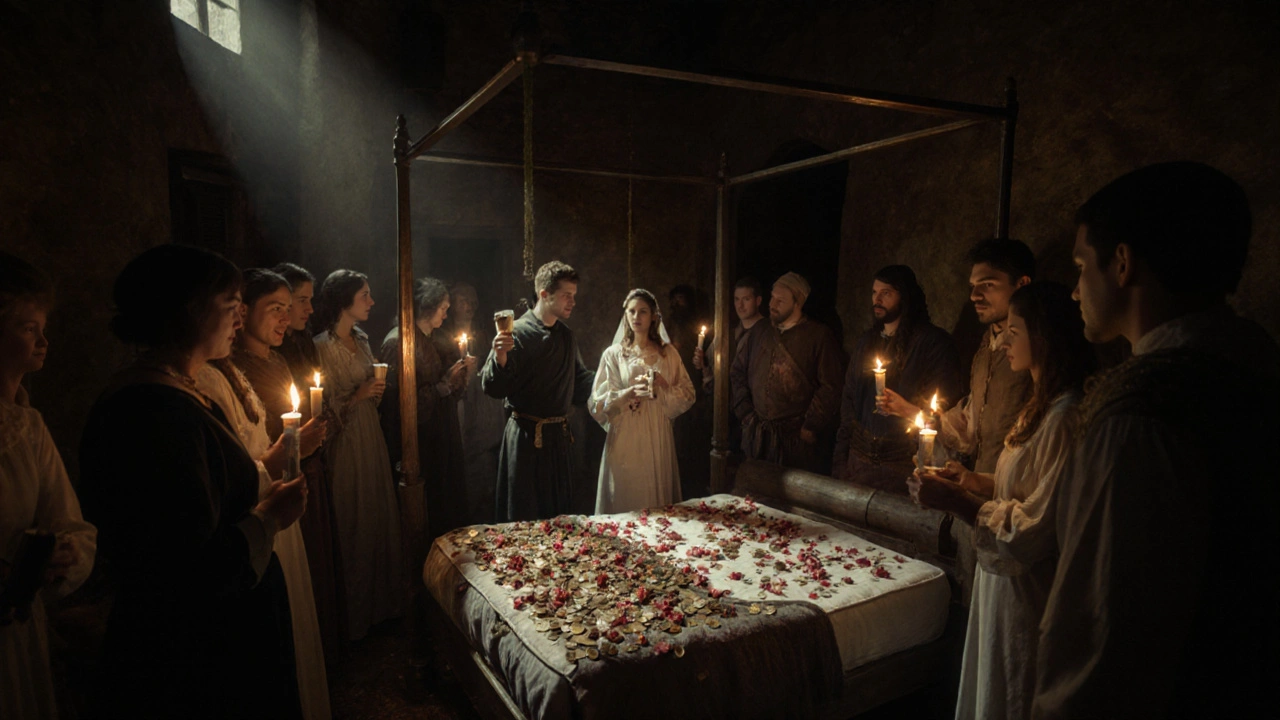
Bedding Ceremonies: How Communities Once Validated Marriage Through Consummation Rituals
Nov 24 2025 / EconomicsBedding ceremonies were once common in medieval Europe, where communities watched newlyweds consummate their marriage to legally validate the union. This practice shaped inheritance, religion, and gender norms-and its echoes survive in today's wedding traditions.
VIEW MORE