1950s Sex Education
When we talk about 1950s sex education, a system designed to enforce sexual morality through silence, fear, and gendered rules. Also known as moral purity education, it wasn’t about health—it was about keeping women in line and men from thinking too much. Schools didn’t teach anatomy. They taught shame. Girls were warned that sex would ruin them. Boys were told to suppress desire. No one talked about pleasure, consent, or even basic biology. If you asked a question, you got a glare, not an answer.
This system didn’t come out of nowhere. It was the last gasp of Victorian legacy, a 19th-century belief that women were morally fragile and men were driven by uncontrollable urges. Also known as separate spheres ideology, it had already shaped how women were educated, how marriage was viewed, and how masturbation was labeled a disease. By the 1950s, it was codified into school pamphlets, church lessons, and parent-teacher meetings. The goal? Prevent premarital sex at all costs—even if it meant leaving kids completely unprepared for real life. Meanwhile, female purity, the idea that a woman’s worth was tied to her sexual inexperience. Also known as chastity culture, it was enforced through dress codes, curfews, and public shaming. Girls who dated too much were called names. Boys who talked about sex were told to grow up. And anyone who dared mention homosexuality? They were told it didn’t exist—or worse, that it was a mental illness. This wasn’t ignorance. It was policy. Textbooks avoided the word "vagina." Teachers skipped the word "erection." The only time sex was discussed was in the context of sin, scandal, or sterilization.
What’s shocking isn’t that this system failed—it’s that so much of it still lingers. The silence around female desire? Still here. The idea that boys can’t control themselves? Still used to excuse abuse. The refusal to teach real anatomy until college? Still common in some states. The posts below dig into the roots of this silence—from the 1950s sex education pamphlets that banned the word "clitoris," to the medical myths that labeled masturbation as dangerous, to the legal systems that censored even basic health information. You’ll find stories about how women secretly shared knowledge, how gay teens were punished for existing, and how the fear of sex became more powerful than the truth about it. This isn’t just history. It’s the reason so many people still feel awkward, ashamed, or confused about their own bodies.
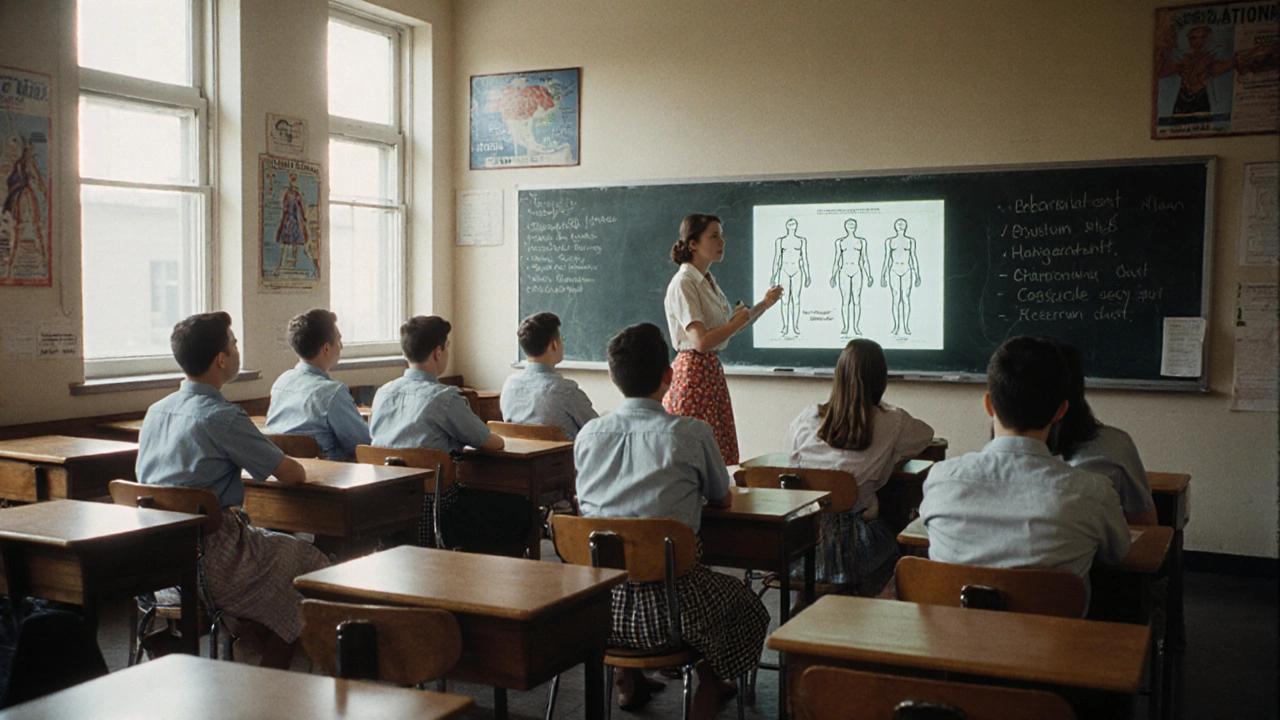
1950s Shift: How the AMA’s Sex Education Series Changed American Schools
Nov 30 2025 / History & CultureIn 1955, the American Medical Association launched the first nationwide sex education program in U.S. public schools. It taught facts, not fear-and reduced teen pregnancy and STDs. Its legacy still shapes how we teach sex education today.
VIEW MORE