AMA Sex Education: Real Histories, Myths, and Truths About Sex
When people ask AMA sex education, a call for honest, unfiltered answers about sexuality often rooted in personal experience and historical context. Also known as Ask Me Anything about sex, it’s not just about facts—it’s about breaking down decades of silence, shame, and misinformation. This isn’t the sanitized version you got in high school. It’s the messy, real, sometimes shocking truth behind how we learned—or didn’t learn—about our bodies, desires, and rights.
Behind every consent, the clear, voluntary agreement to engage in sexual activity, shaped by culture, law, and power. Also known as affirmative consent, it’s now a legal standard—but it wasn’t always talked about is a long history of control. For centuries, women’s pleasure was ignored, men’s desires were pathologized, and queer identities were erased. The masturbation, self-stimulation once labeled a medical emergency by Victorian doctors. Also known as self-pleasure, it’s now proven to reduce stress and improve sleep myth? Doctors once said it caused blindness and insanity. The gender roles, socially enforced expectations about how men and women should behave, especially in sex and relationships. Also known as traditional masculinity and femininity, they dictated who could touch whom, when, and why you grew up with? They came from Victorian-era ideas that treated women as passive and men as uncontrollable. These aren’t just old ideas—they’re the ghosts still whispering in today’s classrooms, courtrooms, and bedrooms.
What you’ll find here isn’t theory. It’s the real stories: how women fought to claim their orgasms, how LGBTQ+ people survived police raids and censorship, how a steam-powered vibrator was sold as a medical device, and how marriage used to be a business deal—not a love story. You’ll read about banned poems, erased lesbian histories, and the science that finally proved the clitoris matters. These aren’t footnotes. They’re the foundation of every honest conversation about sex today.
If you’ve ever wondered why sex education feels broken, why shame still sticks, or why some people still think masturbation is dangerous—you’ll find your answers here. No fluff. No judgment. Just the history, the science, and the voices that refused to stay silent.
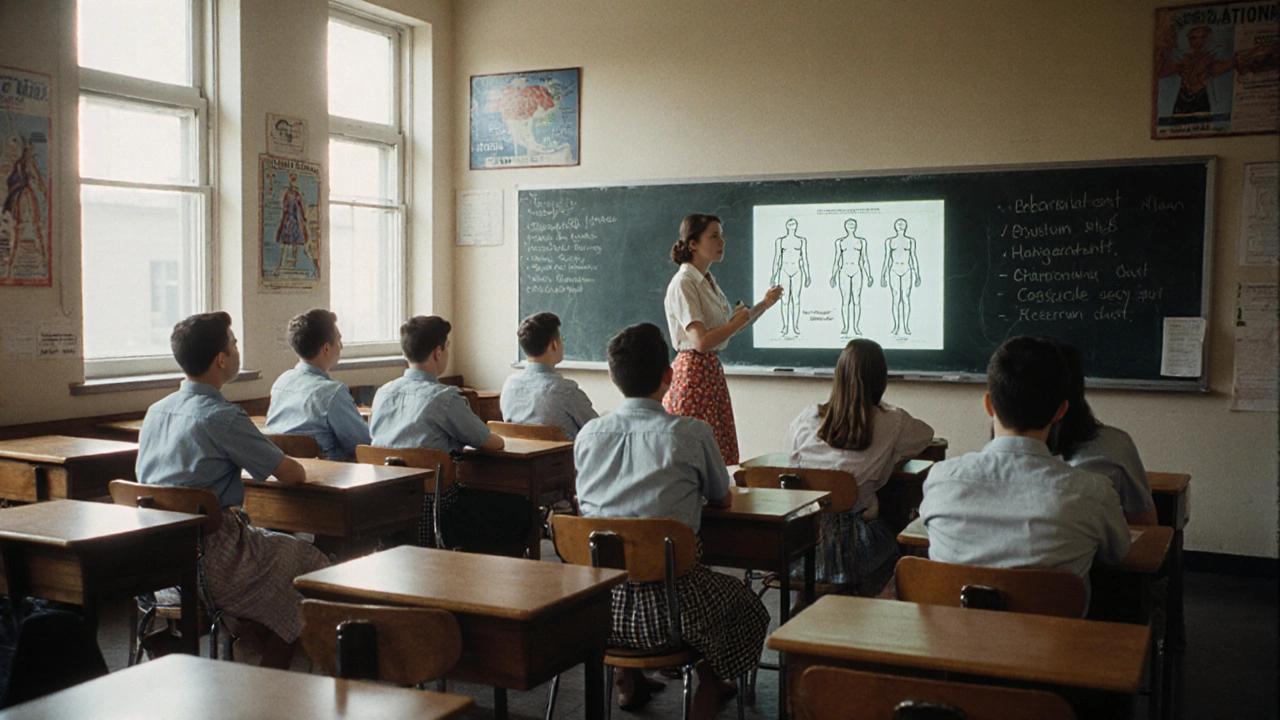
1950s Shift: How the AMA’s Sex Education Series Changed American Schools
Nov 30 2025 / History & CultureIn 1955, the American Medical Association launched the first nationwide sex education program in U.S. public schools. It taught facts, not fear-and reduced teen pregnancy and STDs. Its legacy still shapes how we teach sex education today.
VIEW MORE