Ancient Egyptian Lipstick: Beauty, Power, and Ritual in Early Cosmetics
When you think of ancient Egyptian lipstick, a vivid red pigment applied to lips as both adornment and spiritual protection. Also known as red ochre lip color, it was more than makeup—it was a ritual object worn by queens, priests, and commoners alike to signal status, ward off evil, and honor the gods. Unlike modern lipsticks made in labs, Egyptian versions came from crushed minerals, plant extracts, and even crushed beetles—mixed with fat or oil to stick to the skin. The color wasn’t random; deep reds meant vitality, connection to the goddess Hathor, and protection in the afterlife.
This wasn’t just about looking good. kohl, a black eyeliner made from galena and soot, often paired with lipstick. Also known as antimony eyeliner, it was applied to both men and women to reduce glare from the desert sun and keep flies away—but it also carried magical meaning, believed to invoke the eye of Horus for divine protection. Lipstick and kohl were sold in small alabaster pots, sometimes buried with the dead so they’d look their best in the next world. Women in Thebes wore bright red lips to temple ceremonies; men in the royal court used darker shades to show authority. Even servants applied simple stains before work, proving beauty rituals cut across class.
These practices weren’t isolated. They connected to broader Egyptian beliefs about the body as a vessel for the soul, where appearance mattered as much as action. The same red pigment used on lips was also painted on statues of gods and on tomb walls to symbolize life force. red ochre, a naturally occurring iron oxide pigment. Also known as hematite, it was mined from the Eastern Desert and traded across the Nile Valley, making it one of the first globally traded beauty ingredients. Archaeologists found lipstick containers in the tombs of pharaohs’ wives, alongside mirrors and perfumes—proof that personal care was sacred. And unlike today, where makeup is often seen as superficial, in ancient Egypt, it was medicine, magic, and identity rolled into one.
What you’ll find in the posts below isn’t just a list of old cosmetics. It’s a window into how people used beauty to claim power, resist control, and connect with something deeper than fashion. From the gendered use of color to the hidden politics of scent and pigment, these stories reveal how ancient rituals still echo in how we see ourselves today.
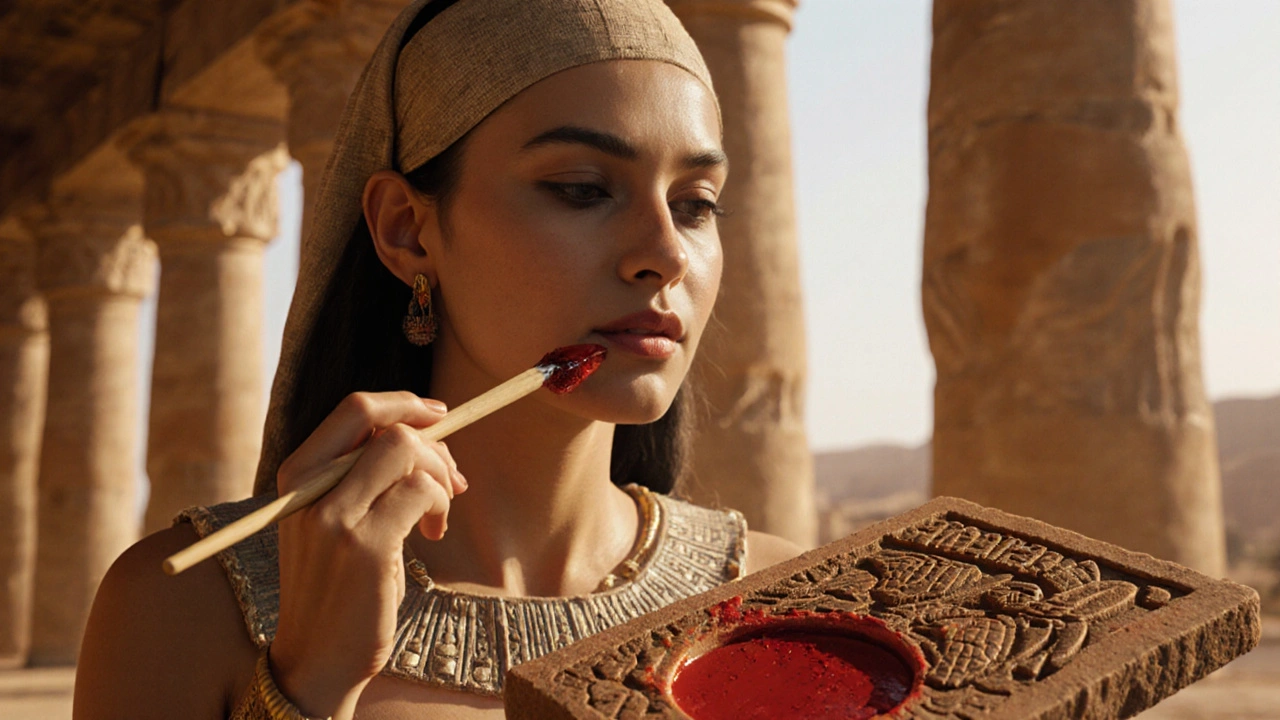
Lipstick and Signals in Ancient Egypt: How Cosmetics Communicated Sex, Status, and Power
Nov 22 2025 / History & CultureAncient Egyptians used lipstick not just for beauty, but as a coded system to signal social status, sexual availability, and spiritual power - with Cleopatra’s crimson lips becoming a symbol of political and erotic authority.
VIEW MORE