When you think of ancient Egypt, you probably picture pyramids, pharaohs, and hieroglyphs. But behind the grand temples and golden masks was a society that used lipstick like a language. Not just for beauty - for signaling. Who you were. Who you wanted to be. Even who you were available to. And it all started with a smear of red ochre on the lips.
It Wasn’t Just Makeup - It Was a Message
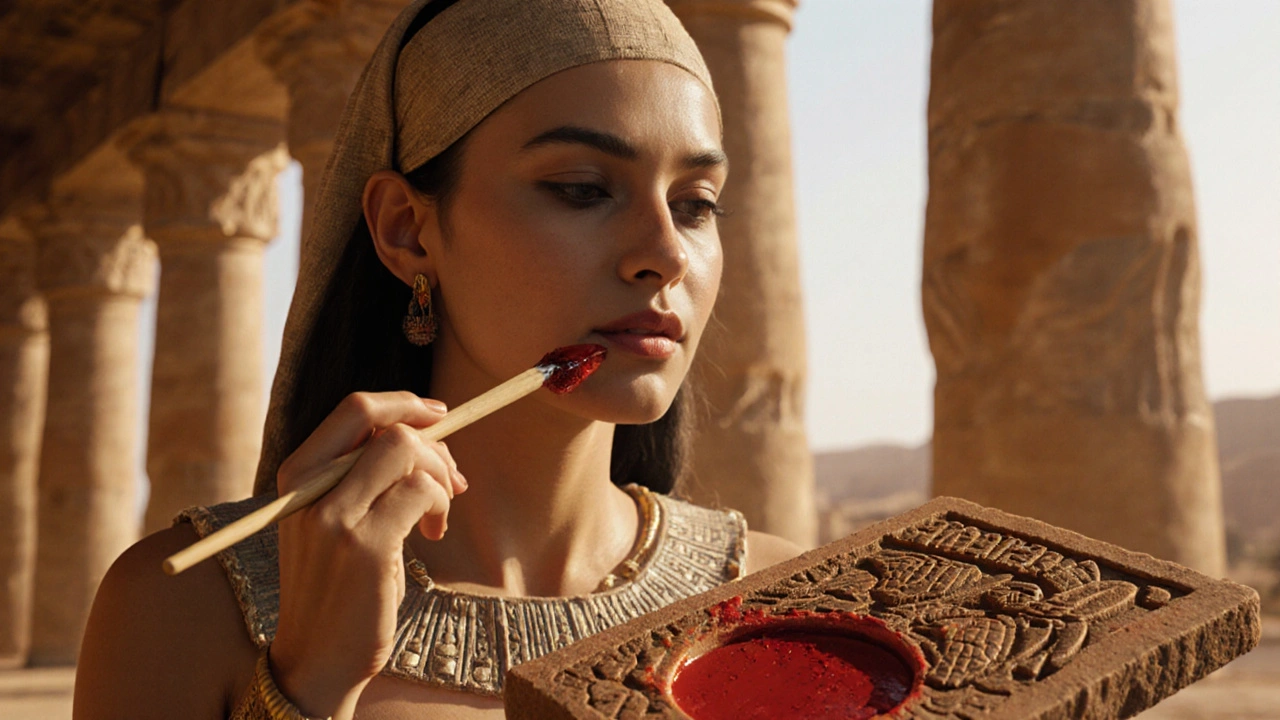
Ancient Egyptians didn’t wear lipstick the way we do today - to look pretty or follow a trend. For them, it was a coded signal. A woman’s lip color told you her social rank, her marital status, her health, and even her sexual availability. This wasn’t guesswork. It was systematized, documented, and enforced by culture. Archaeologists found cosmetic palettes from 3100 BC, carved with shapes of mating turtles - symbols of fertility and regeneration. These weren’t just tools. They were ritual objects. The act of grinding red ochre, mixing it with oils or beeswax, and applying it to the lips was a daily ceremony. And every step carried meaning. The Ebers Papyrus, written around 1550 BC, lists over 700 medical recipes. More than half include ingredients used in lip and cheek stains: red ochre, honey, natron, and salt. These weren’t just for looks. They were medicine. Red ochre had antibacterial properties. Honey prevented infection. Natron dried and preserved. So when a woman painted her lips, she wasn’t just flirting - she was protecting herself. And that protection signaled control. Confidence. Power.Cleopatra’s Crimson: Power, Seduction, and Politics
If you want to understand how far this system went, look at Cleopatra VII. She didn’t just wear lipstick - she weaponized it. Her signature shade? A deep crimson made from crushed carmine beetles, red ants, fish scales, red ochre, and beeswax. Modern chemical tests on her era’s cosmetic residues confirm it. The University of Manchester found traces of carminic acid - the same pigment used in today’s red lipstick - in samples from royal tombs. But why this color? Why not a softer pink? Because crimson wasn’t just sexy. It was expensive. It took thousands of insects to make a small amount of dye. Only the elite could afford it. And Cleopatra used that to her advantage. She wasn’t just a queen. She was a brand. Her lips were a billboard: I am powerful. I am dangerous. I am in control. Debelle Cosmetix’s 2024 analysis called it a "symbol of strength, seduction, and royalty." And they’re right. Her lip color wasn’t just about attraction. It was political theater. When she met Julius Caesar or Mark Antony, her lips were part of the negotiation. They said: I am not here to please. I am here to rule.Men Wore It Too - And So Did Priests
Most people assume makeup in ancient Egypt was for women. That’s wrong. Mummified remains from the Deir el-Bahri cache show that men - especially priests and nobles - wore kohl around their eyes and red pigment on their lips. Why? Because beauty was sacred. The gods were depicted with perfect skin and bold lips. To look like a god was to be closer to them. Priests applied cosmetics before rituals to purify themselves. The red on their lips wasn’t for seduction - it was for consecration. But the effect was the same: it drew attention. It marked them as different. As powerful. As desirable in a spiritual sense. And in a society where appearance was tied to morality, wearing makeup was a sign of discipline. People who cared for their bodies were seen as more in control of their lives. That control extended to sexuality. A woman with perfectly applied lips wasn’t just attractive - she was disciplined. And discipline was sexy.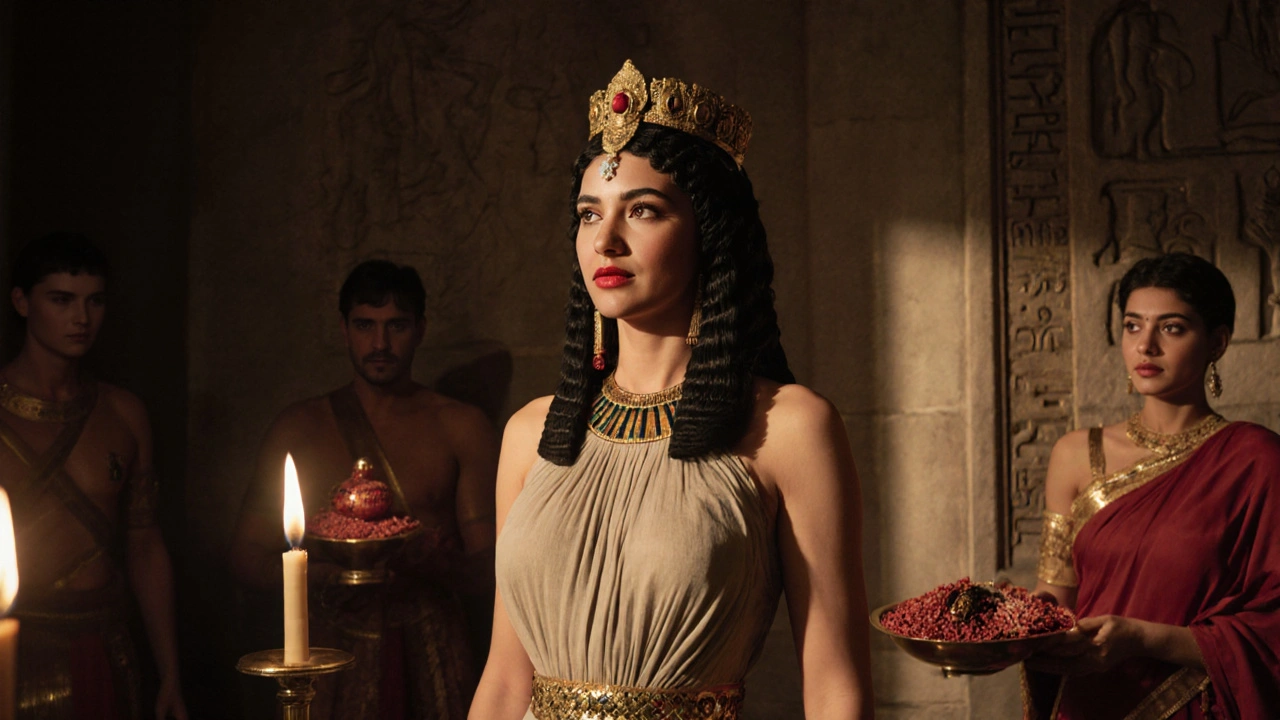
How You Applied It Meant Everything
It wasn’t just the color. It was the shape. Tomb paintings from the reign of Amenhotep III show elite women with sharply defined lips - almost like they’d been drawn with a fine brush. The edges were crisp. The center was darker. The result? Fuller-looking lips. A visual trick that mimicked youth and fertility. Dr. Kara Cooney’s 2024 research links this technique directly to sexual signaling. Fuller lips = higher fertility = greater desirability. And in a culture obsessed with reproduction, that was the ultimate status symbol. The tools were simple: reeds dipped in red ochre paste. But the application? Precision. Elite women spent hours on it. Laborers? They smeared it on quickly, if at all. The difference was obvious. And everyone noticed. The Edwin Smith Papyrus, a medical text from 1600 BC, even refers to "the red lips of the unmarried woman" as a diagnostic clue. Meaning: if a woman had red lips, she was likely available. If she didn’t, she might be married, grieving, or too low-status to afford it.Death Didn’t End the Signal
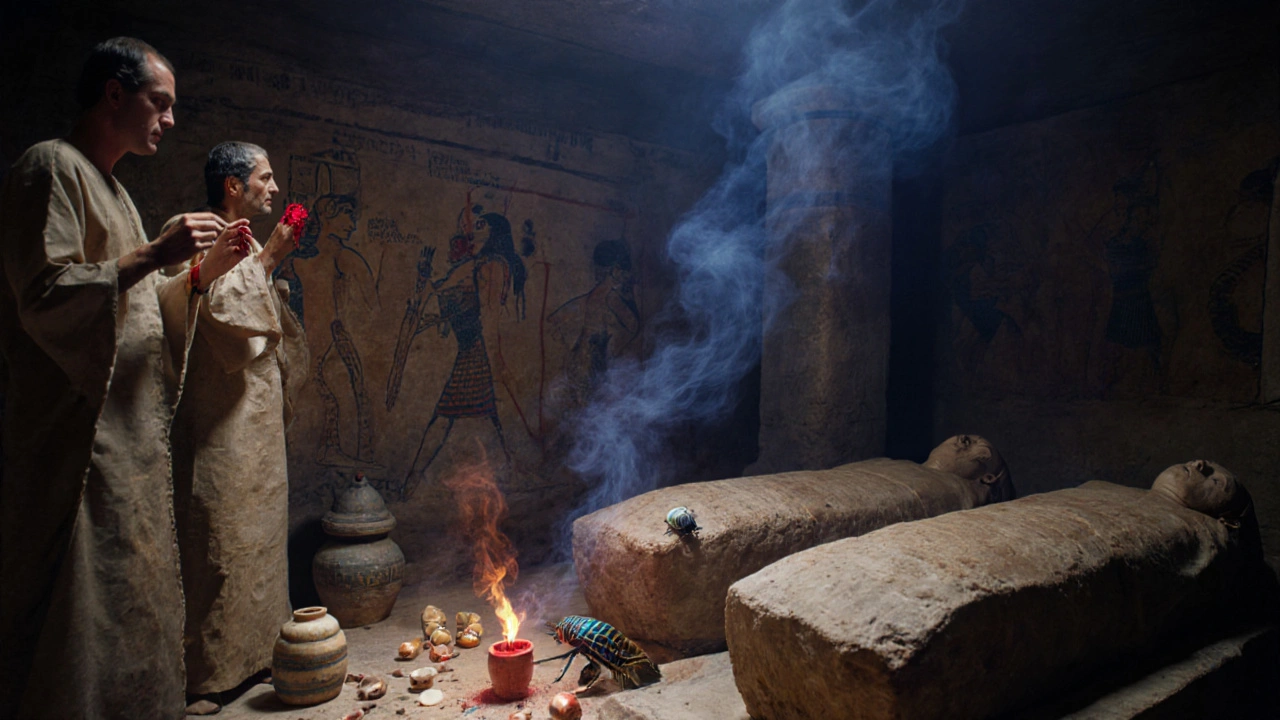
Ancient Egyptians believed the afterlife was a mirror of this world. So they buried their cosmetics with them. In the royal cemetery of Ur, archaeologists found lip stains stored in cockleshells - small, delicate containers meant to last into eternity. These weren’t just relics. They were instructions. When you wake in the next life, paint your lips. Be powerful. Be desirable. Be remembered. Even the materials carried meaning. The scarab beetle, a symbol of rebirth, was often ground into pigments. Red ochre came from the earth - the same soil that buried the dead. Beeswax? It preserved. It lasted. Just like the soul. This wasn’t vanity. It was continuity. The dead were still signaling - to gods, to ancestors, to the living who visited their tombs.