Ancient Rome Sex: Power, Pleasure, and Taboos in Roman Sexual Culture
When we talk about ancient Rome sex, the complex, often contradictory system of desire, control, and social performance in Roman society. Also known as Roman sexuality, it wasn’t just about pleasure—it was about status, citizenship, and dominance. Unlike today’s focus on mutual consent and equality, Roman sexual norms were built on hierarchy. A free Roman man could have sex with slaves, prostitutes, or younger males without shame—because he was the active partner, the one in control. But if he was on the receiving end? That was humiliation. It wasn’t about who you slept with—it was about who held the power.
Sex wasn’t hidden in Rome—it was everywhere. Roman brothels, public spaces where sex was a commercial transaction, often marked by painted frescoes and numbered rooms. Also known as lupanars, these weren’t secret dens—they were normal parts of city life, even in Pompeii, where graffiti still shows clients’ names and prices. Meanwhile, elite men married for alliances, but kept concubines or male lovers on the side. Women had far less freedom. A married woman’s virtue was tied to her husband’s honor, and adultery could mean exile or death. But even then, some women pushed back—like the poet Sulpicia, who wrote openly about desire, or Empress Messalina, whose rumored sexual exploits became political weapons.
Roman gender roles, the rigid expectations of masculinity and femininity that dictated who could act, who could be acted upon, and who was considered civilized. Also known as Roman social hierarchy in sex, these roles didn’t change much across centuries—only who got to enforce them. The ideal Roman man was disciplined, dominant, and emotionally restrained. The ideal woman was modest, fertile, and obedient. But reality was messier. Soldiers had sex with captured women. Emperors like Caligula and Nero turned sex into public spectacle. And in the shadows, women found ways to claim pleasure—even if it meant risking their lives.
What’s missing from most history books? The quiet resistance. The enslaved woman who used sex to survive—and sometimes to gain freedom. The young boy who learned to read Latin in a brothel and later became a poet. The matron who slipped away to secret gatherings where women shared stories, not just chores. Ancient Rome sex wasn’t just about conquest. It was about survival, subversion, and the stubborn human need to connect, even under the heaviest chains.
Below, you’ll find real stories pulled from history—the banned poems, the tomb paintings, the medical texts, and the courtroom records—that reveal how Romans really lived, loved, and lied about sex. No myths. No romanticizing. Just the messy, powerful truth.
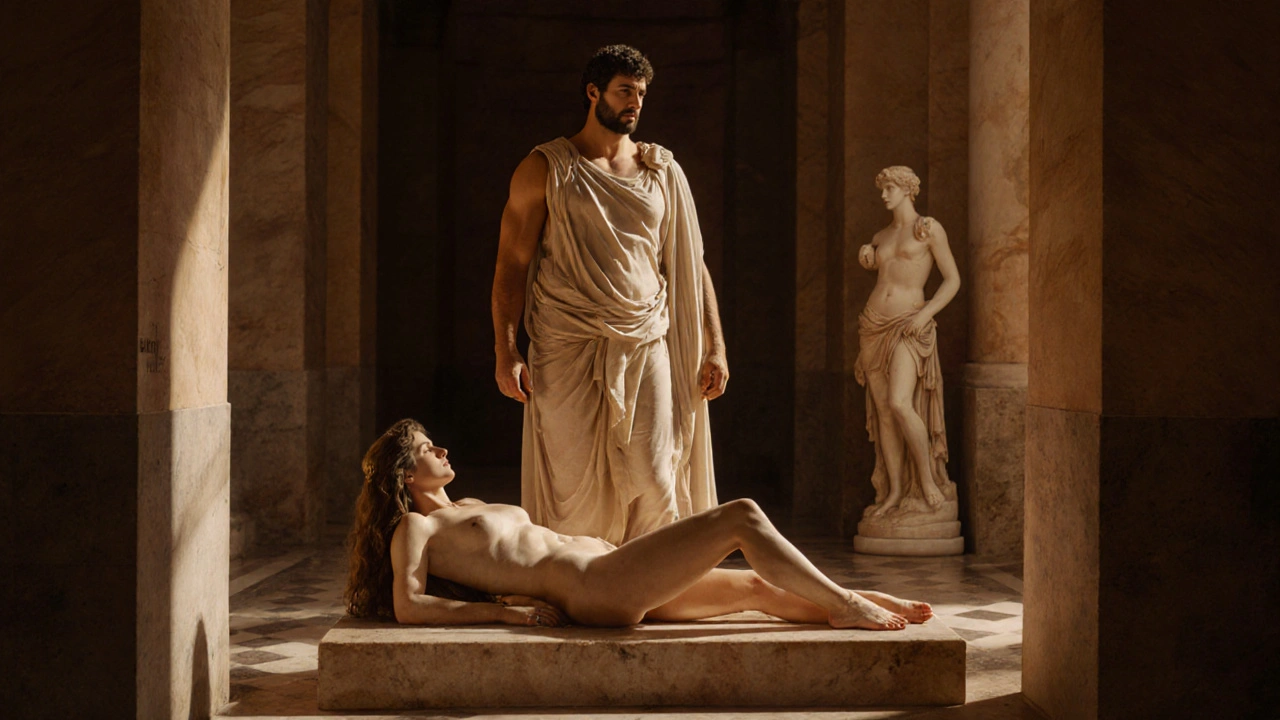
Sexual Positions and Technique in Roman Texts: Sources and Meanings
Nov 12 2025 / History & CultureAncient Roman sexual practices were governed by power, not pleasure. Texts and art reveal strict roles: men dominated, women submitted, and slaves had no rights. Positions, oral sex, and even female agency were shaped by hierarchy-not morality.
VIEW MORE