Aquinas Sexual Sins: How Medieval Morality Shaped Modern Views on Desire
When we talk about Aquinas sexual sins, the moral framework developed by 13th-century theologian Thomas Aquinas that classified sexual acts as sinful based on natural law. Also known as Thomistic sexual ethics, it laid the foundation for how Western Christianity viewed desire, pleasure, and reproduction for centuries. His rules weren’t just church gossip—they became law, shaped medicine, and still whisper in the background of today’s debates about abortion, contraception, and even masturbation.
Aquinas didn’t invent the idea that sex should be tied to procreation, but he gave it a system. He argued that any sexual act outside marriage, or inside marriage without the intent to have children, was a sin against nature. That meant masturbation, oral sex, anal sex, and even sex during pregnancy or menopause were classified as contra naturam—against nature. These weren’t minor offenses. They were mortal sins, meaning they could damn your soul unless confessed. His logic? Sex had one job: make babies. Anything else was a waste, a corruption, a rebellion against God’s design. This thinking didn’t stay in monasteries. It seeped into courts, hospitals, and eventually, the way doctors treated women’s bodies for centuries. Victorian doctors called masturbation a disease because Aquinas had already labeled it a sin.
What’s striking is how much of this still lingers. When you hear someone say sex should only happen in marriage, or that pleasure isn’t the point, you’re hearing Aquinas. Even today, some religious groups use his framework to oppose LGBTQ+ relationships or birth control. But here’s the twist: Aquinas didn’t hate sex. He thought it was good—when used exactly as he prescribed. His problem wasn’t desire. It was deviation. And that narrow view created a culture of shame that silenced women, pathologized non-procreative acts, and made guilt a default response to pleasure. The posts below don’t just talk about history—they show how these old ideas show up in modern myths about female orgasm, the medicalization of masturbation, and why we still struggle to talk about sex without guilt. You’ll see how the same logic that labeled a 13th-century monk’s hand as sinful is still echoing in today’s laws, ads, and even sex education.
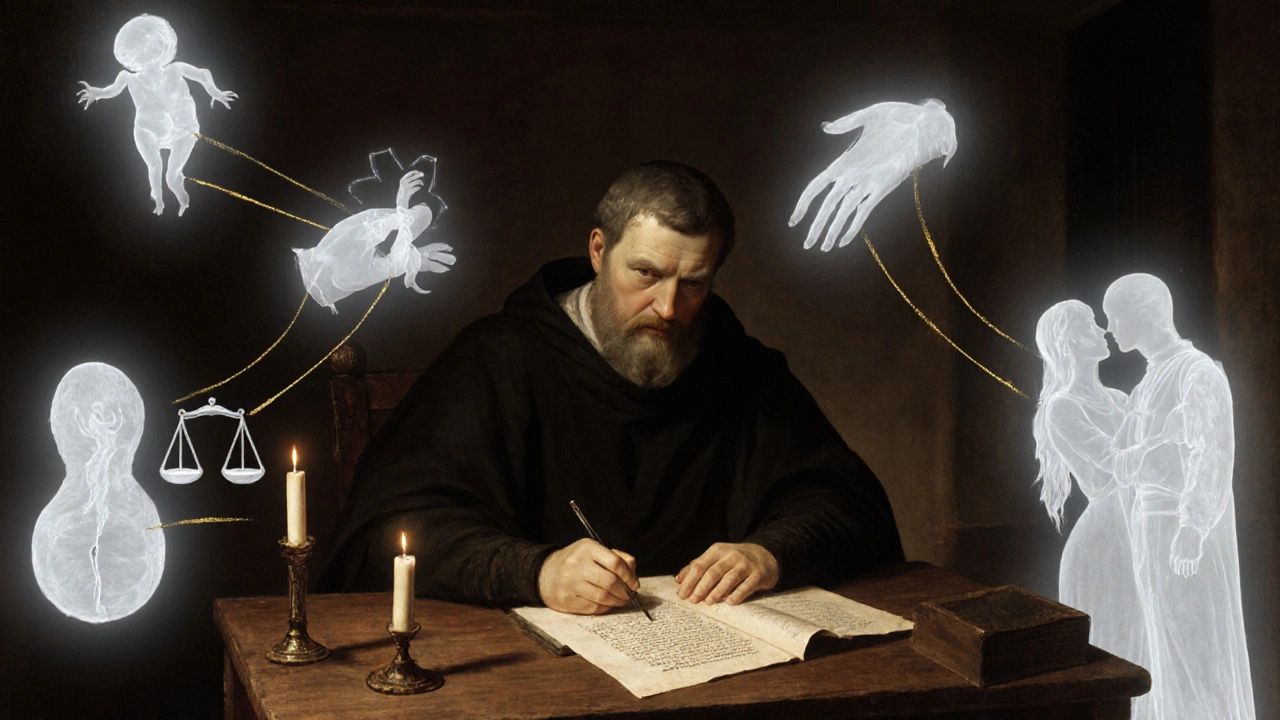
Aquinas’s Procreative Logic: How Medieval Theology Ranked Sexual Sins by Procreation
Nov 1 2025 / History & CultureThomas Aquinas ranked sexual sins by how much they blocked procreation-not by harm or consent. His medieval logic shaped Catholic teaching for 700 years and still influences Church doctrine today.
VIEW MORE