Aquinas Sins Ranking Calculator
Rank Sexual Acts by Aquinas' Procreative Logic
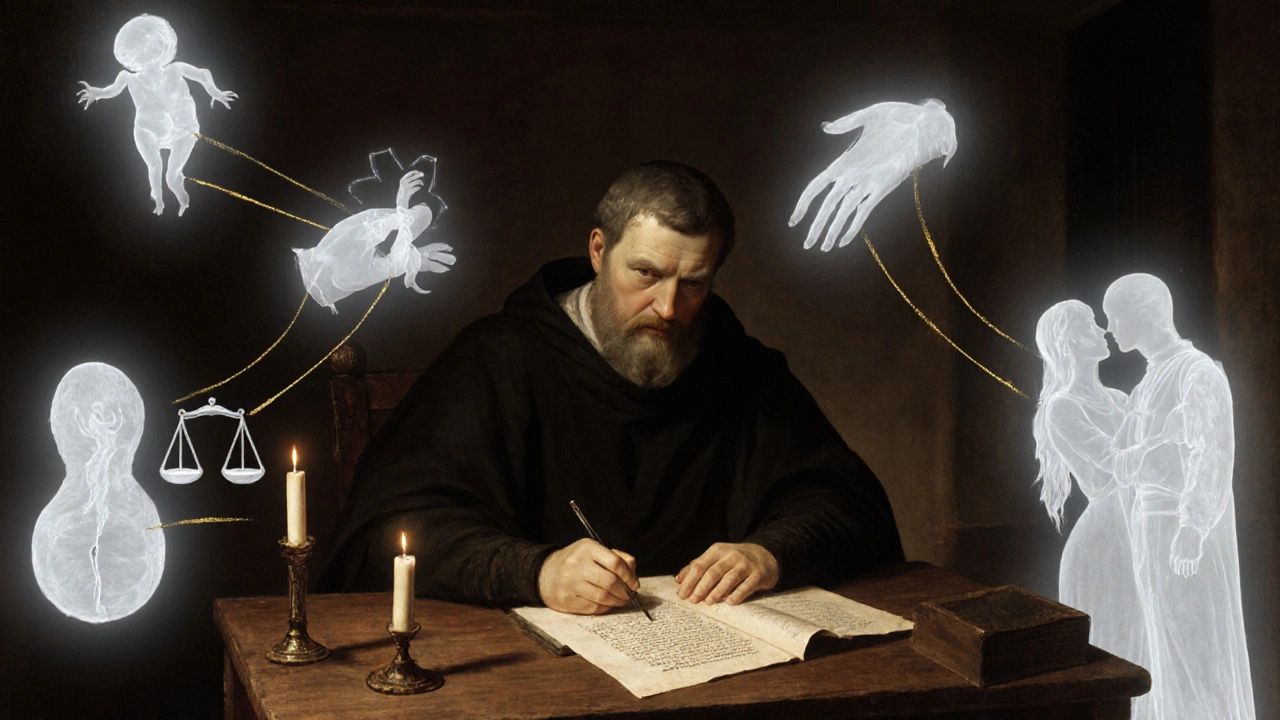
Aquinas ranked sexual sins based on how directly they blocked procreation. The more an act prevented the possibility of a child, the more serious the sin. This tool shows how Aquinas would rank different acts according to his medieval theological framework.
Thomas Aquinas didn’t write about consent. He didn’t weigh trauma, power, or harm. In 13th-century Paris, he ranked sexual sins by one thing: whether they blocked the chance of a baby.
For Aquinas, sex wasn’t about pleasure, intimacy, or love. It was a biological function with a divine blueprint. If a sexual act couldn’t result in a child, it was a sin against nature-and the worse it blocked reproduction, the worse the sin. This wasn’t a fringe idea. It became the backbone of Catholic moral teaching for 700 years.
How Aquinas Ranked Sexual Sins
Aquinas laid out his ranking in the Summa Theologica. He didn’t group sins by who was hurt or whether someone was forced. He grouped them by how directly they interfered with the procreative purpose of sex. The most serious sins weren’t those that violated people-they were those that violated nature.
At the top of his list were acts he called ‘unnatural’: sex between people of the same sex, and sex with animals. These were the worst because, in his view, they made procreation impossible by design. He didn’t say they were worse because they were cruel or degrading. He said they were worse because they couldn’t produce life, ever. No matter the context, no matter the consent, no matter the love-these acts were a direct assault on God’s design.
Next came acts between a man and a woman that blocked conception: anal sex, coitus interruptus, or any deliberate effort to prevent pregnancy. Aquinas compared these to homicide-not because they killed a person, but because they killed the potential for a person. He wrote in the Summa contra Gentiles: ‘After the sin of homicide, whereby a human nature already in existence is destroyed, this type of sin appears to take next place, for by it the generation of human nature is precluded.’
Then came masturbation. Aquinas saw this as the least serious of the ‘unnatural’ sins, but still a mortal sin if done intentionally. He made a sharp distinction between deliberate self-stimulation and involuntary nocturnal emissions. The latter, he said, were not sinful. The body was acting on its own. The mind had to choose evil for it to count as sin.
At the bottom of his list was fornication-sex between unmarried people. Not because it was harmless. But because, in Aquinas’s view, it still left open the possibility of pregnancy. He ranked it lower than contraception because, at least, nature wasn’t being actively thwarted. Seduction-sex without parental consent-was also considered less grave, because the sin was against social order, not against nature itself.
Why Rape and Adultery Were Lower Than Contraception
This is where Aquinas’s logic clashes hardest with modern intuition.
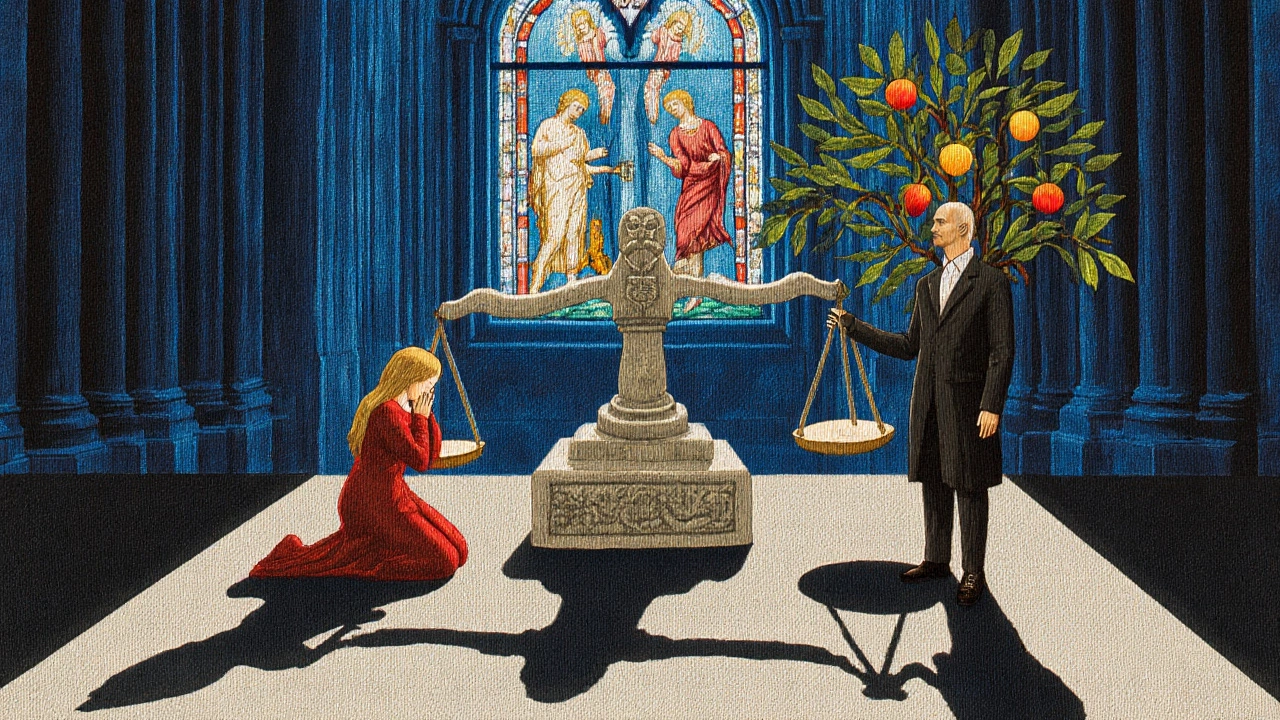
Rape, in his system, was less serious than masturbation. Adultery was less serious than anal sex. Why? Because rape and adultery still allowed for conception. A woman could still get pregnant. The act, even if violent or deceitful, didn’t prevent life. But if a married couple used withdrawal to avoid pregnancy, they were directly blocking nature’s purpose. That, to Aquinas, was a deeper offense against God.
He didn’t ignore the harm of rape. He just didn’t use it as the measure of sin’s gravity. His scale wasn’t about human suffering-it was about cosmic order. He wrote: ‘Though not harmful to others, they are sins directly against God himself as the creator of nature.’
This framework made no room for the victim. It didn’t ask if someone was coerced, terrified, or powerless. It asked: Could this act produce a child? If not, it was worse than violence.
Modern ethicists call this inverted. Louis Crompton, in Homosexuality and Civilisation, noted the absurdity: ‘Rape, which may at least lead to pregnancy, becomes a less serious sin than masturbation.’
The Theological Engine Behind the Ranking
Aquinas didn’t invent this idea out of thin air. He built it on Aristotle’s biology and Augustine’s theology. Aristotle believed semen carried the ‘form’ of a human being. Augustine saw sexual desire as tainted by original sin. Aquinas fused them: sex was meant to be procreative, and any separation of sex from reproduction was a corruption of nature.
He lived in a time when the Church was fighting heresies that saw the body as evil. The Cathars believed marriage and sex were traps of the devil. Aquinas pushed back: God made the body. Sex in marriage was good-so long as it served its purpose. He argued Adam and Eve had sex in Eden-not out of lust, but out of duty to multiply. That made sex part of God’s original plan, not a fall from grace.
But he also believed that after the Fall, lust entered sex. Even within marriage, pleasure was dangerous. It could distract from the true purpose: children. So while marital sex was permitted, it had to be open to life. Any effort to avoid pregnancy was still a sin, even if the couple loved each other.
How This Shaped the Church for Centuries
Aquinas’s taxonomy didn’t stay in theological journals. It became canon law.
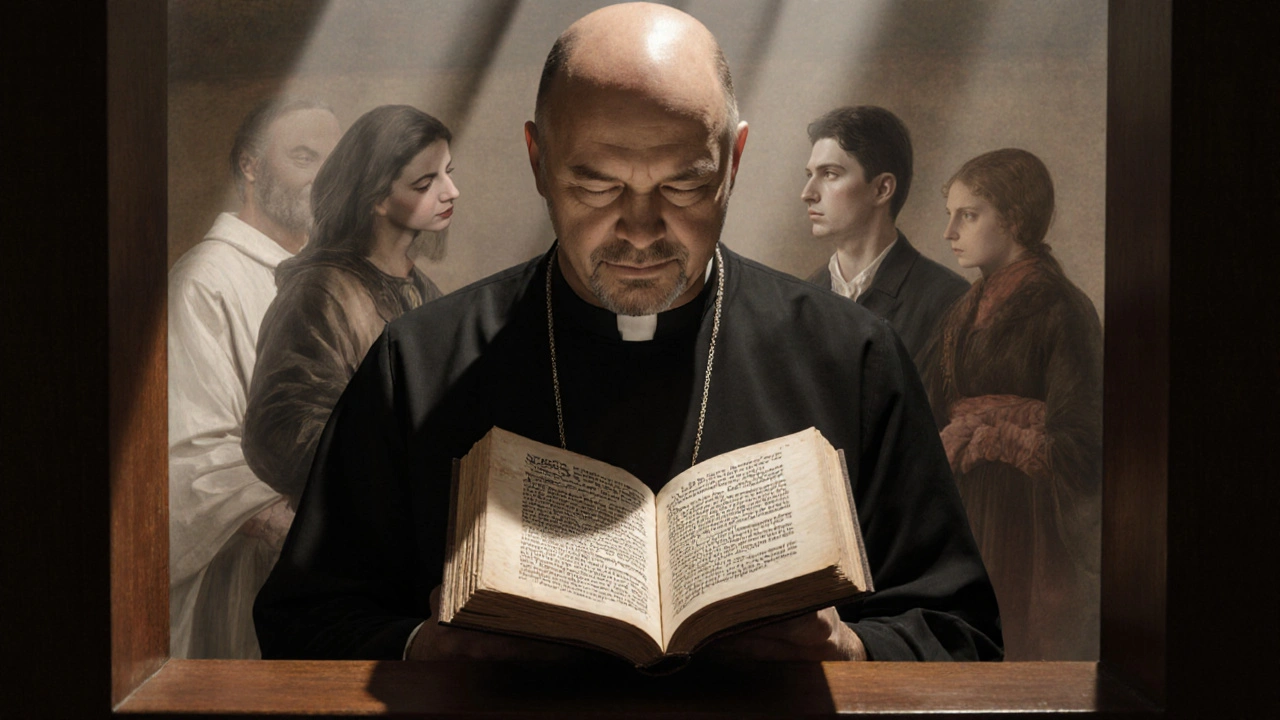
By the 16th century, the Council of Trent made his views official. Confessors were trained to ask detailed questions: Was the act natural? Was contraception used? Was there a deliberate intention to avoid conception? The answers determined penance.
For centuries, priests used Aquinas’s hierarchy to judge sexual behavior. A married couple using withdrawal? Grave sin. A man raping a woman? Still a sin-but less grave than the withdrawal. A woman who masturbated? Mortal sin. A man who cheated on his wife? Also mortal-but not as bad as anal sex.
This logic was codified in the Catechism of the Catholic Church in 1992, which still holds: ‘Each and every marital act must remain open to the transmission of life.’ That line is straight from Aquinas.
Where the Church Has Moved-And Where It Still Stands
By the 20th century, some Catholic thinkers began pushing back. Karol Wojtyla, who became Pope John Paul II, tried to balance Aquinas’s focus on procreation with the idea of spousal love. He argued that sex wasn’t just about babies-it was also about unity. But even he didn’t reject the core rule: contraception was still wrong.
Pope Francis’s 2016 document Amoris Laetitia marked a shift. He acknowledged that people’s lives are shaped by fear, trauma, poverty, and cultural pressure. He didn’t change Church teaching, but he opened space for mercy. He didn’t say contraception was okay. But he said we can’t judge people’s consciences the same way we judged them in 1274.
Modern theologians now admit Aquinas’s biology was outdated. He thought semen carried the full human form from the start. We know now that conception is a complex process involving ovulation, fertilization, and implantation. He didn’t know about hormones, reproductive physiology, or consent psychology.
Still, his method endures. He didn’t just list sins-he built a system. He asked: What is the purpose of this act? What does it oppose? That’s why his framework still gets studied, even by critics.
Why This Still Matters Today
Aquinas’s ranking isn’t just a historical curiosity. It’s the root of why the Catholic Church still opposes contraception, IVF, and same-sex relationships. The logic hasn’t changed. The language has softened, but the core remains: if sex doesn’t lead to life, it’s morally flawed.
That’s why debates about abortion, birth control, and LGBTQ+ rights in the Church keep returning to Aquinas. He didn’t just write about sex-he defined what it means to be human, according to nature and God.
Today, we measure morality by harm, dignity, and autonomy. Aquinas measured it by biology and divine intent. One system sees rape as the ultimate violation. The other sees contraception as the deeper sin.
Which one makes more sense today? That’s not a question for theology alone. It’s a question for anyone who still lives under the shadow of medieval rules.
Why did Aquinas rank contraception worse than rape?
Aquinas ranked sins based on how directly they frustrated the procreative purpose of sex, not on harm to individuals. Rape, while violent, still allowed for the possibility of conception. Contraception, like coitus interruptus or withdrawal, deliberately blocked that possibility. To Aquinas, preventing the creation of human life was a greater offense against God’s natural order than violating a person. He saw the former as a sin against nature itself, while the latter was a sin against a person.
Was Aquinas’s view on sex unique in the Middle Ages?
Yes. While other medieval theologians acknowledged marital pleasure and emotional bonds, Aquinas made procreation the sole moral standard. He rejected the idea that sex within marriage could be good for anything other than having children. This made his view more rigid than contemporaries like Peter Lombard or even Augustine, who saw concupiscence as a consequence of sin but didn’t rank sins by biological function alone.
Did Aquinas believe sex was evil?
No. Aquinas believed sex was good when used according to nature-within marriage, open to life. He argued against the Cathars and other dualists who saw the body and sexuality as evil. For him, sex was part of God’s original design. But after the Fall, it became corrupted by lust. So sex wasn’t evil, but it had to be carefully controlled to avoid sin.
How did Aquinas’s ideas influence modern Catholic teaching?
Aquinas’s framework became the foundation of Catholic sexual ethics. His distinction between natural and unnatural acts shaped canon law, confessional practices, and official documents like Humanae Vitae (1968) and the Catechism of the Catholic Church (1992). Even today, the Church teaches that every marital act must remain open to life-a direct echo of Aquinas’s procreative logic.
Is Aquinas’s sexual ethics still taught in seminaries today?
Yes, but not as a rigid rulebook. Seminaries still teach Aquinas’s method-his use of natural law, his emphasis on purpose, his logical structure. But modern theologians contextualize his views, acknowledging his medieval biology and lack of understanding of psychology, trauma, and consent. He’s studied as a foundational thinker, not as a final authority.