Assyrian Laws: Ancient Rules on Sex, Power, and Gender
When we think of ancient legal systems, we often picture Hammurabi’s Code—but Assyrian laws, a set of legal codes from the Neo-Assyrian Empire (911–609 BCE) that governed everything from marriage to sexual violence. Also known as Assyrian legal codes, these were among the first written systems to explicitly define sexual conduct, property rights in marriage, and punishments for adultery, rape, and same-sex acts. Unlike later Roman or Greek laws, Assyrian rules didn’t pretend to be neutral. They were tools of control—designed to protect male lineage, control women’s bodies, and reinforce class divisions. And they did it with startling clarity.
One of the most revealing aspects of these laws is how they treated female sexuality, not as a personal right, but as a family asset subject to strict regulation. Also known as women’s sexual control in antiquity, the system punished women far more harshly than men for adultery, often with death or public humiliation, while men could have concubines with little consequence. Marriage contracts, written in cuneiform and tied to dowries, land transfers, and inheritance. Also known as ancient Mesopotamian marital agreements, these weren’t romantic unions—they were economic and political deals, often arranged before girls reached puberty. These contracts didn’t ask for consent; they recorded ownership. And if a woman was raped, the law sometimes blamed her for being in the wrong place—unless she was a slave, in which case her owner was compensated, not her.
What’s striking is how these rules mirror modern debates. The same questions we’re still asking—about consent, gender roles, and who gets to define morality—were already being fought over in Nineveh and Ashur. The Assyrians didn’t have feminism or human rights, but they did have witnesses, written testimony, and courts. Their laws show us that control over sexuality isn’t new—it’s ancient. And so is resistance. Women in Assyria hid their pregnancies, lied about paternity, and used magic to avoid unwanted sex. They didn’t have courts on their side, but they had cunning.
What you’ll find in the posts below isn’t just history. It’s the lineage of how power shaped sex—from the temple prostitutes of ancient Sumer to the medical myths of Victorian doctors, from erased lesbian archives to the rise of AI porn. These stories all connect back to the same question: who gets to decide what’s normal, what’s sinful, and who gets to feel pleasure without punishment? The Assyrians gave us the first answers. The rest is still being written.
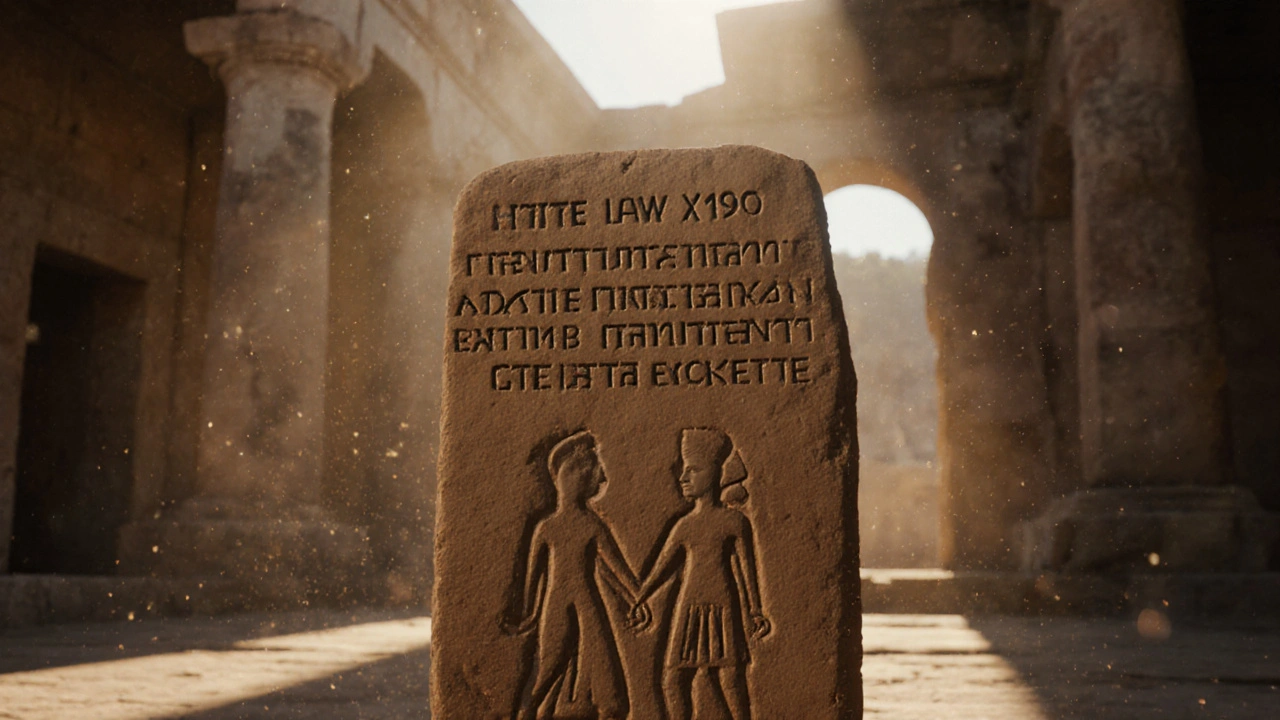
Hittite and Assyrian Laws on Sexual Consent: Early Codifications and Gaps
Nov 24 2025 / History & CultureThe Hittite and Assyrian legal codes from 1650-1100 BCE contain some of the earliest known laws addressing sexual consent, revealing stark differences in how ancient societies handled rape, consent, and gender roles - with the Hittites recognizing mutual willingness and the Assyrians enforcing brutal retribution.
VIEW MORE