Cleopatra Makeup: Ancient Beauty Secrets and the Power of Cosmetic Rituals
When we think of Cleopatra makeup, the iconic eyeliner and bold pigments worn by Egypt’s last pharaoh, often tied to myth, seduction, and royal power. Also known as ancient Egyptian cosmetics, it wasn’t just fashion—it was medicine, status, and spiritual armor. Cleopatra didn’t apply kohl just to look striking. She used it because it protected her eyes from the sun, blocked flies, and reduced infection in a land where water was scarce and dust was constant. The black pigment, made from galena or soot mixed with oil, was applied with precision—not for men, but for survival and control.
This wasn’t vanity. It was strategy. In ancient Egypt, makeup was worn by men and women, rich and poor, but the quality and materials signaled rank. The deeper the kohl, the higher the status. The richer the ochre for cheeks, the closer you were to the gods. kohl eyeliner, a key component of Cleopatra’s daily ritual, was believed to ward off the evil eye and invoke the protection of the gods Horus and Ra. Archaeologists found cosmetic palettes in tombs alongside jewelry and food—because beauty was part of the journey to the afterlife. Even the tools mattered: ivory applicators, stone grinders, and ceramic containers were carefully crafted, often inscribed with prayers. This was ritual, not routine.
And it worked. Egyptian cosmetics had real antibacterial properties. The lead compounds in kohl triggered the body’s immune response, helping prevent eye infections that could spread and kill. Modern studies confirm what the Egyptians knew instinctively: their makeup was a public health tool. Meanwhile, beauty rituals, including scented oils, henna tattoos, and linen-wrapped hair, were tied to daily discipline and social performance. Cleopatra’s legendary allure wasn’t magic—it was discipline, access to rare ingredients like lapis lazuli and carmine, and the cultural authority to command them. She didn’t just wear makeup; she weaponized it.
What you’ll find below isn’t just a list of articles—it’s a curated look at how beauty, power, and history intersect. From the medical use of ancient pigments to how gender and control shaped who got to wear what, these posts connect Cleopatra’s eyeliner to broader stories about sexuality, identity, and survival. You’ll see how cosmetics were tools of resistance, how rituals were coded language, and how the body became a canvas for control—and liberation.
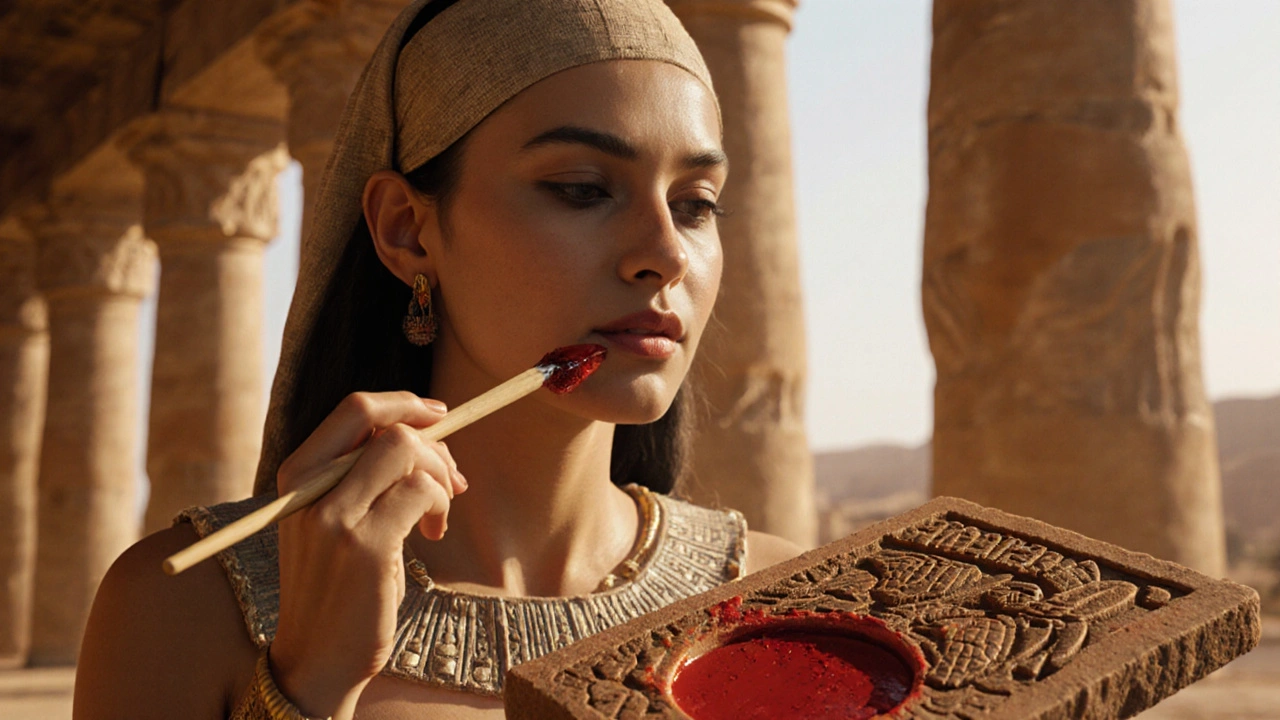
Lipstick and Signals in Ancient Egypt: How Cosmetics Communicated Sex, Status, and Power
Nov 22 2025 / History & CultureAncient Egyptians used lipstick not just for beauty, but as a coded system to signal social status, sexual availability, and spiritual power - with Cleopatra’s crimson lips becoming a symbol of political and erotic authority.
VIEW MORE