Clitoral Orgasm: The Science, History, and Myths Behind Female Pleasure
When we talk about clitoral orgasm, the type of sexual climax triggered by stimulation of the clitoris, distinct from vaginal orgasm in both anatomy and experience. Also known as clitoral climax, it's the most reliable path to orgasm for most women—yet for over a century, medicine, religion, and culture told women it wasn't normal, necessary, or even real. The clitoris isn't just a small button on the outside. It’s a complex organ with over 8,000 nerve endings, extending internally in a wishbone shape. Most women need direct clitoral stimulation to reach orgasm—not penetration alone. This isn’t a preference. It’s biology.
For decades, doctors called the clitoris a "vestigial" organ—something left over from evolution with no real function. Freud claimed women who needed clitoral stimulation were "immature." Even in the 1970s, medical textbooks suggested vaginal orgasms were the only "mature" form. But research from Masters and Johnson in the 1960s, and later Helen O’Connell’s 3D imaging in the 1990s, proved the clitoris is central to female sexual response. It’s not a side note. It’s the main player. And the reason it evolved? It likely helped our ancestors ovulate. Early mammals needed physical stimulation to release eggs. Even though humans don’t need that anymore, the pleasure system stayed. That’s why clitoral orgasm exists—not to make babies, but to make pleasure worth pursuing.
That history explains why so many women still feel confused, ashamed, or broken when they can’t climax from intercourse alone. It’s not you. It’s the myth. The female orgasm, a physiological response involving muscle contractions, hormonal shifts, and neural activation triggered by sexual stimulation. Also known as climax, it’s one of the most misunderstood processes in human biology. The gap between what women need to feel pleasure and what society says they should experience is called the orgasm gap. Studies show over 70% of women need clitoral stimulation to orgasm, yet many partners still assume penetration is enough. That’s not ignorance—it’s legacy. And it’s changing. Today’s sex educators, researchers, and activists are rewriting the rules. You’ll find articles here that dig into how Victorian doctors pathologized female desire, how ancient cultures celebrated sexual pleasure, and why modern medicine is finally catching up to what women have always known.
What you’ll find below isn’t just a list of articles. It’s a map. From the steam-powered vibrators sold as medical devices to treat "hysteria," to the erased lesbian histories in archives, to the evolutionary puzzle of why female pleasure persists without reproductive purpose—each piece connects to the same truth: pleasure has been controlled, hidden, and rewritten. But it’s not gone. It’s waiting to be reclaimed. These posts give you the facts, the history, and the context to understand your body—not through myth, but through evidence.
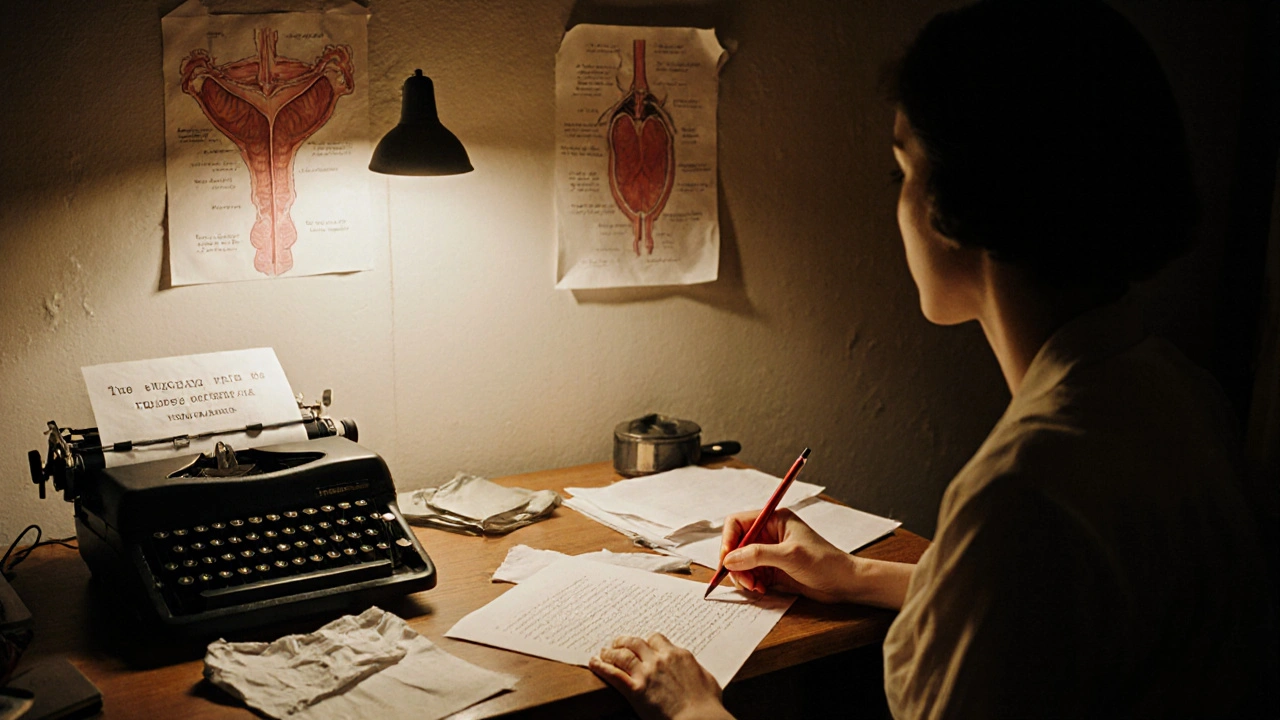
Anne Koedt and the Clitoral Orgasm: How Feminism Changed the Way We Understand Female Pleasure
Nov 9 2025 / History & CultureAnne Koedt's 1968 essay shattered the myth that vaginal orgasms were the mark of mature female sexuality. Her anatomical argument-that all female orgasms are clitoral-transformed feminist thought, sex education, and medical practice. Today, her work remains essential to understanding real female pleasure.
VIEW MORE