Clitoral Orgasm Calculator
How Common Is Clitoral Stimulation Needed?
According to the article: Anne Koedt's work debunked the myth that vaginal orgasms are primary. Modern research confirms all female orgasms are clitoral—whether through direct stimulation or indirectly through penetration.
Your Estimated Need
Source: Indiana University study (2017)
For decades, women were told that if they couldn’t orgasm from penetration alone, something was wrong with them. Not their bodies. Not their partners. Them. The idea was rooted in Freud’s 1905 theory that clitoral orgasms were childish, and only vaginal orgasms marked a woman’s sexual maturity. This wasn’t just a medical opinion-it became law in bedrooms, therapy rooms, and marriage manuals. Women who needed direct clitoral stimulation were labeled frigid, neurotic, or broken. Then came Anne Koedt.
The Essay That Shattered a Myth
In 1968, Anne Koedt, a radical feminist in New York, wrote a short but explosive essay called The Myth of the Vaginal Orgasm. It wasn’t meant to be a bestseller. It was published in a small feminist newsletter called Notes from the First Year. But within a few years, it became one of the most influential texts in modern feminism. Koedt didn’t just disagree with Freud-she dismantled his entire framework using one thing he ignored: anatomy. She pointed out a simple fact: the vagina doesn’t have the nerve endings to create orgasm. The clitoris does. Not just the tip you can see, but a whole network of tissue that wraps around the vaginal canal. Koedt didn’t have MRI scans or cadaver dissections to prove it. She used the work of C. Lombard Kelly, a 1940s researcher who found that only the clitoris contained specialized sensory corpuscles designed for orgasm. Everything else in the female genital tract? Built for reproduction, not pleasure. Her conclusion was radical: There is no such thing as a vaginal orgasm. All female orgasms are clitoral. Not because of how they feel, but because of how the body is built.Why Freud Got It Wrong
Freud’s theory wasn’t based on science. It was based on Victorian ideas about gender. He believed women’s sexuality should be passive, centered on reproduction, and subordinate to men. The clitoris? He called it a “pine shaving” meant to ignite the “harder wood” of the vagina. If a woman still needed clitoral stimulation after marriage, Freud said she was stuck in adolescence. Koedt flipped that script. She argued that calling women frigid wasn’t a diagnosis-it was a cover-up. It let men off the hook for not learning how to pleasure women. It let doctors ignore the real issue: most women simply don’t get enough direct clitoral stimulation during intercourse. That’s not a flaw in her body. It’s a flaw in the system. Her essay didn’t just challenge doctors. It challenged the entire culture of sex. If the myth of the vaginal orgasm was false, then so was the idea that women’s pleasure was secondary. Her work turned female orgasm from a medical problem into a political one.The Science Caught Up
For years, Koedt’s claims were dismissed as radical feminist rhetoric. Then, in 1998, urologist Helen O’Connell and her team dissected ten female cadavers. What they found shocked even medical professionals. The clitoris isn’t just a small button. It’s a complex organ with two legs (crura) that extend up to nine centimeters inside the body, wrapping around the urethra and vagina. The nerves that trigger orgasm? They’re the same ones that respond to penetration. This wasn’t just confirmation-it was a revolution. Koedt had been right all along. There’s no such thing as a vaginal orgasm. Penetration doesn’t cause orgasm. It stimulates the internal parts of the clitoris. That’s why so many women can’t orgasm from sex alone. A 2017 study from Indiana University found that only 18% of American women regularly orgasm from vaginal penetration. Thirty-seven percent need direct clitoral stimulation. The rest? They get there through a mix of pressure, movement, or fantasy. But every single one of them? Their orgasm comes from clitoral nerves.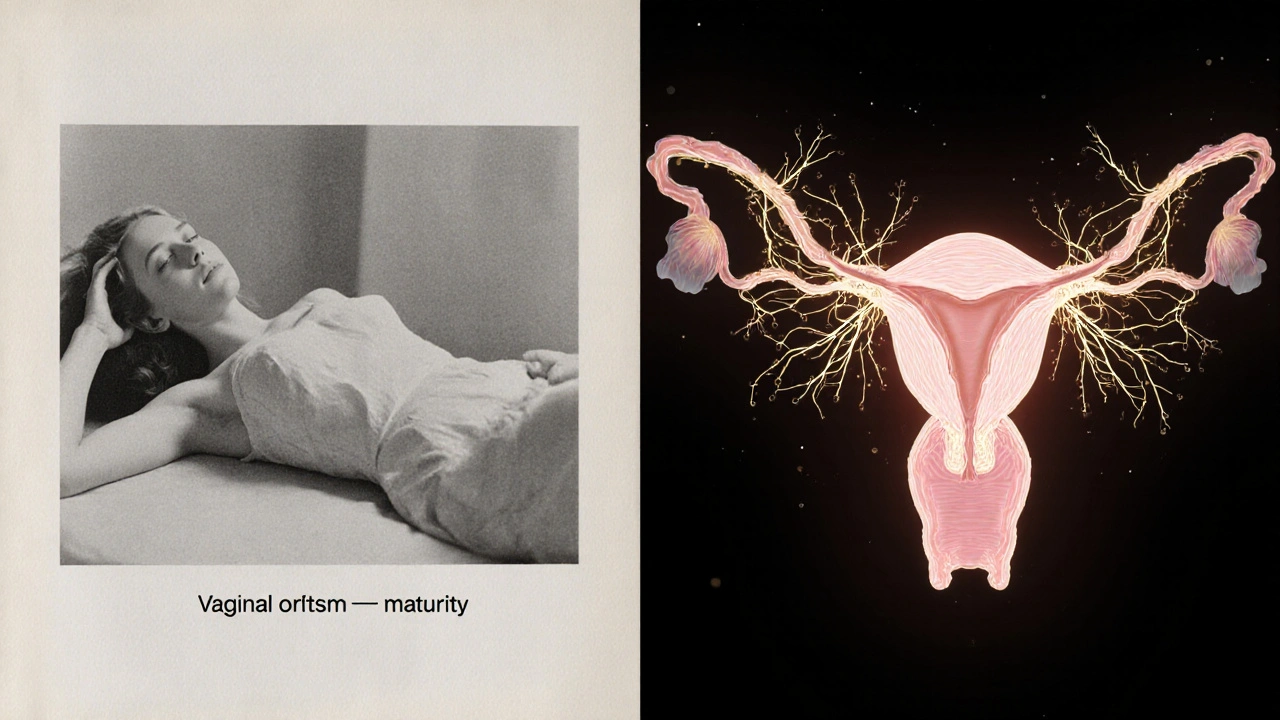
What This Means in Real Life
If you’ve ever felt like something was wrong with you because you couldn’t come from intercourse, you’re not broken. You’re normal. The problem isn’t your body. It’s the myth you were taught. That’s why sex educators now say the same thing Koedt said: Most people with vulvas need direct clitoral stimulation to orgasm. Planned Parenthood updated their website in 2023 to say exactly that. The American College of Obstetricians and Gynecologists issued a guideline in 2016 acknowledging the same truth. And it’s changing how people have sex. The sexual wellness market-worth over $33 billion in 2022-is built around clitoral stimulation. Seventy-eight percent of new vibrators are designed to target the clitoris, not the vagina. Apps like OMGYes, which studied 6,300 women, found that 87% had better orgasms when their partners focused on the clitoris. Reddit threads, forums like Scarleteen, and even couples’ therapy sessions now reference Koedt’s work. One 2022 thread on r/sex with over 12,000 upvotes had dozens of women sharing how learning about the clitoral orgasm myth lifted years of shame and anxiety. They weren’t failing. They’d just been lied to.The Criticisms and the Nuances
Koedt’s essay wasn’t perfect. Some critics say she made orgasm sound too mechanical-like a switch that only flips when the clitoris is touched. But pleasure isn’t just physical. Emotions, trust, fantasy, and connection all play a role. The brain is part of the sex organ. Some women do orgasm from penetration alone. But that’s because the internal clitoral structures are being stimulated indirectly. It’s not a different kind of orgasm. It’s the same one, just reached through a different path. And yes, some conservative voices argue that reducing pleasure to anatomy ignores emotional intimacy. But Koedt never said emotion didn’t matter. She said the myth of the vaginal orgasm was used to silence women’s needs. Once you remove that lie, you make space for real intimacy-not fake expectations.
Where We Are Now
Today, Koedt’s essay is required reading in 92% of introductory Women’s and Gender Studies courses. Her ideas are embedded in sex education curriculums across the U.S. The Society for the Scientific Study of Sexuality now lists clitoral stimulation as a standard part of sexual health advice. But the myth hasn’t died. A 2021 study found that 68% of sexually active adults still believe vaginal penetration should be enough for a woman to orgasm. That’s why education matters. That’s why Koedt’s work still matters. She didn’t just write about anatomy. She wrote about power. About who gets to define pleasure. About who gets to say what’s normal. Her essay gave women permission to want more-to ask for what feels good, to stop blaming themselves, and to reject the idea that their bodies were defective.What You Can Do Today
If you’re a woman: Stop feeling guilty if you need clitoral stimulation. Your body isn’t broken. It’s designed that way. Try exploring with your fingers, a toy, or a partner who’s willing to learn. You don’t need permission. You need information. If you’re a man: Stop assuming penetration is enough. Ask. Listen. Pay attention to what feels good. Most women aren’t hiding anything-they’ve just been taught to stay quiet. If you’re a parent, teacher, or healthcare provider: Teach the truth. Not the myth. The clitoris isn’t a footnote. It’s the center. Anne Koedt didn’t change the world with a protest or a law. She changed it with a piece of paper and a simple truth: Orgasms aren’t magical. They’re anatomical. And women deserve to know how their bodies work.That truth still echoes today. Not in textbooks alone-but in quiet moments when a woman finally feels safe enough to say, ‘I need this.’ And someone says back, ‘Me too.’