Cosmetics as Sexual Signal
When you put on lipstick, eyeliner, or blush, you're not just enhancing your face—you're sending a cosmetics as sexual signal, a deliberate use of color and form to communicate attraction, status, or dominance. Also known as visual courtship display, this behavior isn't new—it's wired into human history, long before makeup was sold in stores.
Think about it: why do so many cultures across time and place use pigments on the face? Ancient Egyptians lined their eyes with kohl not just for style, but to ward off evil and draw attention to the eyes—key features in human attraction. In Victorian England, pale skin and rosy cheeks weren't just fashion; they signaled wealth (you didn't work outdoors) and fertility (a sign of health). Today, red lipstick is still linked to increased perceived attractiveness in studies, not because it's 'beautiful' in a universal way, but because it mimics natural signs of arousal—flushed skin and engorged lips. This isn't coincidence. It's biology meeting culture.
And it's not just about men noticing women. gender performance, how people express gender through appearance, behavior, and style. Also known as gender expression, it's a tool for claiming space, challenging norms, or signaling belonging. Non-binary folks use bold makeup to reject binary expectations. Drag artists turn cosmetics into theater, flipping power dynamics on their head. Even men using tinted moisturizer or brow gel are quietly reshaping what 'masculinity' looks like. These aren't just trends—they're acts of redefinition.
The science backs this up. Research shows that people wearing makeup are rated as more competent, trustworthy, and attractive—even when the observers don't know they're wearing it. That’s not magic. It’s evolution. Humans are wired to read faces fast. Eyes, lips, skin tone—they're all cues we use to assess health, fertility, and social intent. Cosmetics amplify those cues, intentionally or not. And that’s why makeup isn't frivolous. It's a survival tool dressed in glitter.
What you'll find below isn't a list of beauty tips. It's a collection of deep dives into how makeup, scent, grooming, and adornment have been used as weapons, shields, and signals across centuries. From Etruscan tomb paintings showing women with kohl-rimmed eyes to Victorian doctors warning against 'excessive coloring,' these stories reveal how control over appearance has always been tied to control over power. You'll see how the same red lipstick that once got women labeled as immoral now gets them hired for leadership roles. How eyeliner became a symbol of rebellion, then mainstream fashion, then political statement. How beauty standards aren't just imposed—they're negotiated, resisted, and reclaimed.
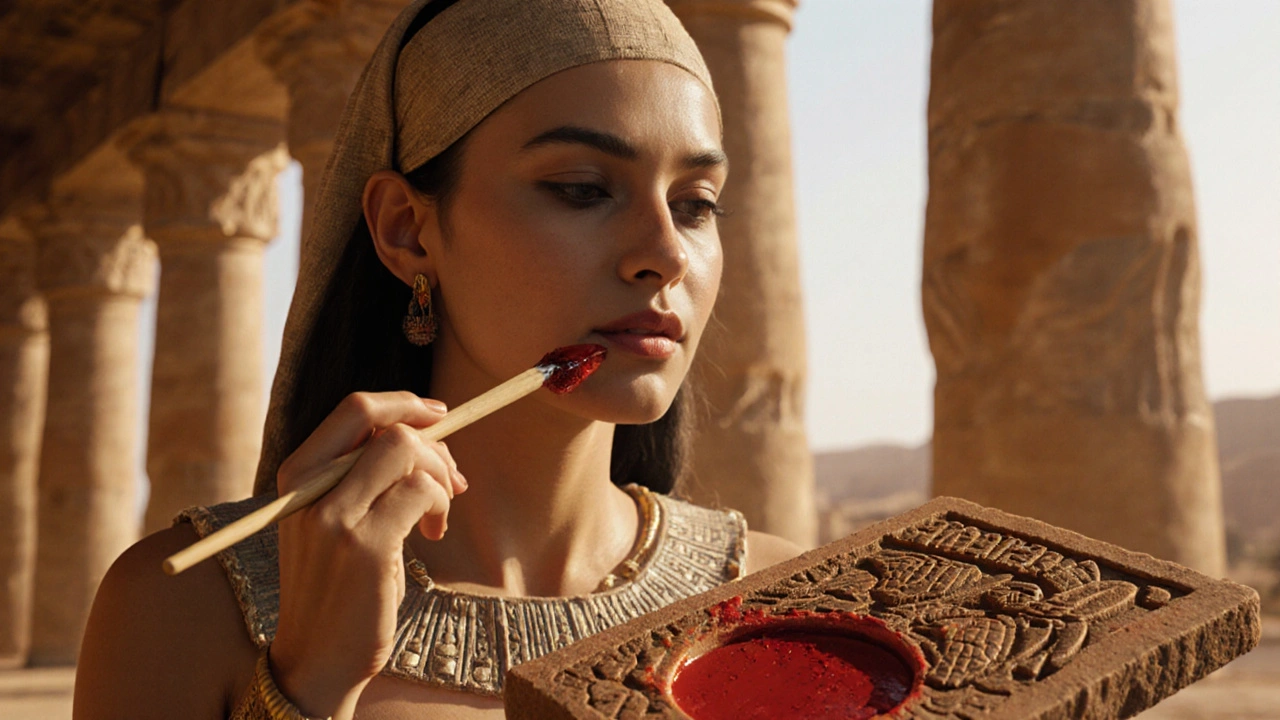
Lipstick and Signals in Ancient Egypt: How Cosmetics Communicated Sex, Status, and Power
Nov 22 2025 / History & CultureAncient Egyptians used lipstick not just for beauty, but as a coded system to signal social status, sexual availability, and spiritual power - with Cleopatra’s crimson lips becoming a symbol of political and erotic authority.
VIEW MORE