Creation Myths: How Ancient Stories Shape Modern Sex and Gender Beliefs
When we talk about creation myths, ancient narratives that explain the origins of the world, humans, and gender. Also known as origin stories, they weren’t just religious tales—they were the first social contracts, defining who could do what, who was sacred, and who was dangerous. These stories didn’t just describe how the world began—they told people how to live in it, especially when it came to sex, bodies, and power.
Take the story of Adam and Eve: it didn’t just introduce sin—it tied female sexuality to disobedience, making shame a core part of how women were taught to see their own bodies. Meanwhile, in ancient Sumer, the goddess Inanna ruled over love, war, and fertility—her myths showed female desire as divine, not dangerous. These weren’t just different gods—they were different rules. One framed sex as a fall from grace; another saw it as a path to spiritual power. And in Etruscan tombs, couples making love weren’t painted as decadent—they were shown as guides to the afterlife, proving that pleasure and death could be sacred together. These contrasting views didn’t vanish when writing was invented. They got buried under centuries of moralizing, then resurfaced in Victorian medical manuals that called masturbation a disease, or in legal systems that still treat non-heterosexual unions as exceptions.
Modern gender roles, the silence around female pleasure, even the way we think about consent—all of it carries traces of these old stories. The idea that men are natural leaders? That’s not biology—it’s a myth from Mesopotamia. The belief that women’s sexuality must be controlled? That’s a rewrite of Babylonian temple codes. And when we ignore how these myths were used to justify power, we keep repeating them. But here’s the thing: myths can be rewritten. The Etruscans didn’t hide their sexual art. The ancient Egyptians used lipstick to signal authority, not just beauty. And today, people are digging up these forgotten stories—not to worship them, but to reclaim them. What you’ll find below isn’t just history. It’s evidence that the rules we live by weren’t written in stone. They were written by people. And people can change them.
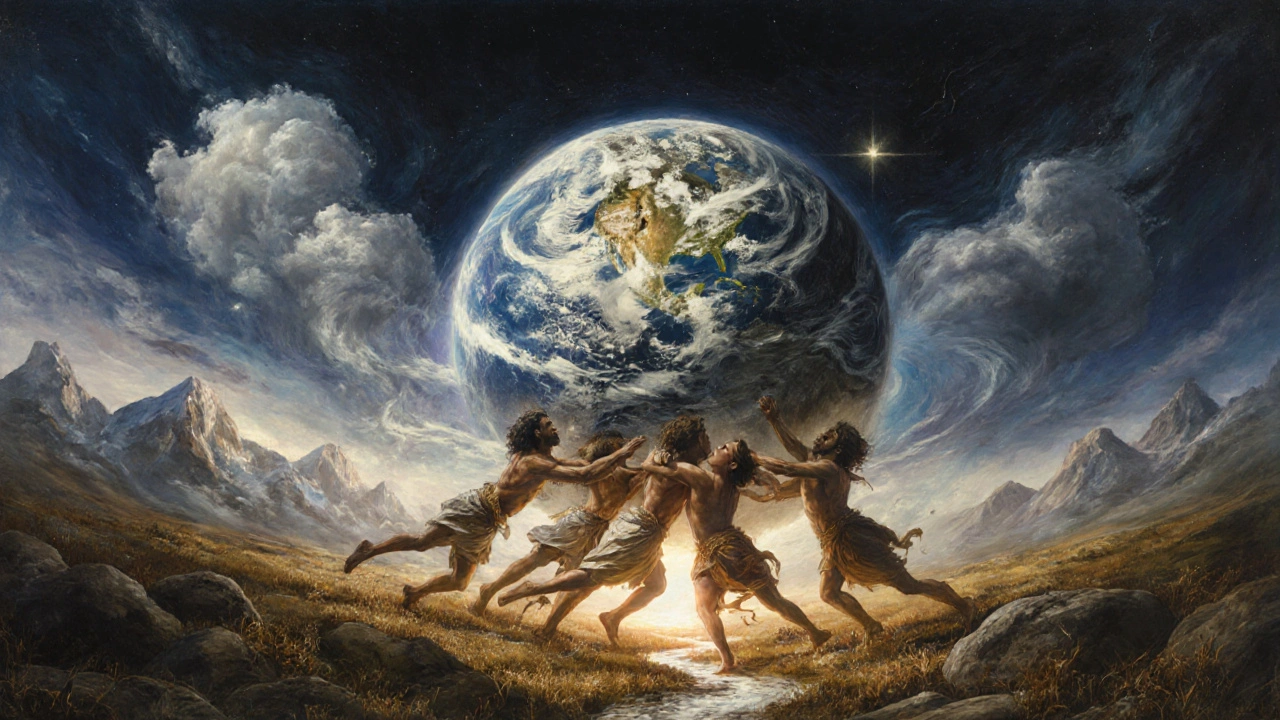
Creation Myths and Gender Dualities: How Male and Female Forces Shape Human Origin Stories
Nov 9 2025 / History & CultureCreation myths across cultures use male-female dualities to explain human origins, but these symbols vary widely-from sun goddesses to two-faced beings. These stories reflect societal values, not universal truths about gender.
VIEW MORE