Deepfakes: How AI-Generated Sex Content Is Rewriting History and Consent
When you hear deepfakes, AI-generated videos or images that convincingly swap one person’s face or voice onto another’s body. Also known as synthetic media, it’s not just a tech glitch—it’s a tool that’s being used to erase consent, rewrite identities, and weaponize intimacy. This isn’t science fiction. It’s happening right now, to real people, and it’s tied to centuries of control over women’s bodies, sexual expression, and who gets to be seen—or erased.
Deepfakes don’t exist in a vacuum. They’re the digital cousin of Victorian-era medical myths that labeled female desire as hysteria, or the stag films of the 1920s that circulated in secret, built on anonymity and exploitation. Just like those older forms of sexual imagery, deepfakes thrive when there’s no accountability, when victims are silenced, and when society treats sexual imagery as entertainment rather than violation. What’s new isn’t the desire to control sexuality—it’s the scale and speed at which it’s done. A single algorithm can generate hundreds of fake nudes in minutes, targeting anyone with a public photo. And unlike old-school porn, these aren’t just fantasies—they’re used for blackmail, harassment, and public humiliation, often without the victim’s knowledge.
What makes deepfakes especially dangerous is how they twist history’s oldest tools of power: shame and invisibility. For centuries, women’s sexuality was hidden, censored, or pathologized. Now, AI doesn’t just hide it—it fabricates it, and then spreads it. The same forces that erased lesbian history from archives, or silenced female orgasm in medical texts, are now using code to create false versions of people’s bodies and force them into narratives they never agreed to. This isn’t just about technology—it’s about who gets to define reality. And right now, the people most targeted are women, trans folks, and marginalized communities who’ve already been pushed to the edges of history.
But here’s the thing: deepfakes also expose the cracks in how we’ve always handled sex, privacy, and power. The same systems that ignored Victorian-era vibrators as medical devices, or dismissed Elizabethan dildo poems as obscene, are now struggling to catch up to AI-generated content. The law lags. Platforms are confused. Victims are blamed. But the people fighting back—activists, survivors, researchers—are drawing direct lines from past censorship to present-day abuse. They’re not just asking for bans. They’re asking for a new kind of consent—one that’s not just verbal, but digital, systemic, and enforced.
Below, you’ll find articles that trace how control over sexuality has always been tied to technology, culture, and law. From the steam-powered vibrators sold as medical cures to the banned erotic poems of the 1500s, history shows us that every new tool for pleasure or power has been met with fear, denial, and resistance. Deepfakes are just the latest chapter—and understanding them means understanding everything that came before.
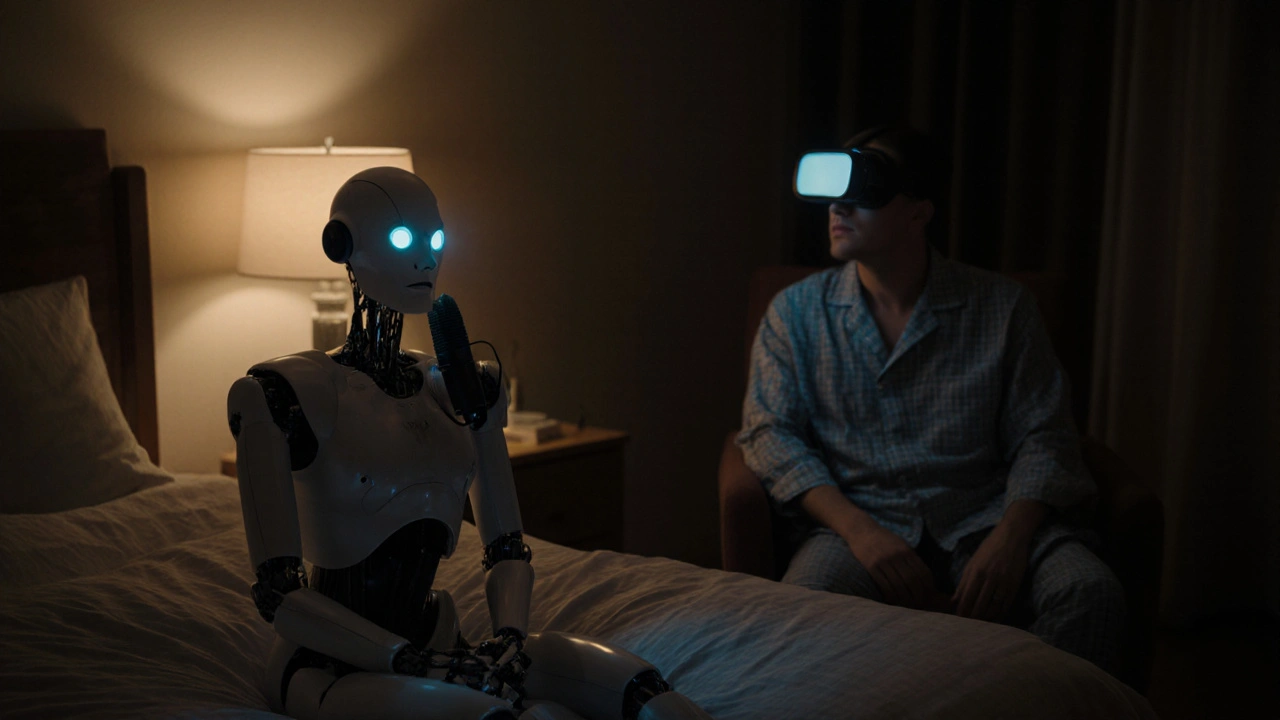
Sex Robots and AI in Porn Production: The Real Ethics Behind the Speculation
Nov 25 2025 / History & CultureSex robots and AI-generated porn are changing how we experience intimacy. With no laws, no data, and no consensus on ethics, we’re stepping into a future where machines simulate desire-but can’t feel it.
VIEW MORE